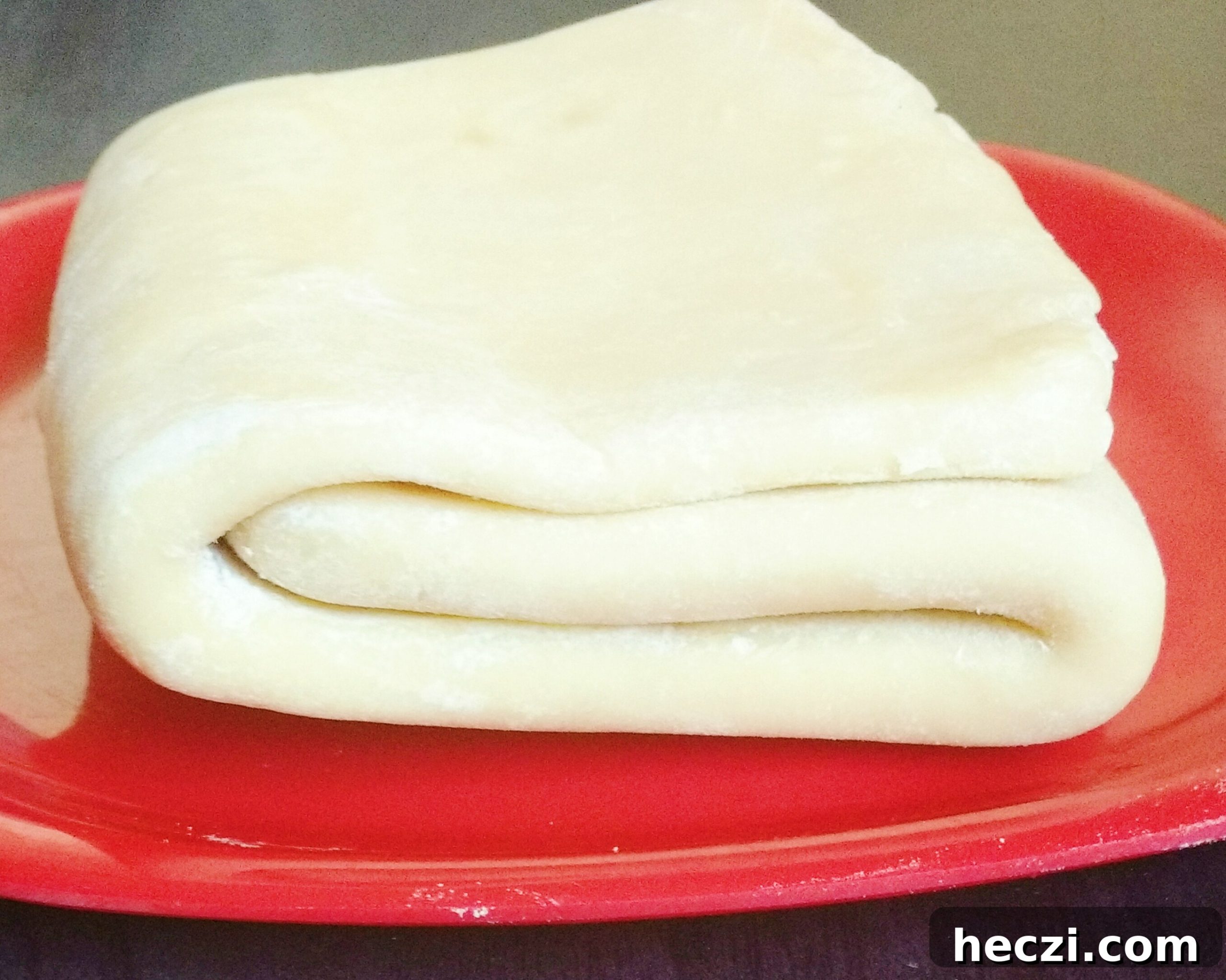
Puff pastry, also known as pâte feuilletée, is a light, flaky pastry used in both sweet and savory dishes. In India, its most familiar form is the savory puff sold in bakeries across towns and cities.
Store-bought puff pastry can be hard to find in some places, so learning to make it from scratch is a valuable skill for any baker. It may seem intimidating at first, but the process is straightforward though time-consuming. The method involves short bursts of hands-on work interspersed with chilling periods.
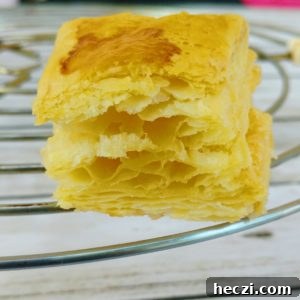
Puff pastry is a laminated dough made by enclosing a block of butter (beurrage) inside a flour dough (détrempe), then repeatedly rolling and folding the dough. Chilling between folds keeps the butter solid. During baking, the butter melts and releases steam, which separates and lifts the dough layers; the heat then cooks the flour to form the characteristic crisp, airy “puffs.”
There are faster approaches—so-called “rough puff” or quick puff pastry recipes—that give good results when time is limited. Over time I developed a method that can be completed in under an hour and still produces very satisfactory layers. I have also created a video to make the folding technique easier to follow.
That said, the traditional longer method delivers the most dramatic results: more lift and hundreds of delicate layers. It takes longer—often half a day or more—but for those who enjoy the process, the outcome is well worth the wait.
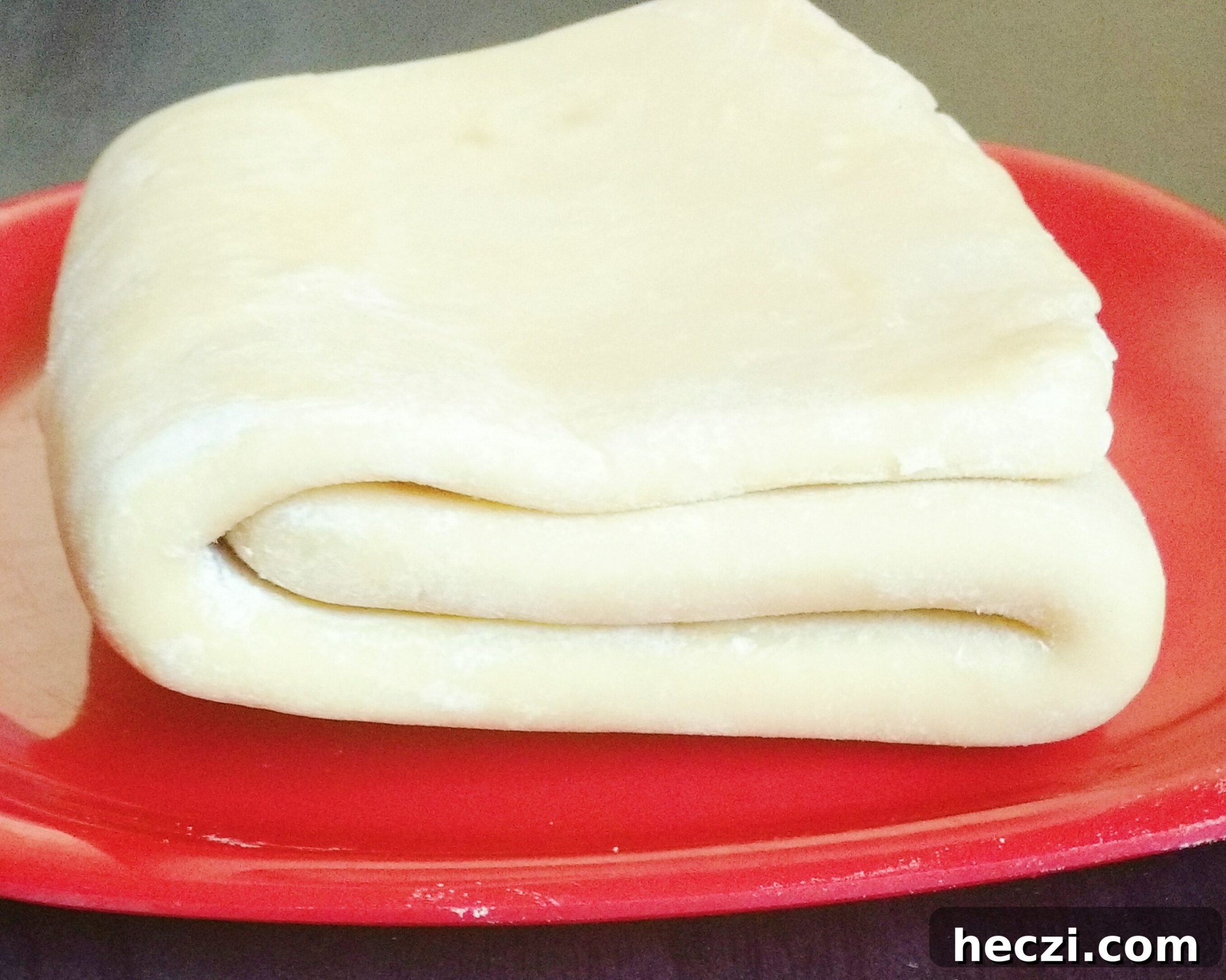
Puff pastry
Ingredients
-
250
grams
all-purpose flour (about 2 cups) -
100
grams
unsalted butter (about 1/2 cup)
at room temperature -
100
ml
water (about a scant 1/2 cup) -
1
tsp
salt -
100
grams
unsalted butter (for the butter block)
at room temperature
Instructions
-
Spread one portion (about 100 grams) of the butter into a 5 x 5 inch square between sheets of parchment, then chill until firm.
-
On a clean surface, measure the flour and make a well in the center. Add the water mixed with salt.
-
Add the remaining butter, cut into cubes, to the flour.
-
Using your fingers or a pastry scraper, rub the butter, water and flour together to form coarse crumbs, then bring them together into a rough dough.
-
Wrap the dough and chill for one hour.
-
After chilling, roll the dough on a floured surface into a rectangle about 5 x 15 inches.
-
Place the chilled butter slab in the center. Fold the short ends of the dough over the butter to enclose it, creating an envelope with butter exposed only on two ends.
-
Roll the envelope into a rectangle again, about 5 x 15 inches, keeping the edges as straight as possible.
-
From one short end, fold one third of the dough toward the center, then fold the remaining third over it, like folding a letter. This completes one turn.
-
Roll the dough again into the same-sized rectangle and repeat the fold for a second turn.
-
Wrap the dough in plastic and chill for 2 hours.
-
Perform two more turns (roll and fold twice), then wrap and chill for another 2 hours.
-
Finally, complete the last two turns, then chill the pastry overnight for best results.
-
When ready to use, cut the required amount, roll out and bake according to your recipe.
Notes
Step by step Tutorial:
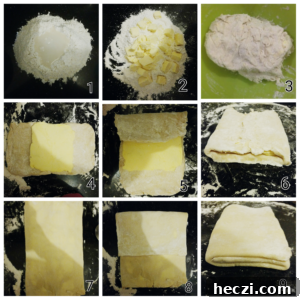
With this reliable puff pastry recipe, the possibilities are endless. You can use it for pithiviers, jam palmiers, savory puffs, tarts and many other pastries. If you prefer a quicker option, try a shorter “rough puff” method for good results with less waiting.
Update: A fellow baker tested this puff pastry and had great results with clear step-by-step photos and delicious vegetable puffs. If you enjoy seeing the process illustrated, look for bloggers who share detailed photo tutorials that can complement this recipe.