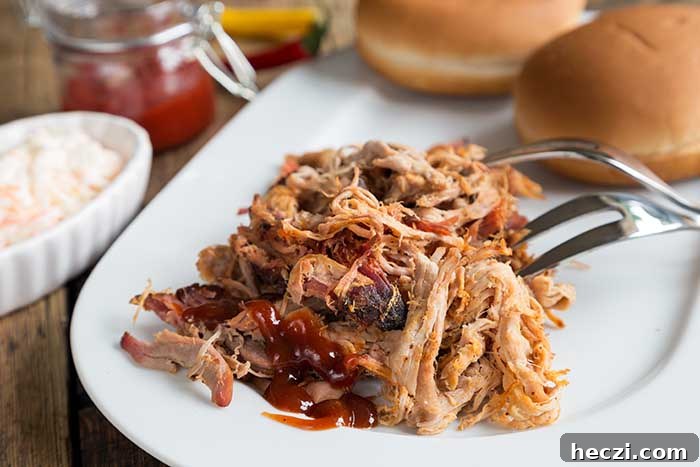
Say “pulled pork” to any barbecue lover and you’ll get an enthusiastic response. While it’s a joy to prepare, it’s also easy to make too much. Here’s how to plan portions to reduce waste while keeping guests satisfied.
- How Much Pulled Pork Per Person?
- Pulled Pork Calculator
- How to Store Pulled Pork Leftovers
Burgers and hot dogs are reliable, but pulled pork is a chance to showcase real BBQ skill. Done well, smoked pulled pork becomes a tender, melt-in-your-mouth centerpiece that disappears quickly at gatherings.
The trick most people struggle with is quantity: too little and guests go hungry; too much and you’re left with more leftovers than you want. The guidance below helps you balance appetite, event type, and waste reduction.
How Much Pulled Pork Per Person?
A good rule of thumb is to serve about one-third of a pound (0.33 lb) of cooked pulled pork per person. Remember that raw pork shoulder will typically lose about half its weight during cooking. For example, an 8 lb raw pork shoulder generally yields roughly 4 lb of cooked pulled pork, which is enough for about 12 people at 1/3 lb each.
Pulled Pork Calculator
Two simple rules make planning easy:
RULE #1: One pound of cooked pulled pork feeds about three people (roughly 1/3 lb per person).
RULE #2: Expect about a 50% yield from raw to cooked weight — one pound of raw pork produces roughly 0.5 lb of cooked pulled pork.
Calculation method: Multiply the number of guests by 0.33 lb to estimate cooked pork needed, then account for the 50% yield by doubling that figure to find the raw weight to start with.
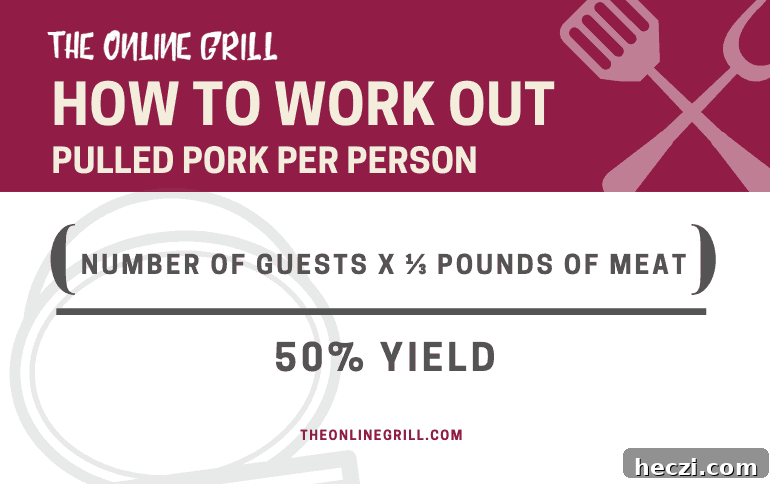
Example for 10 guests
10 guests × 0.33 lb = 3.3 lb cooked pork needed
3.3 lb ÷ 0.5 yield = 6.6 lb raw pork required (approximately)
That gives you a practical starting point, but adjust for the following factors:
Children: Kids usually eat less than adults. A practical approach is to count each child as 50–67% of an adult portion. For simplicity, you can use 0.25 lb of cooked pork per child when estimating.
Type of event: Sit-down dinners generally require more food per person than casual standing parties.
Time of day: Dinner portions tend to be larger than lunch portions.
Serving style: If pulled pork is the main item served on its own, plan for larger portions. If it’s offered in sandwiches or as part of a buffet with many other items, plan smaller portions. Typical sandwich servings use about 5 ounces (0.31 lb) of pork per sandwich—adjust calculations to match whether you’re serving buns or plated meals.

Overall menu: If you’re offering several mains—burgers, hot dogs, sides—reduce the amount of pulled pork accordingly. As a rule, cut the calculated pulled pork total by about one-third if it’s one of multiple mains.
How to Store Pulled Pork Leftovers
If your calculations still leave you with leftovers, that’s not a bad problem to have. Stored properly, pulled pork keeps well and reheat nicely.
Divide the pork into airtight containers, and include any sauce or cooking juices to help preserve flavor and moisture. Refrigerate if you plan to eat the pork within two days. For longer storage, freeze in appropriately portioned containers or vacuum-sealed bags—pulled pork keeps well in the freezer for up to about four months.
When reheating from frozen, take care to preserve moisture: thaw overnight in the fridge when possible, reheat gently with added sauce or broth, and avoid high, direct heat that can dry the meat. Proper reheating helps retain texture and flavor.
With a little planning and the simple rules above, you can prepare the right amount of pulled pork for your gathering, minimize waste, and ensure everyone leaves happy and satisfied.