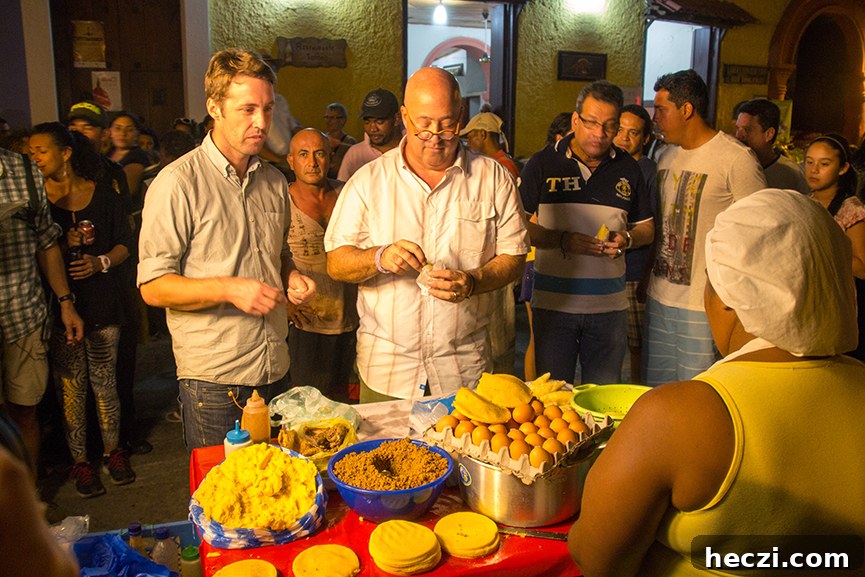
Street Food Perfection
Situated on Colombia’s Caribbean coast, Cartagena blends African, Spanish, European and indigenous influences into a vibrant culinary scene. The city’s walled old town is a living historical landmark, filled with elegant plazas and impressive 16th-century architecture. Although many restaurants cater to the steady stream of visitors, genuine Colombian street flavors still thrive alongside the tourist spots.
For nearly three decades, La Mona’s arepa stand has been serving traditional fried comfort food to old town locals. Her specialty is one of Cartagena’s most beloved street treats: the twice-fried arepa filled with a soft-cooked egg. Known locally as the arepa de huevo, this preparation begins with a pocket of cornmeal dough that holds meat, cheese and a whole, uncooked egg. As the arepa fries, the egg cooks inside, swelling to surround the meat and cheese in a rich, gooey embrace. The contrast between the crisp, golden exterior and the creamy interior creates a truly satisfying texture and flavor.
The arepa de huevo exemplifies Cartagena’s street-food culture: simple ingredients transformed by technique and time-tested tradition. Vendors like La Mona keep these flavors alive by maintaining careful frying routines and using fresh ingredients, ensuring each arepa delivers the comforting, savory notes that locals cherish. Whether enjoyed quickly at a bustling stall or taken to a nearby plaza to savor slowly, the arepa de huevo remains a must-try for anyone exploring the city’s culinary heritage.
Beyond the arepa de huevo, Cartagena’s food scene offers a range of dishes reflecting its multicultural roots—seafood stews, coconut rice, fried snacks and sweet treats—each telling a part of the city’s story. Sampling street food here is as much about the people and place as it is about taste: stalls, vendors and long-running family stands contribute to a living food tradition that helps define Cartagena’s identity.
Visiting an old-town arepa stand provides a chance to witness this tradition firsthand. The preparation is straightforward but precise: pressing the corn dough, enclosing the fillings, and frying twice to achieve the ideal balance of crunch and softness. The result is a portable, deeply satisfying dish that highlights how everyday street food can become something memorable when crafted with care.
Next time you find yourself wandering Cartagena’s historic streets, seek out a long-standing arepa vendor. Order an arepa de huevo, watch the cooking process and taste a piece of local history—one fried, golden bite at a time.