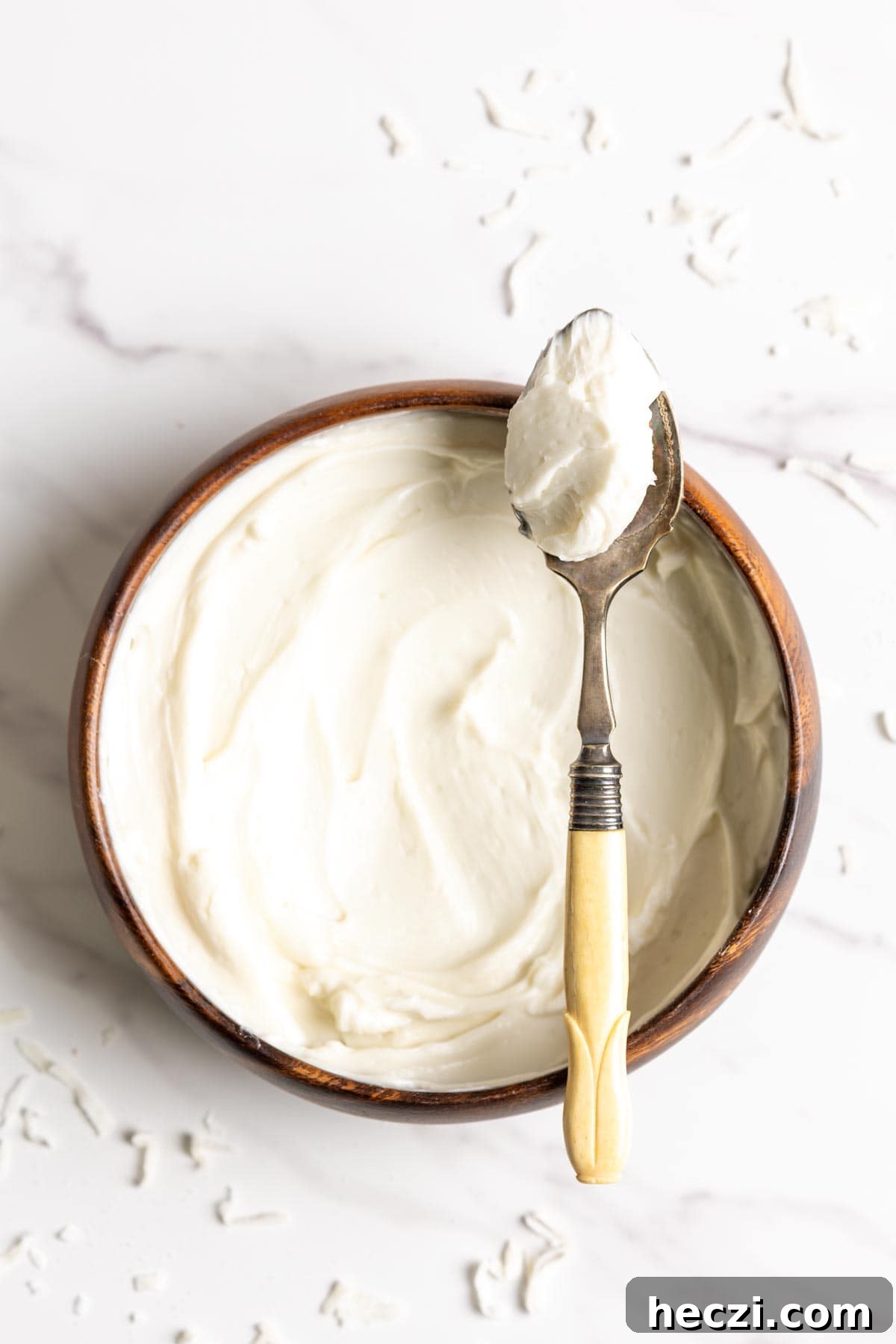
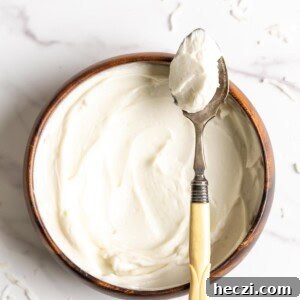
Add a sweet, delicious coconut flavor to cakes, cupcakes, and cookies with this incredibly easy Coconut Frosting. It’s creamy, silky, and not overly sweet.
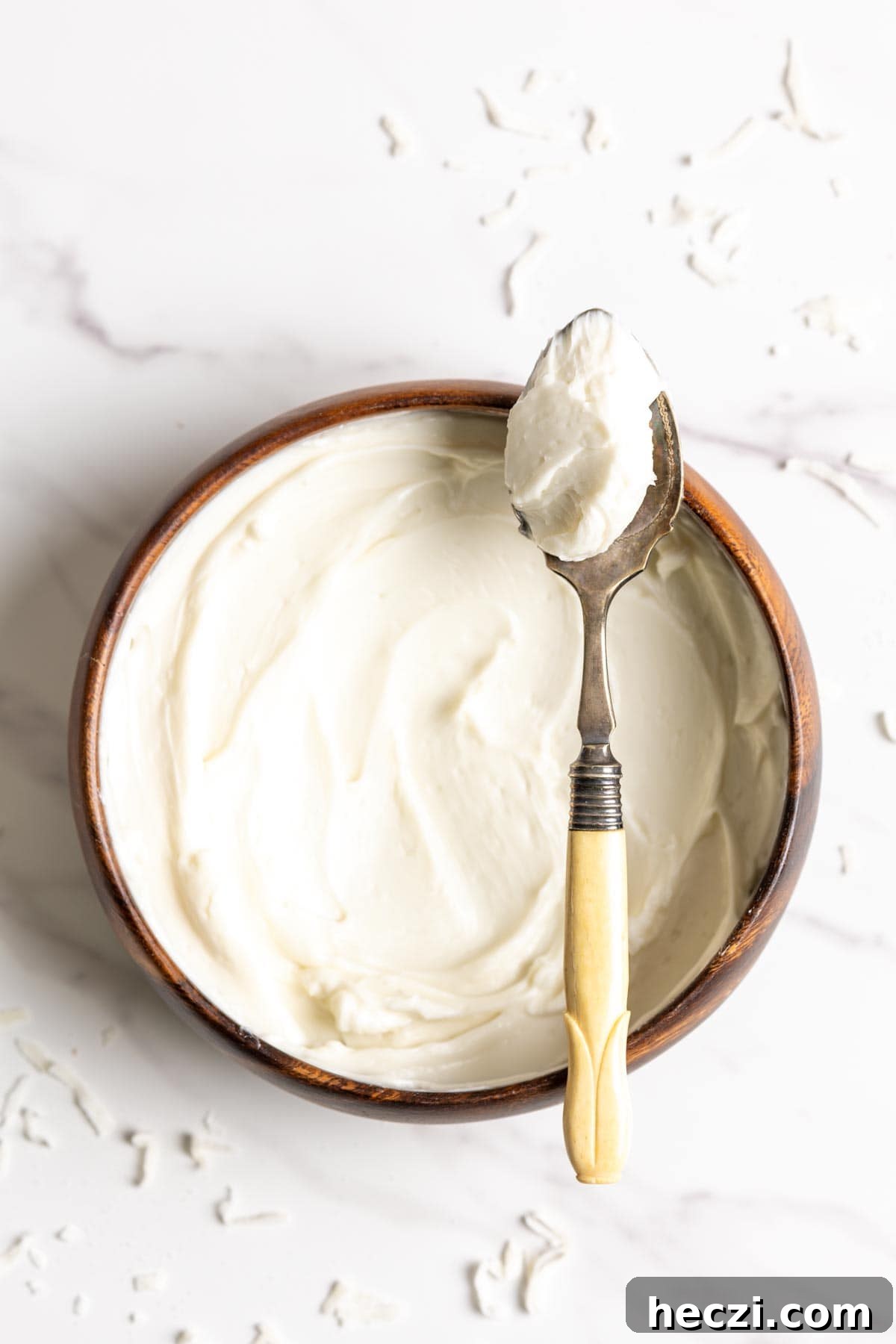
This coconut frosting is essentially an American buttercream with a tropical twist. Like many of my frosting recipes, it uses substantially less sugar than typical recipes you’ll find online, so it won’t overwhelm the palate. If you enjoy desserts that are flavorful but not cloyingly sweet, you’ll love this one.
I paired it with Pina Colada cupcakes and brought them to work—my coworkers couldn’t stop eating them. It’s also a perfect match for macadamia coconut chocolate cupcakes or any simple vanilla or coconut cake.
Table of Contents
- Helpful tools
- Ingredients and substitutions
- How to make coconut frosting
- More baker’s tips
- Storage
- FAQs
- Silky 6-Ingredient Coconut Frosting Recipe
Helpful tools
You’ll need a stand mixer or an electric hand mixer to make this coconut frosting. Mixing by hand is possible but will be much harder and take longer.
Ingredients and substitutions
The full ingredient list and amounts appear in the recipe card at the end of this post. Notes and substitution tips:
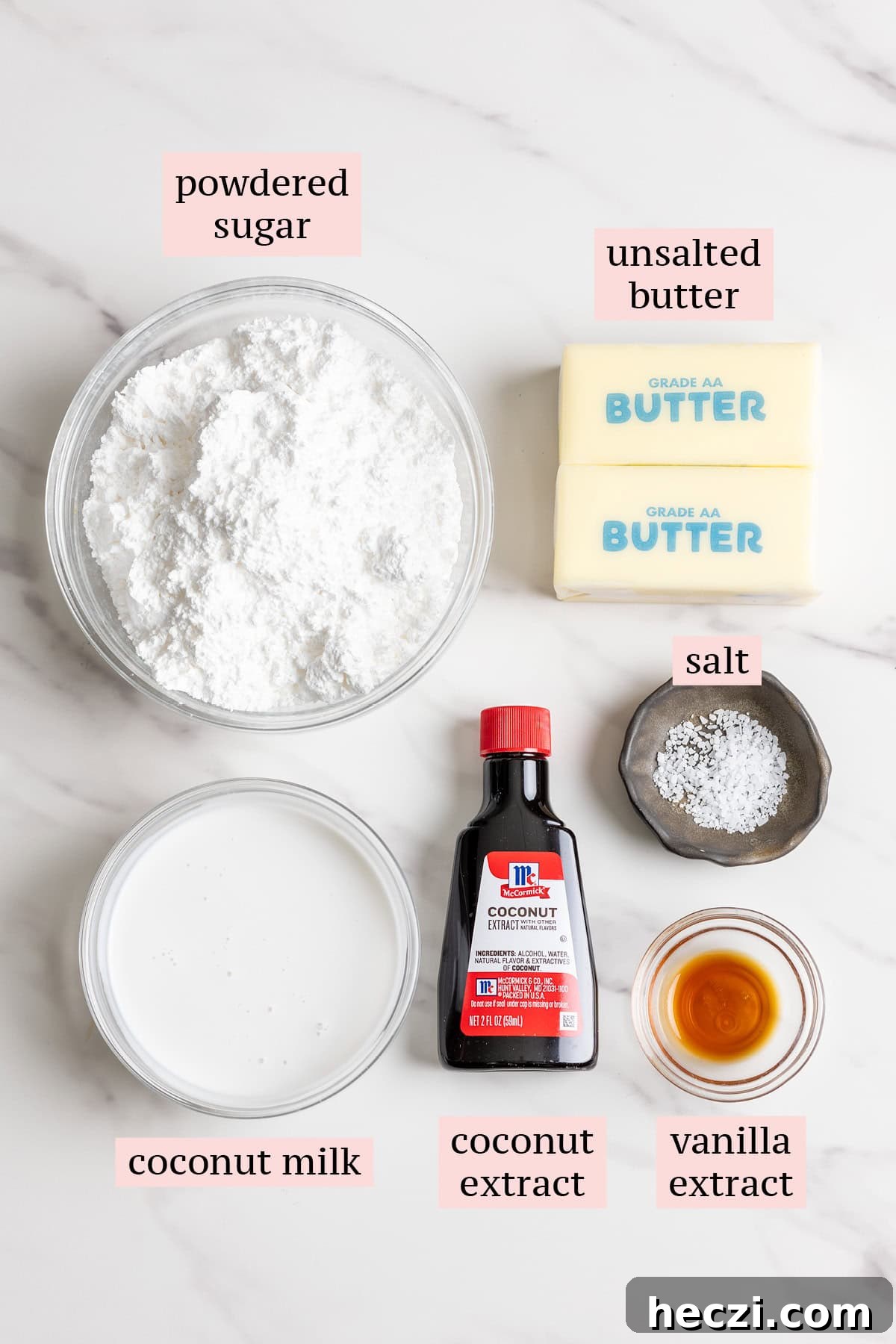
- Unsalted butter – Use unsalted butter. Salted butter will make the frosting too salty unless you adjust sugar and salt precisely.
- Coconut milk or cream – Use canned coconut milk or coconut cream for the best flavor and texture. You can substitute heavy cream only if you add coconut extract to keep the coconut character.
- Powdered sugar – For a smooth, fluffy frosting powdered sugar is essential. Grinding granulated sugar will not yield the same fine texture.
- Salt – A pinch or two enhances sweetness and balances flavor.
- Vanilla extract – Adds depth; I use ½ teaspoon.
- Coconut extract – ½ teaspoon boosts coconut aroma and flavor. If you don’t have it, a small splash of Malibu rum can work as a substitute. If you omit both, the canned coconut milk still provides a mild coconut note.
How to make coconut frosting
Below are the basic steps. You can scroll to the recipe card for the full printable instructions.
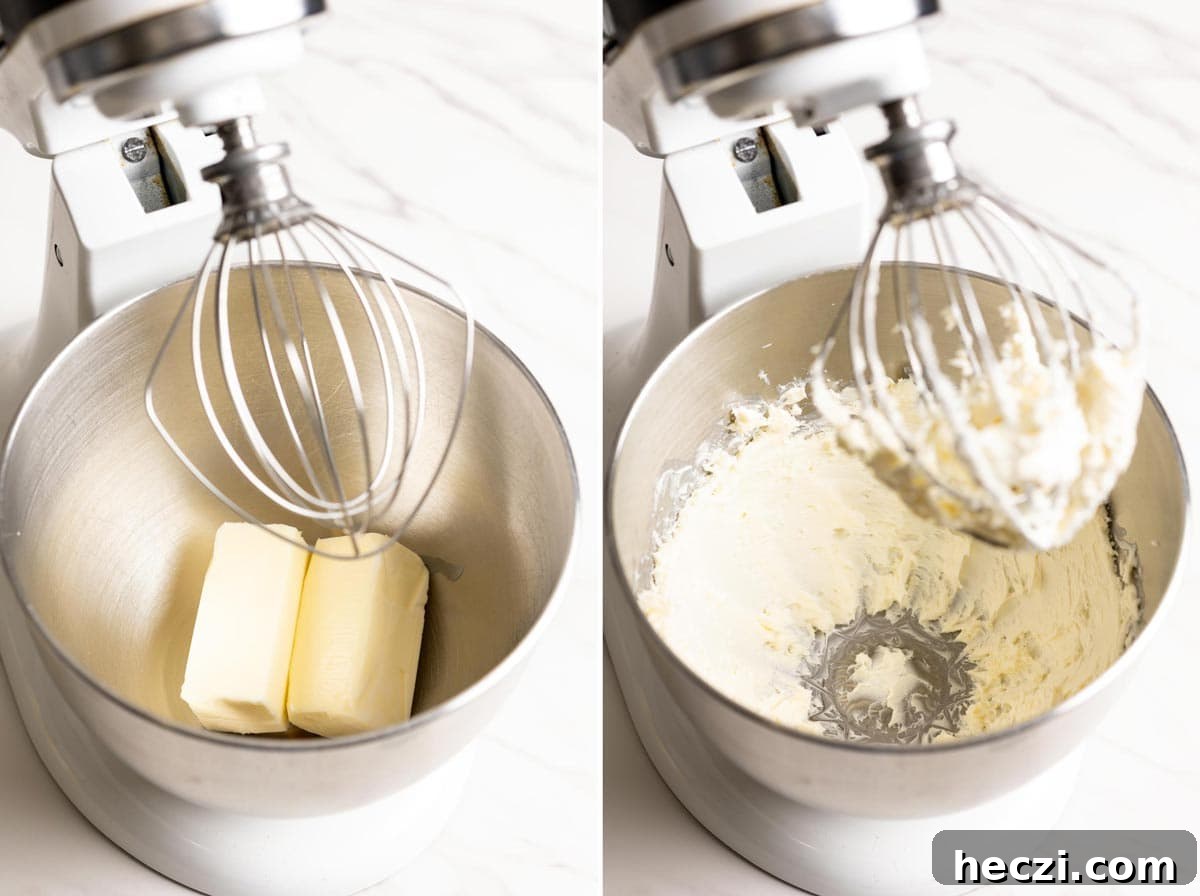
Cream the softened butter in your stand mixer or with an electric hand mixer until smooth and light in color.
Add the powdered sugar and salt, stir briefly to combine, then increase the mixer speed to medium-high and beat until fully incorporated and creamy.
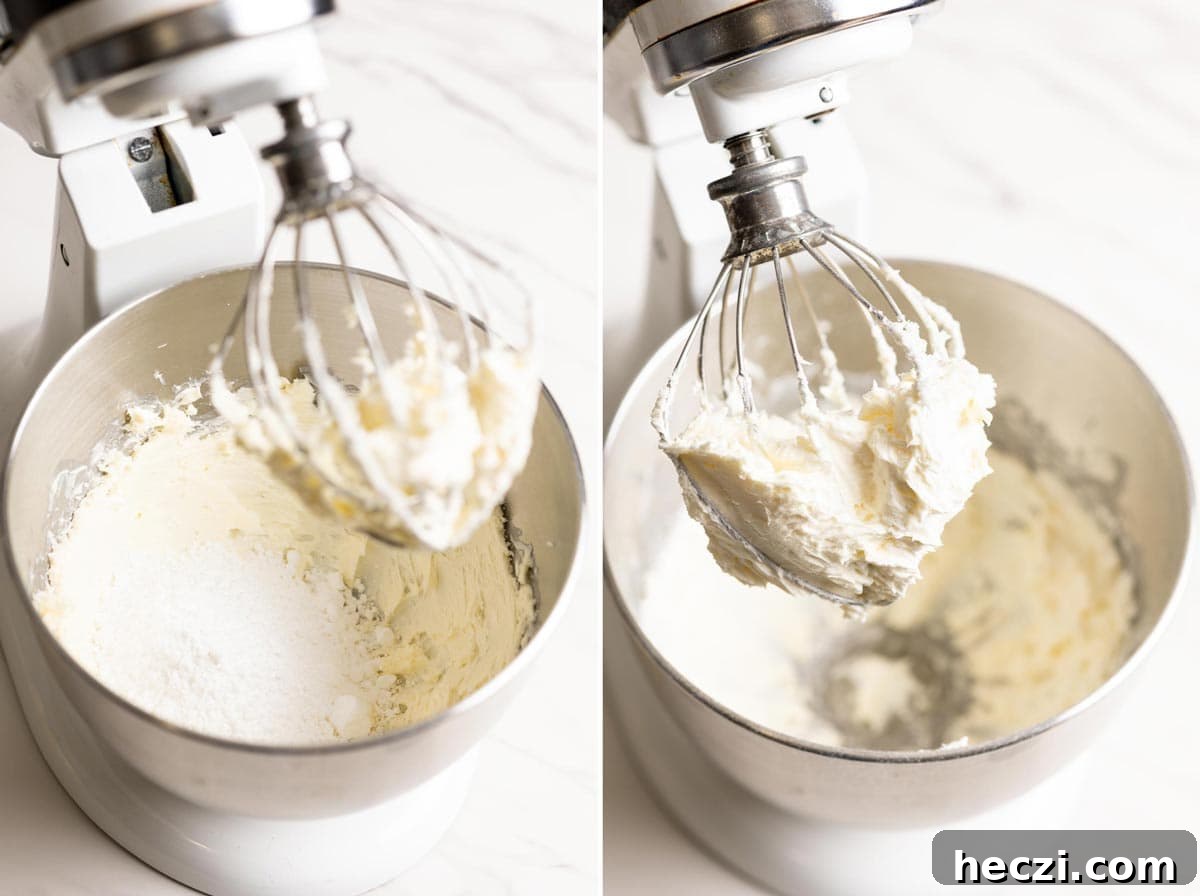
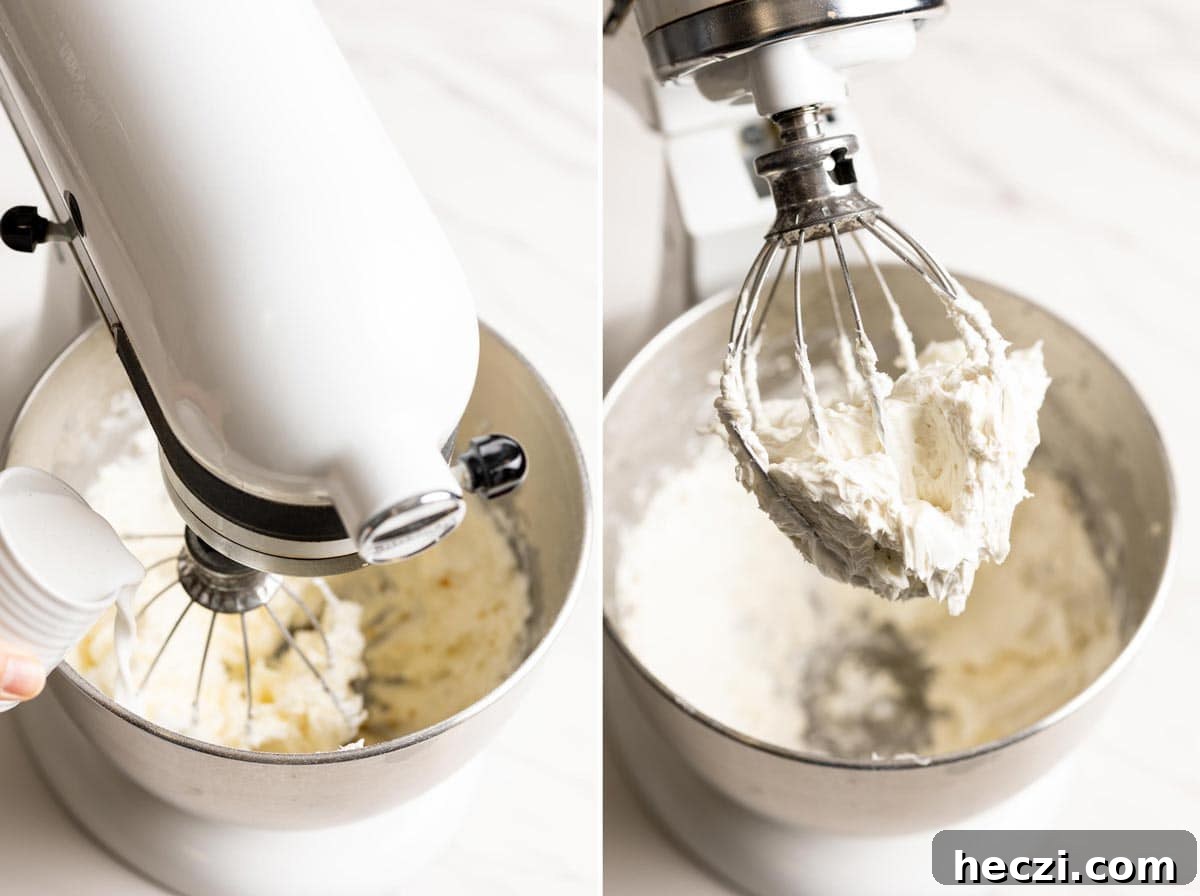
Add vanilla and coconut extracts, then stream in the canned coconut milk a little at a time while mixing. Continue beating until the frosting is light and fluffy—about 5–10 minutes.
More baker’s tips
- To intensify coconut flavor, fold in sweetened coconut flakes if you don’t plan to pipe the frosting.
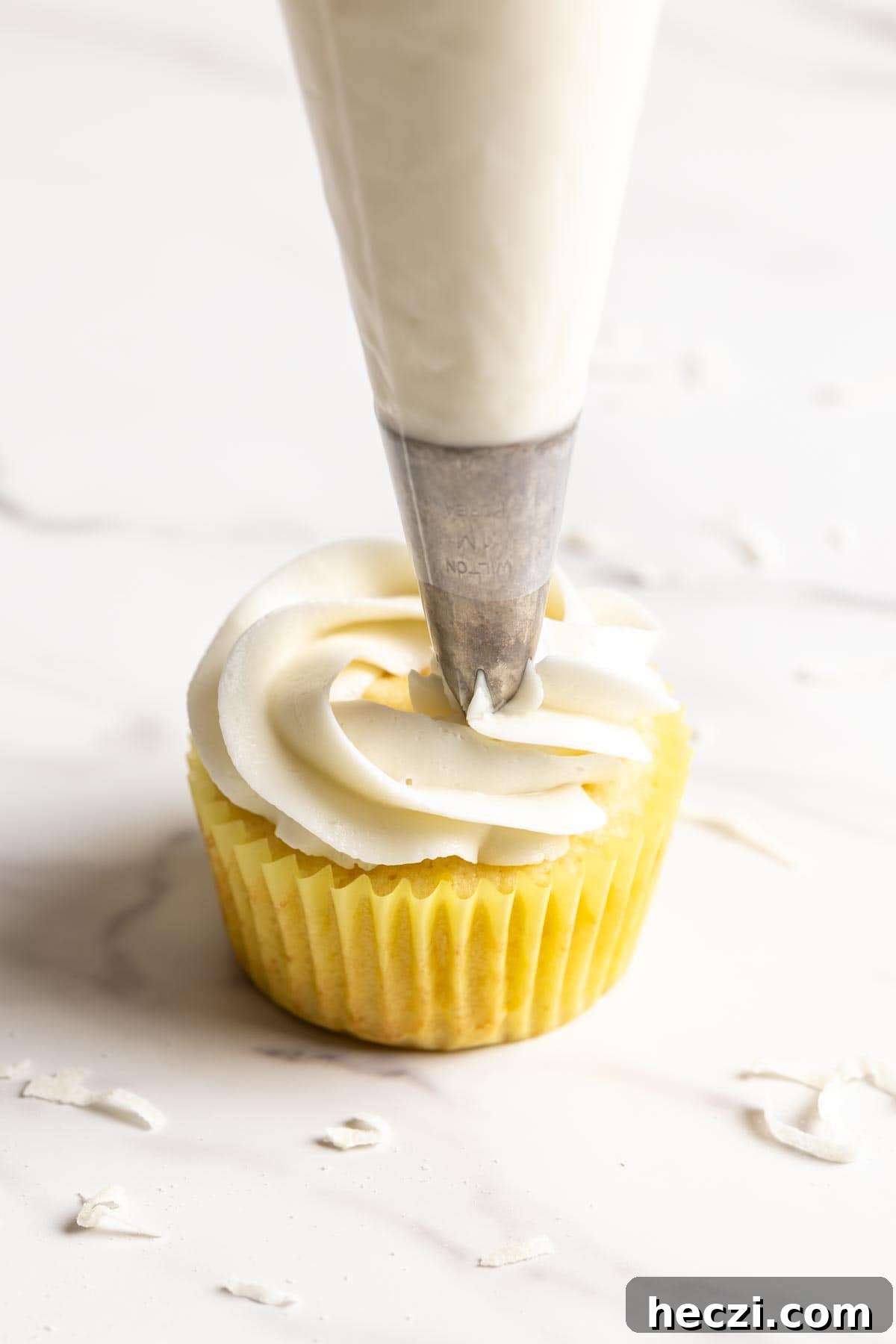
- If you plan to pipe, either use a piping tip with a large opening or sprinkle coconut flakes on top after piping to avoid clogging the tip.
- Toast coconut flakes in a skillet over medium heat until golden to add a nutty note.
- This recipe yields just over 2 cups of frosting—enough for 12–18 cupcakes depending on how generously you frost them.
Storage
Refrigerate the frosting in an airtight container for up to one week. Bring it to room temperature for 30–60 minutes and re-whip until fluffy before using. You can also freeze it in an airtight container for up to three months and re-whip after thawing.
FAQs
Yes. The frosting is slightly thinner than many classic buttercreams but remains pipeable, especially after chilling briefly.
If you add too much coconut milk at once the mixture can separate. This can look curdled, but continued beating often brings the frosting back together. When testing the recipe, a separated-looking mixture came right after 10–15 minutes of mixing.
This recipe uses less sugar than many buttercreams, so it will be thinner. To thicken it, reduce the coconut milk or add more powdered sugar, keeping in mind both changes will affect taste and sweetness.
Hungry for more?
Join the free newsletter for weekly recipe ideas, inspiration, and occasional subscriber-only giveaways.
Silky 6-Ingredient Coconut Frosting
Equipment
- Stand Mixer
Ingredients
- 8 ounce unsalted butter, room temperature (227 g)
- 1 ½ cup powdered sugar (150 g)
- 2 pinches of salt (kosher or others)
- ½ cup coconut milk or coconut cream, canned (118 g)
- ½ teaspoon pure vanilla extract
- ½ teaspoon coconut extract
Instructions
- Cream the softened butter in your stand mixer bowl on medium to medium-high speed until light and creamy.
- Add powdered sugar and salt. Stir to combine, then gradually increase the mixer speed to medium-high and beat until fully incorporated and creamy.
- Add vanilla and coconut extracts. Stream in the coconut milk while beating on medium-low to incorporate, then increase to medium-high and beat until light and fluffy, about 5–10 more minutes.
Notes
- This recipe makes just over 2 cups of frosting—enough for 12–18 cupcakes.
- If you don’t have coconut extract, a splash of Malibu rum is a suitable substitute.
- To increase coconut texture and flavor, fold in sweetened coconut flakes or sprinkle them on top after piping. Toast flakes for a nuttier flavor.
Nutrition
Nutrition information is automatically calculated and should be used as an approximation.
 Like this recipe? Rate & comment below!
This post may contain affiliate links. For more details on how we utilize affiliates, ads, and sponsored content, see our full disclosure policy. Thank you for your support, which helps us continue sharing delicious recipes at no extra cost to you.