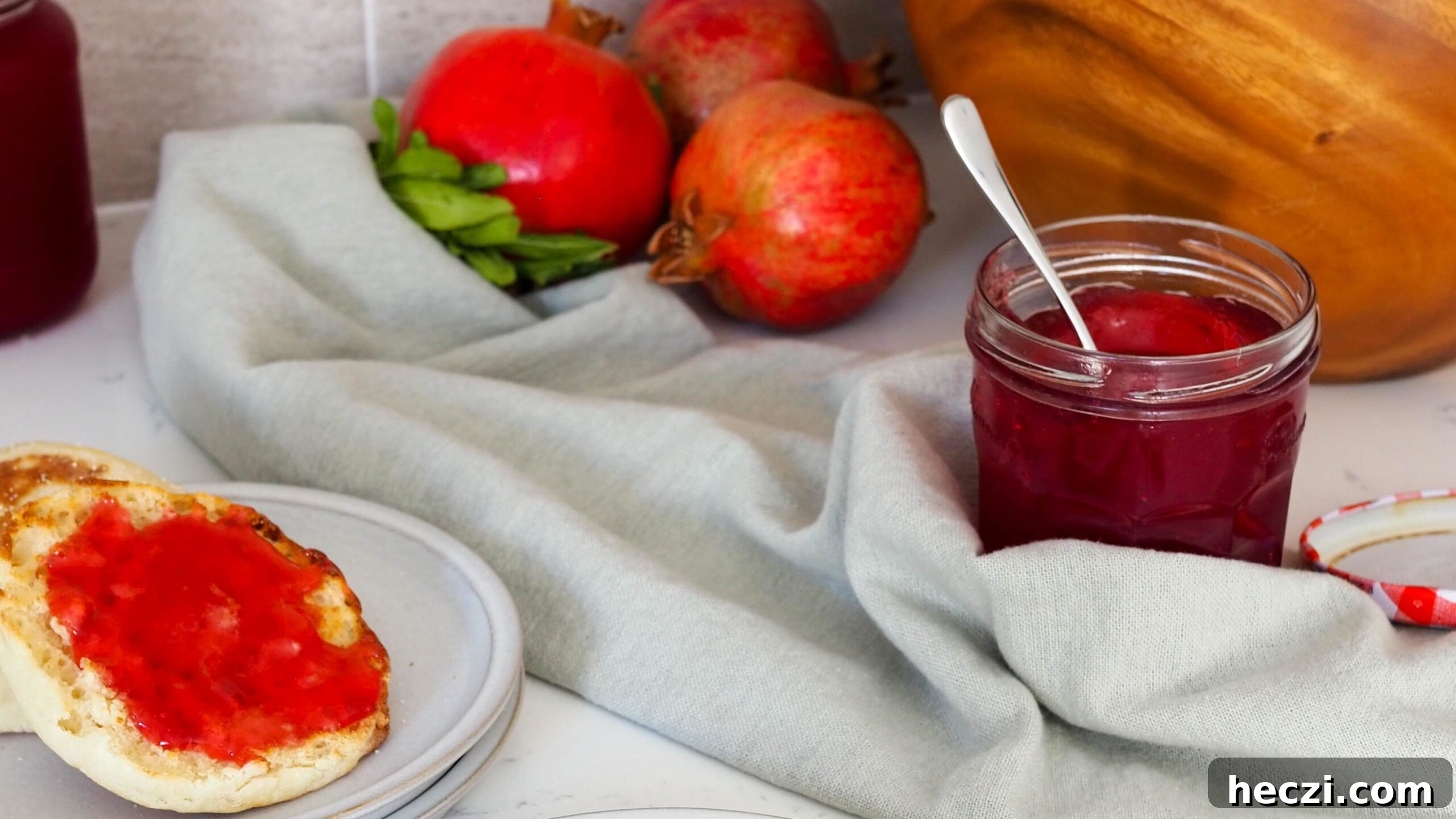
This small-batch pomegranate jelly is a simple way to enjoy pomegranate flavor year-round. I usually make it from fresh pomegranate juice, but it works equally well with bottled juice. Tart and sweet, this jelly complements warm spices in baked goods and makes a lovely filling for layer cakes and Linzer cookies.
The recipe is straightforward and scales easily. If you only have a couple of pomegranates, make one batch; if you have more fruit, double or triple the recipe. If you prefer frozen treats, you can also use pomegranate juice to make sorbet.
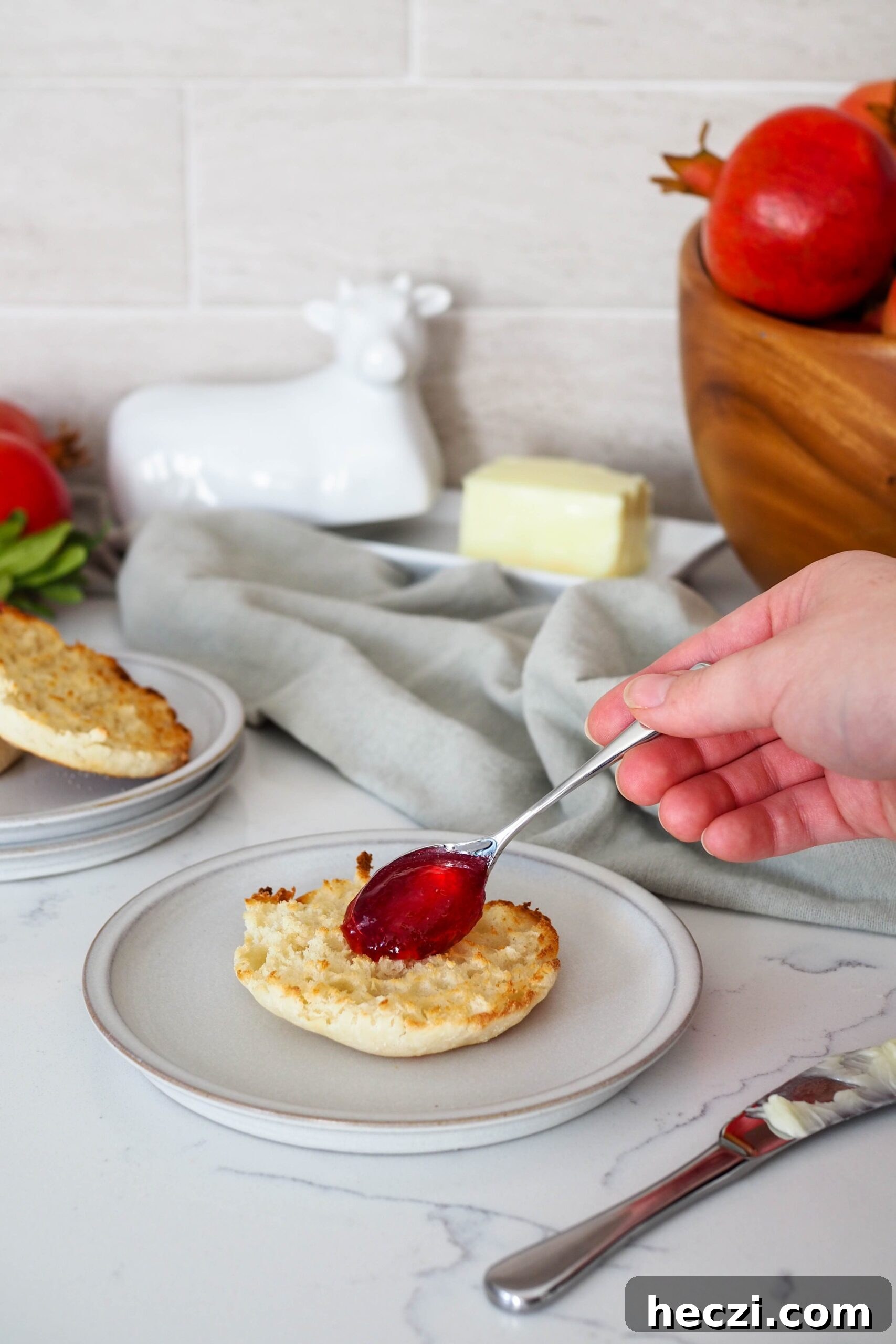
“This jam recipe is THE best. Quickly became a favorite in my household. It’s perfect in every way, consistency, flavor, all of the above! Thank you for this recipe!” -Lyric
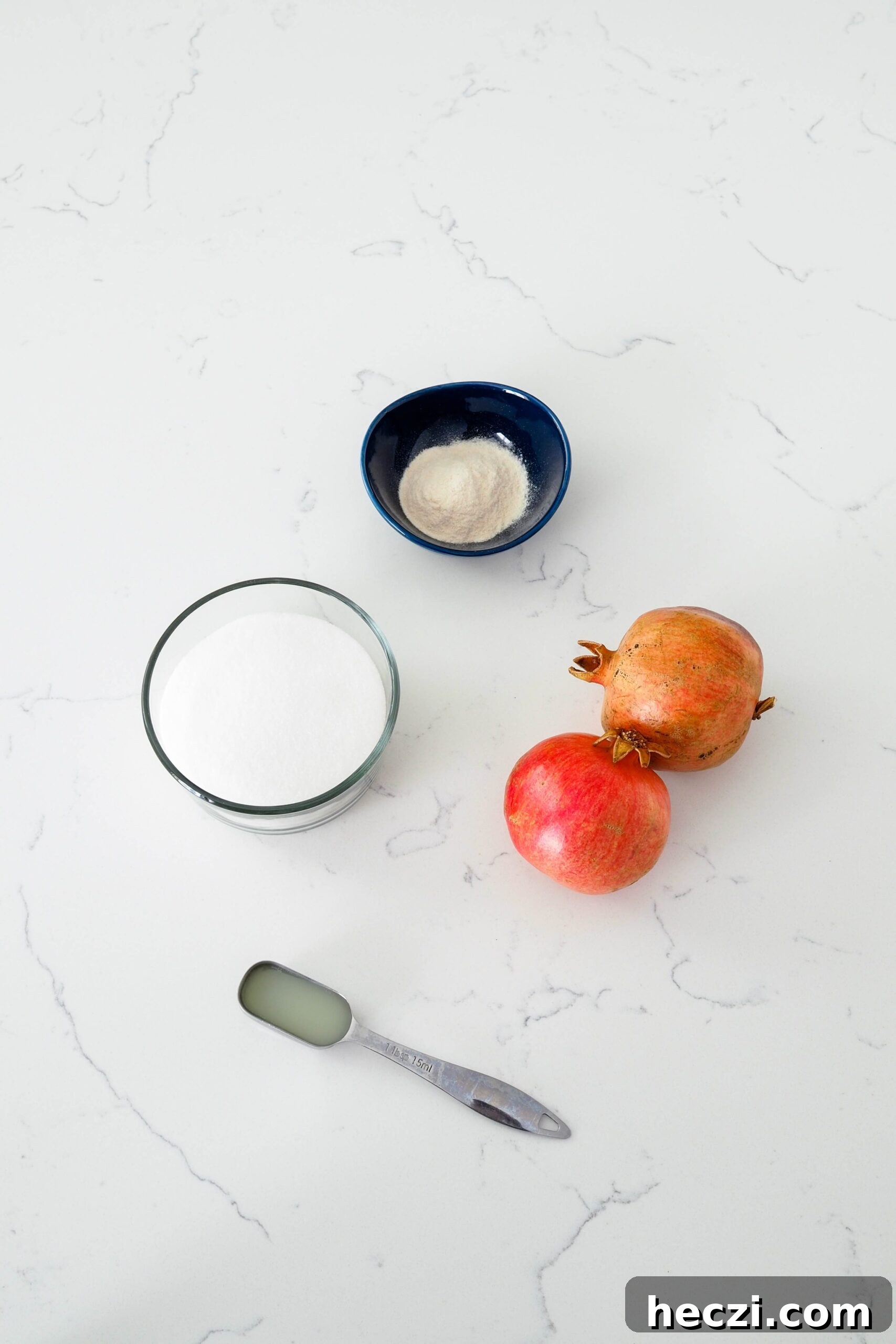
Ingredients for Pomegranate Jelly
This recipe uses a few basic ingredients. If you don’t usually make jams, you may need to buy pectin.
- Pomegranate juice – the main ingredient. Medium pomegranates yield roughly ½ cup of juice each, so about two pomegranates make a cup of juice. Bottled pomegranate juice works fine and minimizes cleanup.
- Pectin – needed to thicken the jelly quickly. Pectin is a plant-derived carbohydrate that helps the jelly set and is suitable for vegetarian and vegan diets.
- Lemon juice – provides the acidity pectin needs to gel properly. Use fresh or bottled lemon juice.
- Granulated sugar – adds sweetness and helps the jelly finish with the right texture and shelf life.
Can I Make Pomegranate Jelly from Bottled Juice?
Yes. If fresh pomegranates are unavailable or you want less prep, bottled pomegranate juice is an easy substitute and yields excellent results.
Can I Use Less Sugar?
Not recommended. Reducing the sugar significantly will likely result in a runny jelly. Jam-making depends on a balance of ingredients for proper texture; changing the sugar by more than about ¼ cup can affect the set.
Quick Tips for Prepping the Pomegranate
The trickiest part is extracting the juice without splattering your kitchen. There are many approaches; find the method that suits you. Below is how I do it methodically to minimize mess.
How to Open a Pomegranate
Be methodical. With a careful approach, you can open and deseed a pomegranate without a huge cleanup.
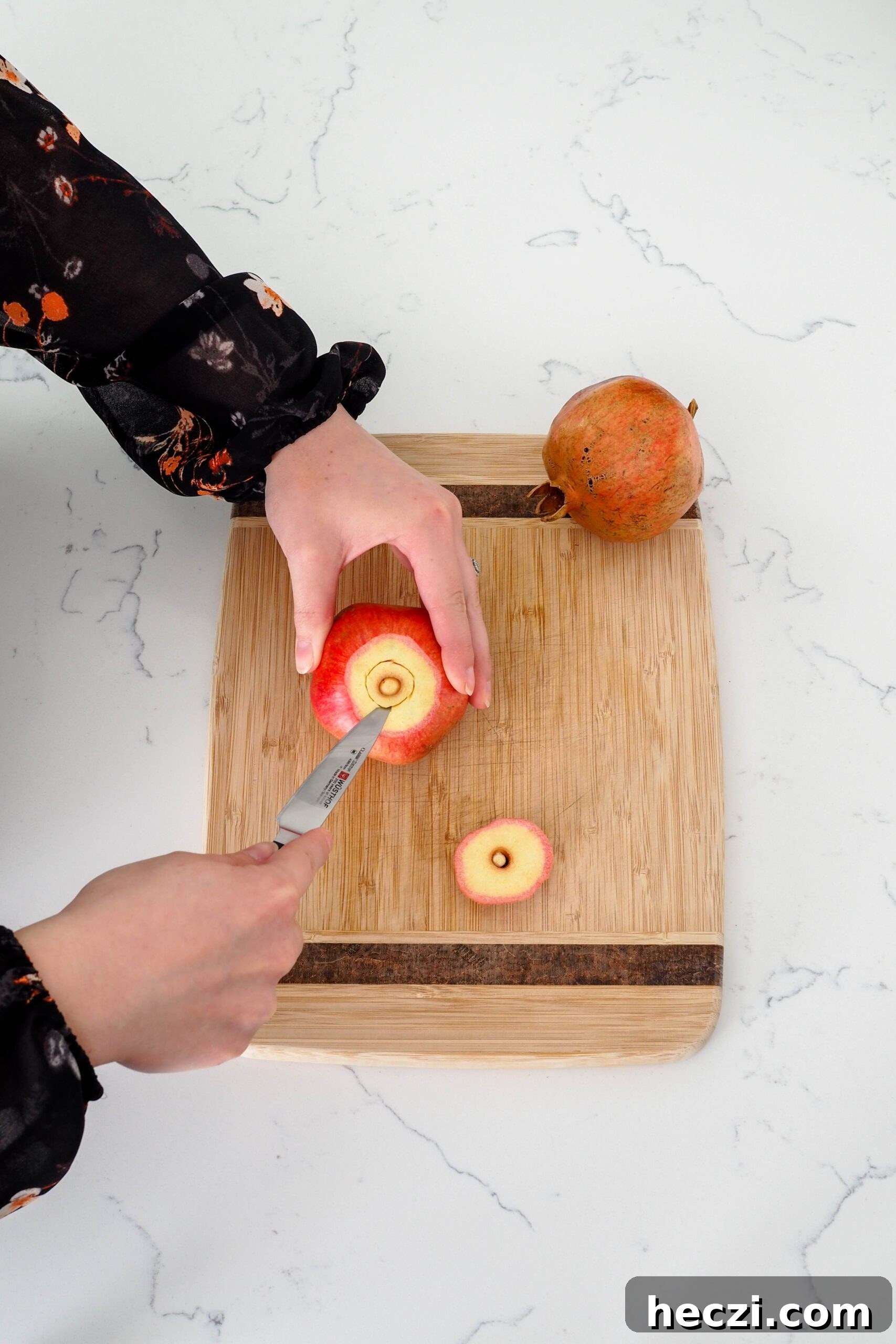
Step 1: Cut off the crown
Use a paring knife to cut off the crown of the pomegranate.
Step 2: Remove the membrane beneath the crown
Cut out the thick circle of membrane beneath the crown, usually ¼” to ½”. Insert the knife at a slight angle and rotate the fruit to cut the membrane; then pop the circle out.
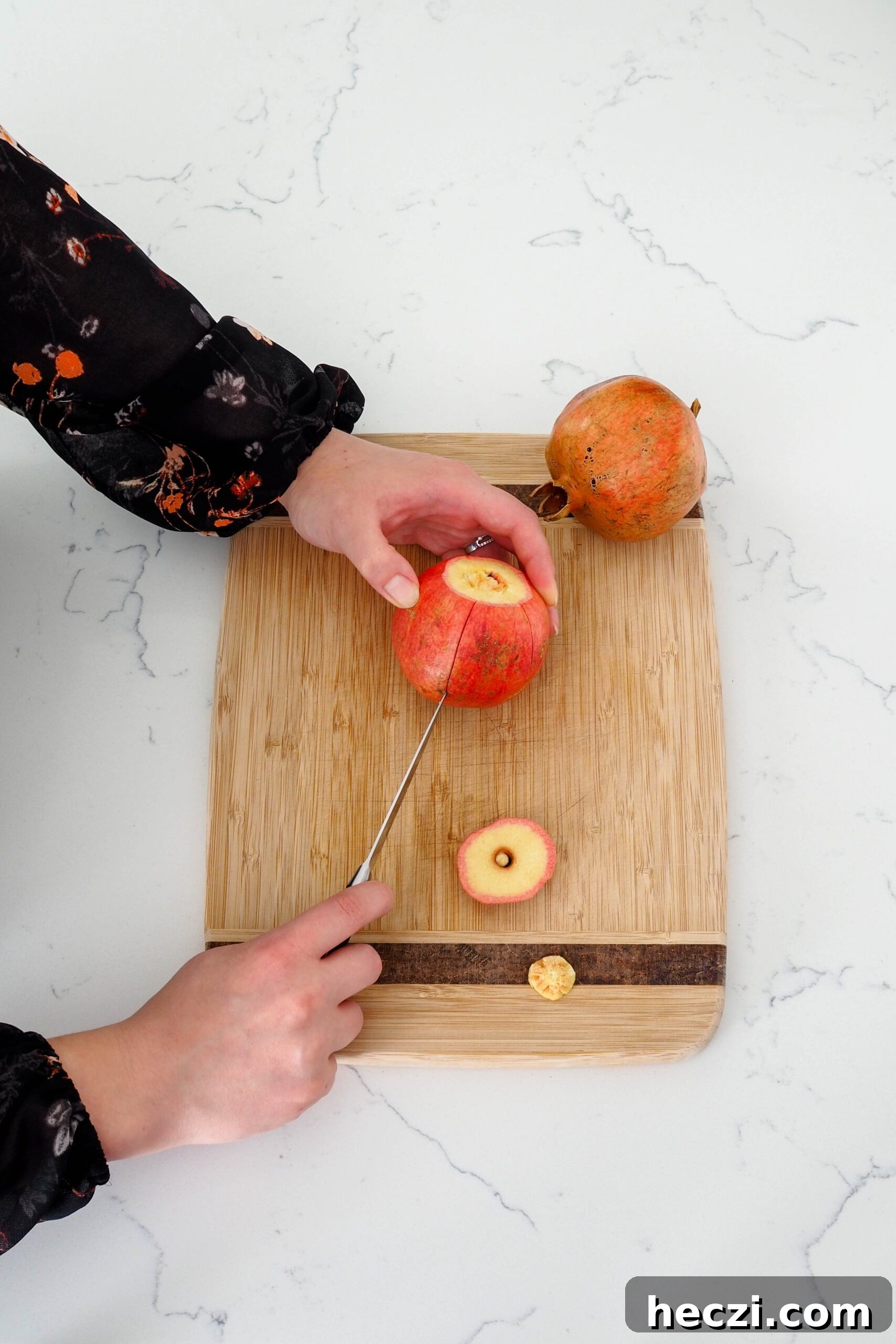
Step 3: Score the Edges
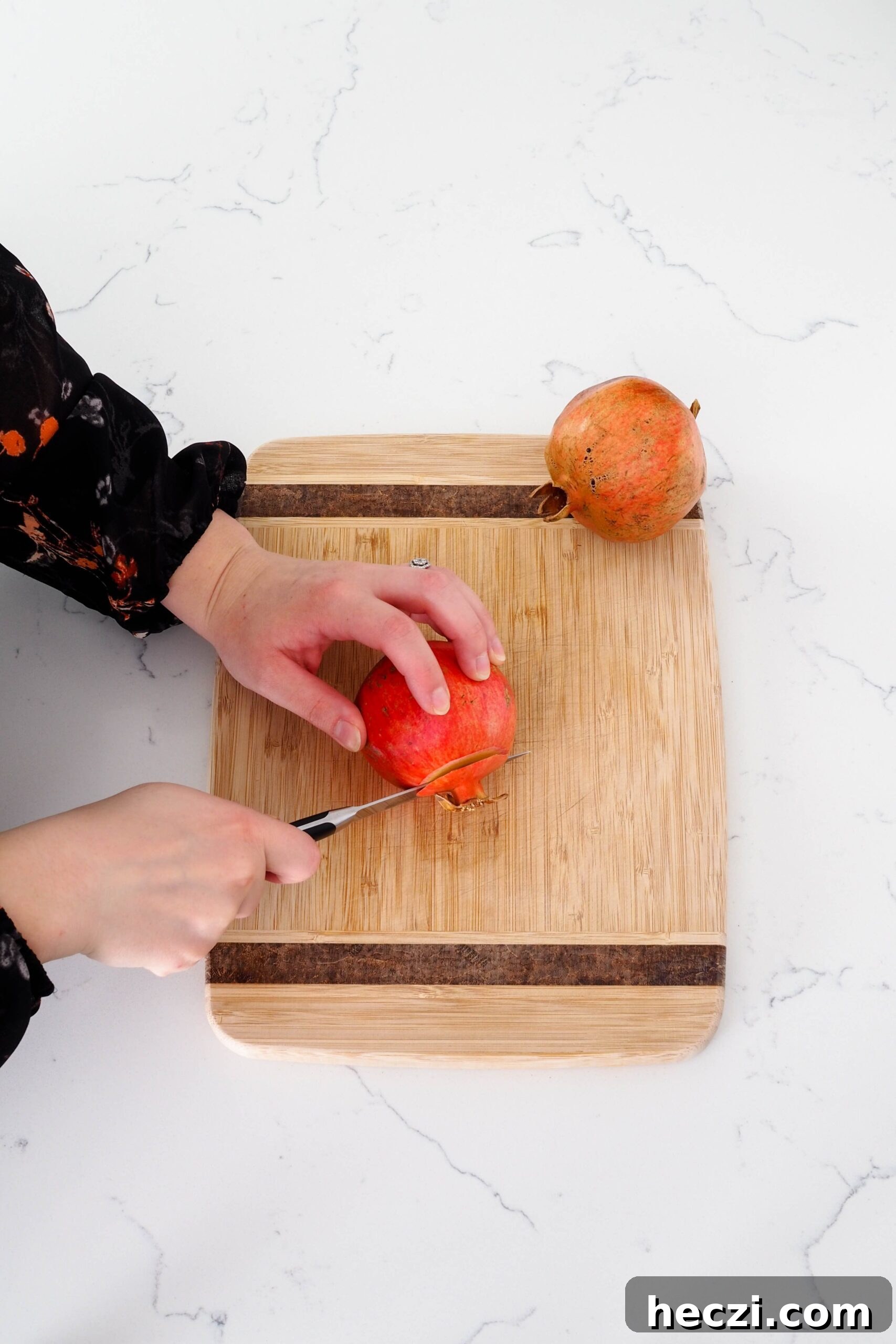
Lightly score the rind five times from top to bottom, starting where you removed the crown. Score only the skin; if juice begins to run, score more shallowly.
Step 4: Pull the Pomegranate Apart
With the membrane removed and edges scored, the pomegranate should separate into sections easily. Hold the fruit and gently pull sections apart using your thumbs to disconnect the inner membranes.
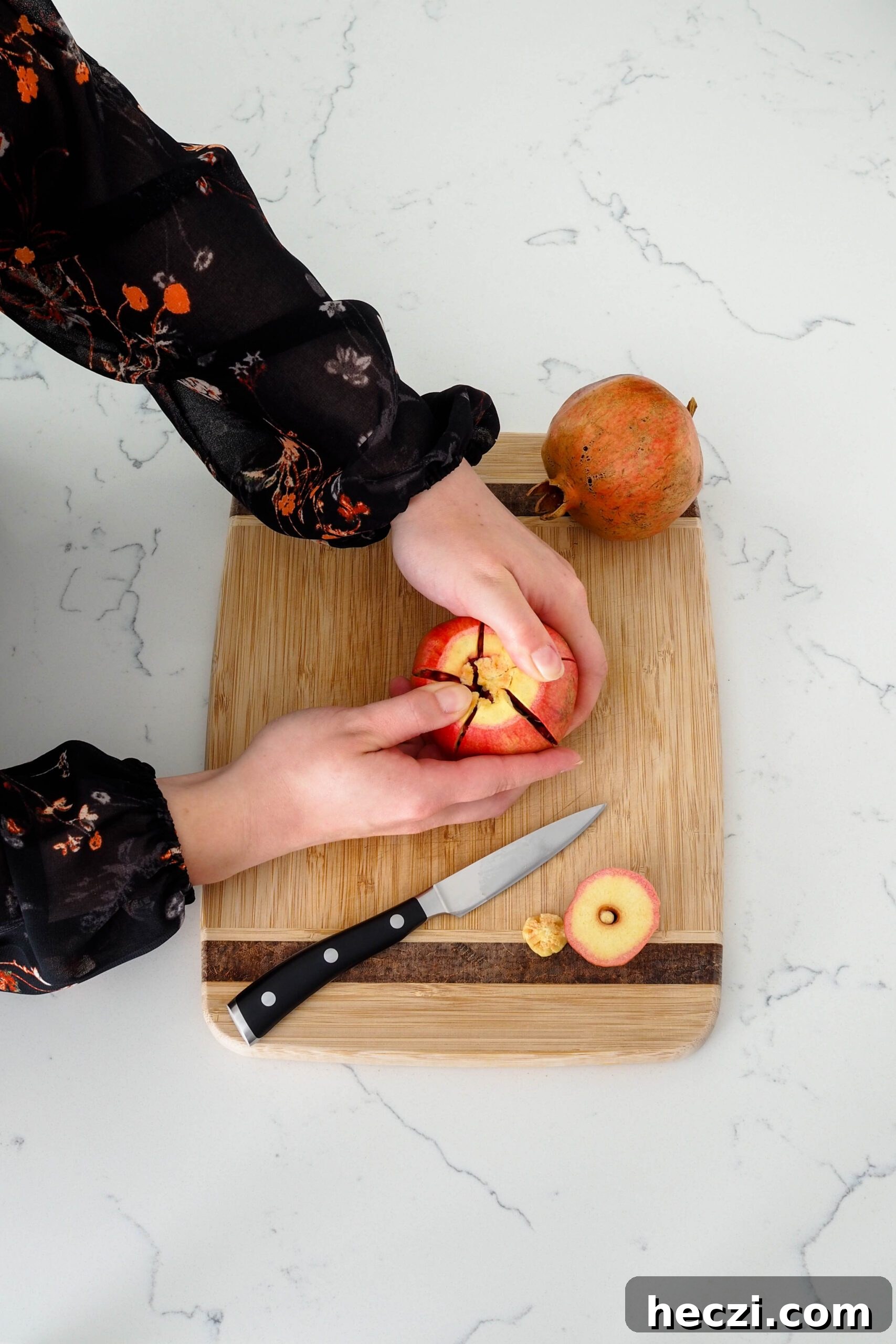
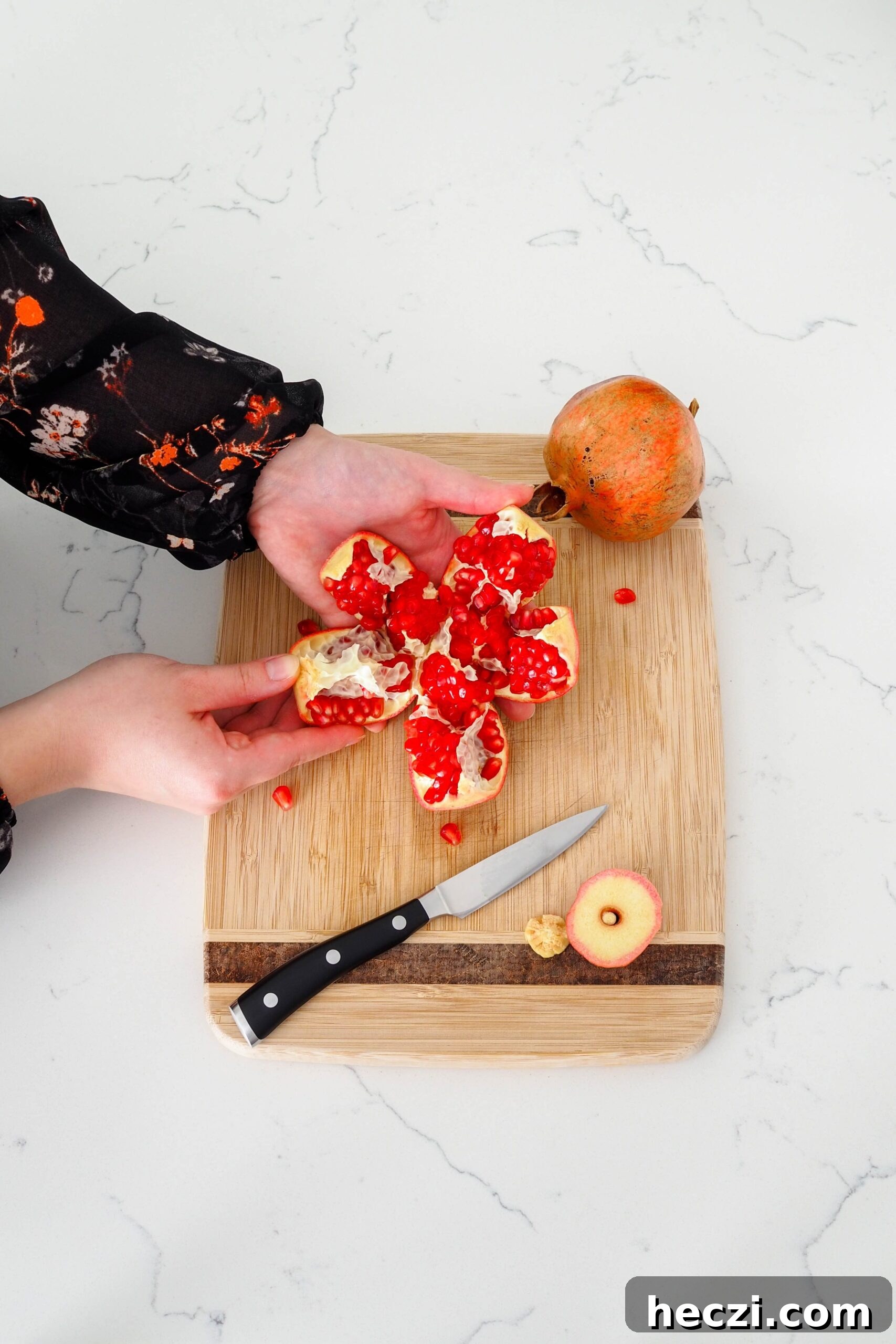
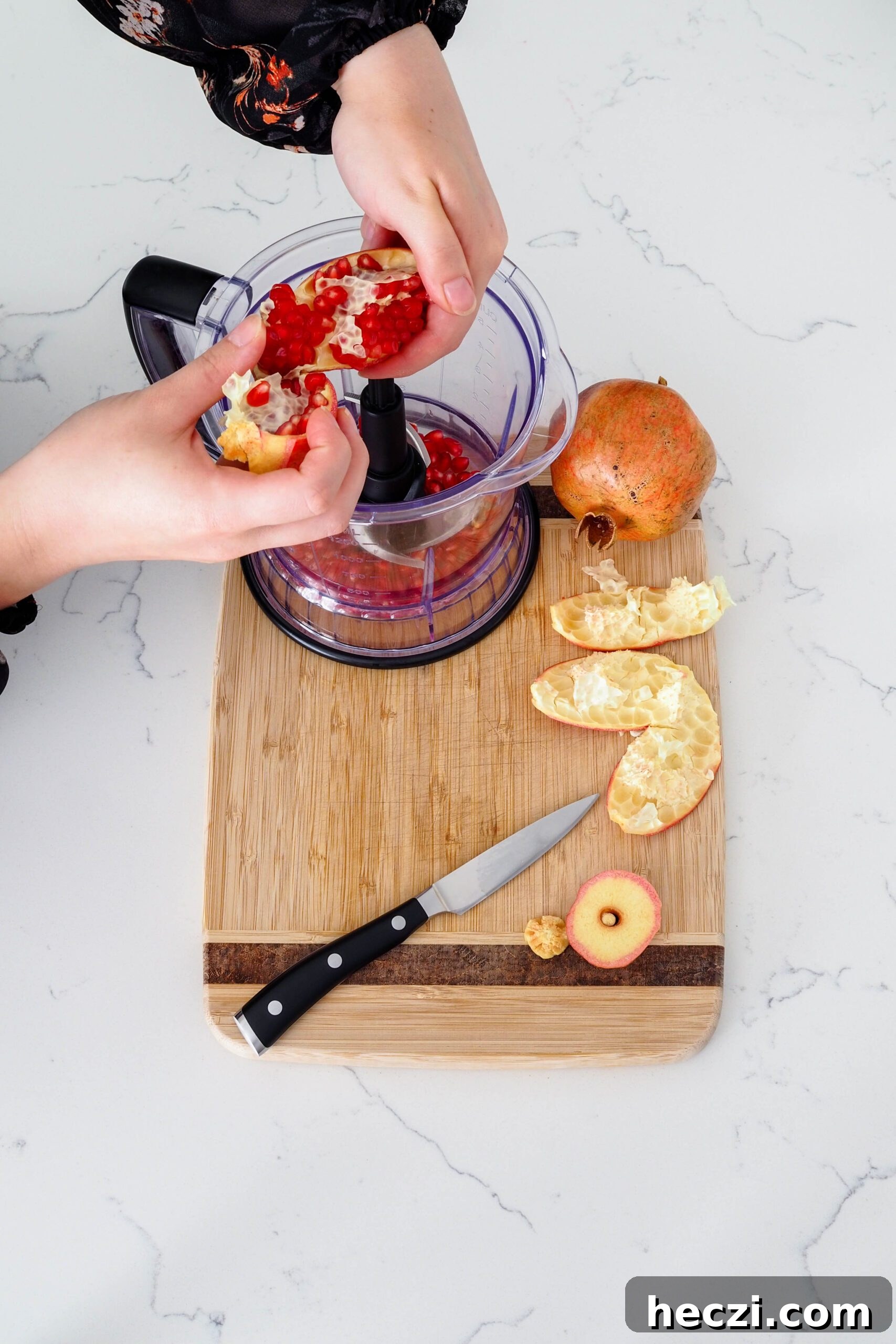
Step 5: Separate the Arils from the Membrane
Work over a bowl and use the pads of your fingers to gently brush the arils away from the membrane. Remove any white membrane pieces that fall into the bowl.
How to Juice a Pomegranate
I find blending or processing the arils for a few seconds the easiest way to extract juice. It keeps the counters clean and only produces a few dishes to wash.
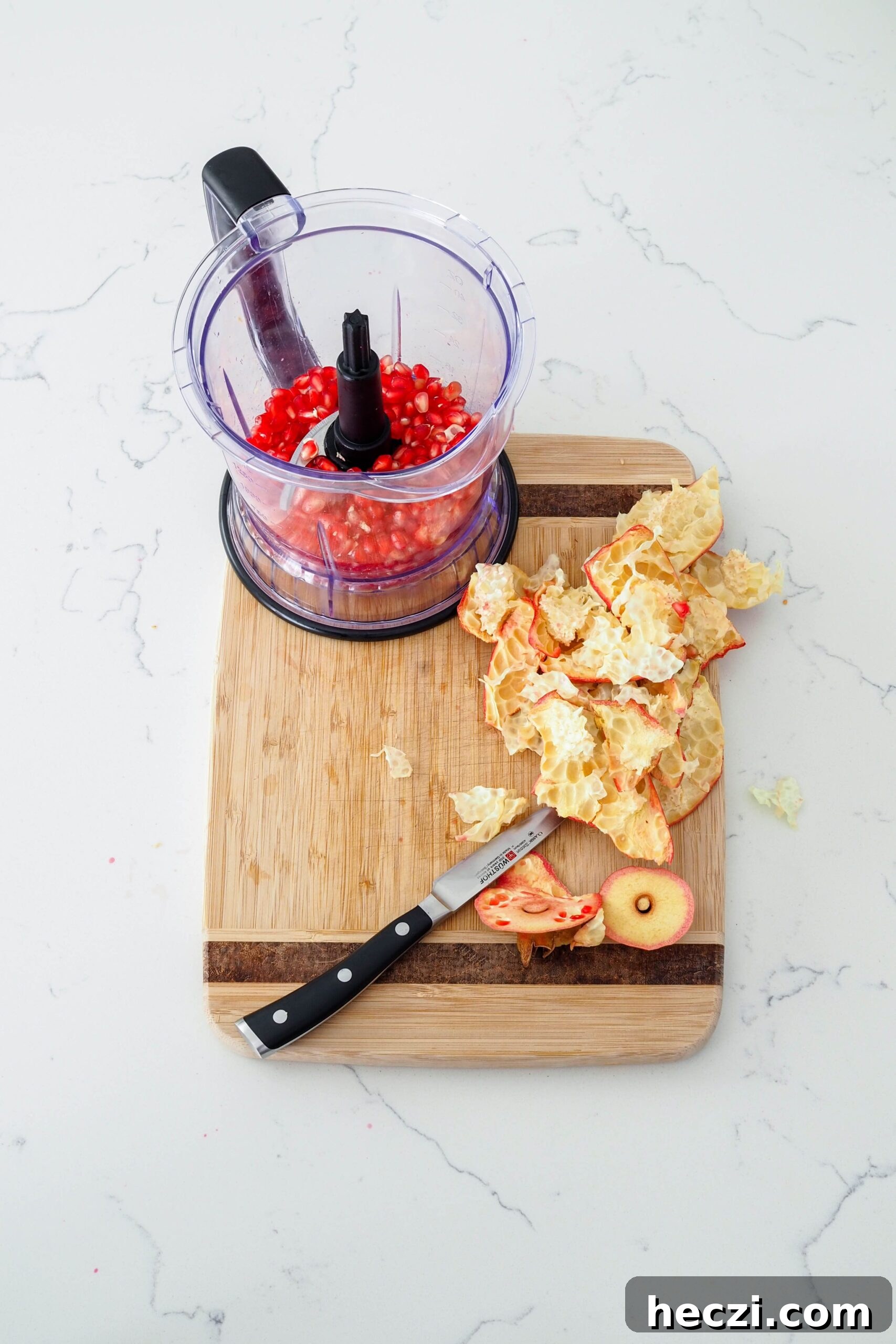
Step 1: Place the arils in a blender or food processor
Put the arils in the blender or food processor. Remove any visible membrane or pith to avoid bitterness.
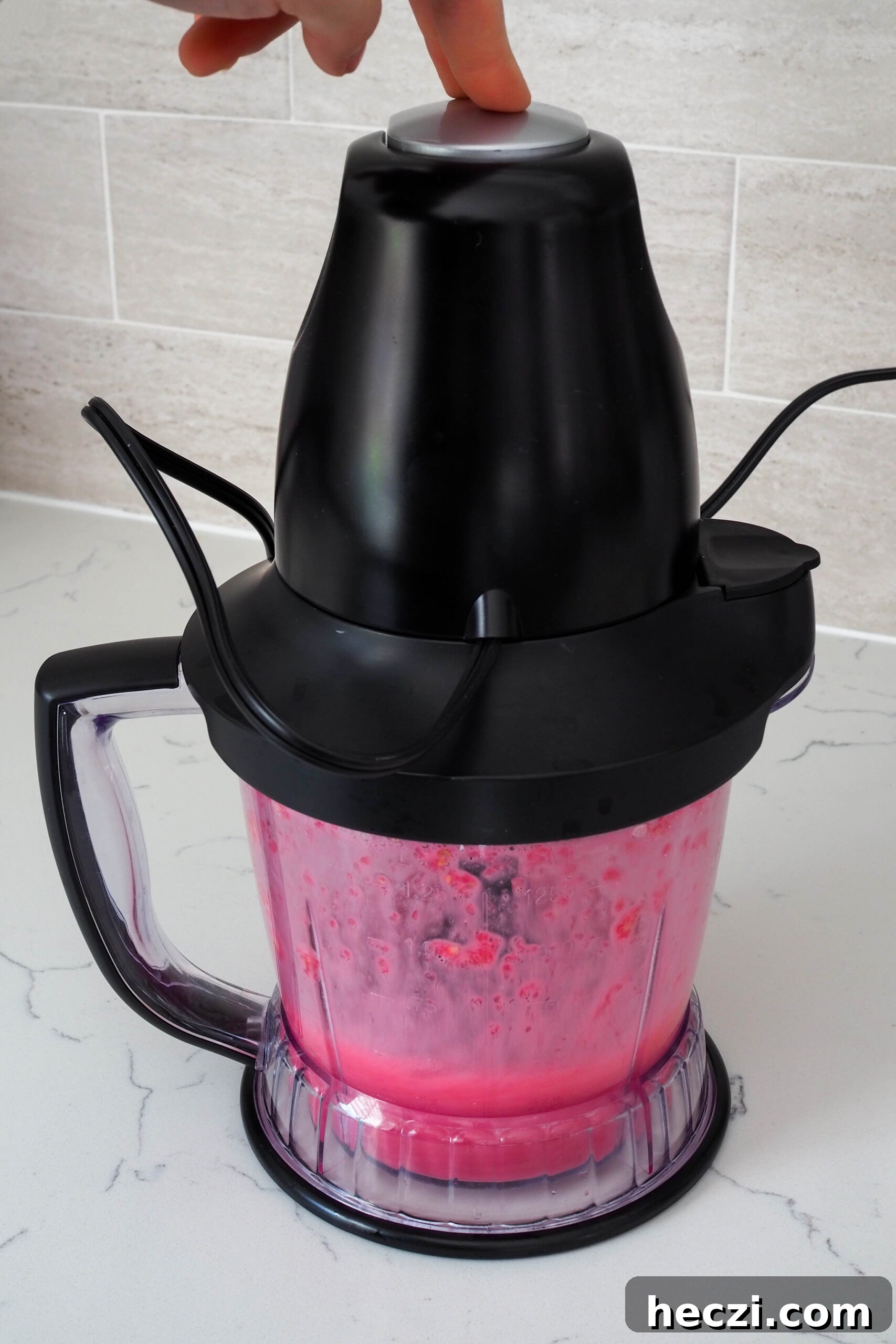
Step 2: Blend
Pulse until the arils release their juice and the mixture becomes liquidy. This takes just a few seconds.
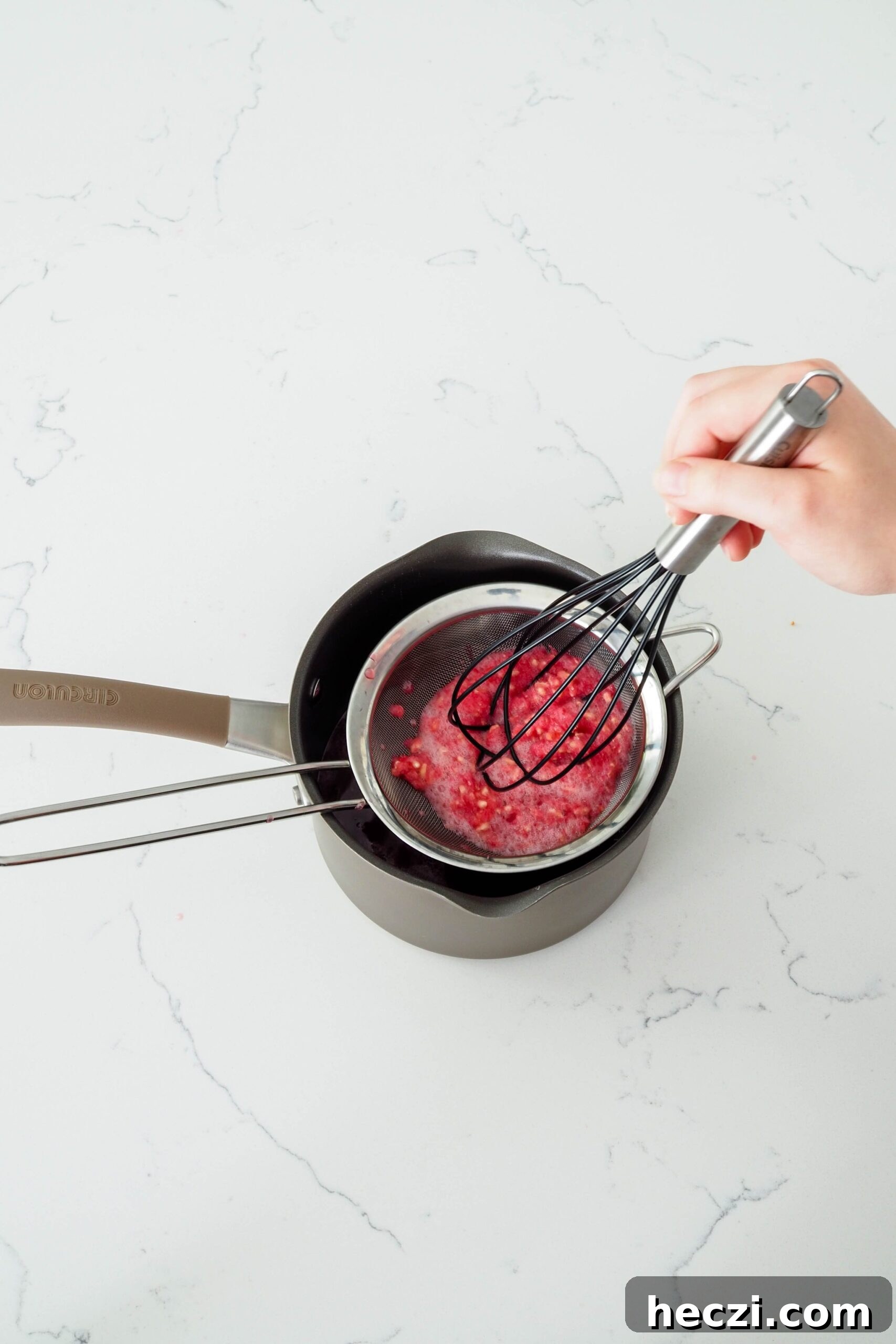
Step 3: Strain
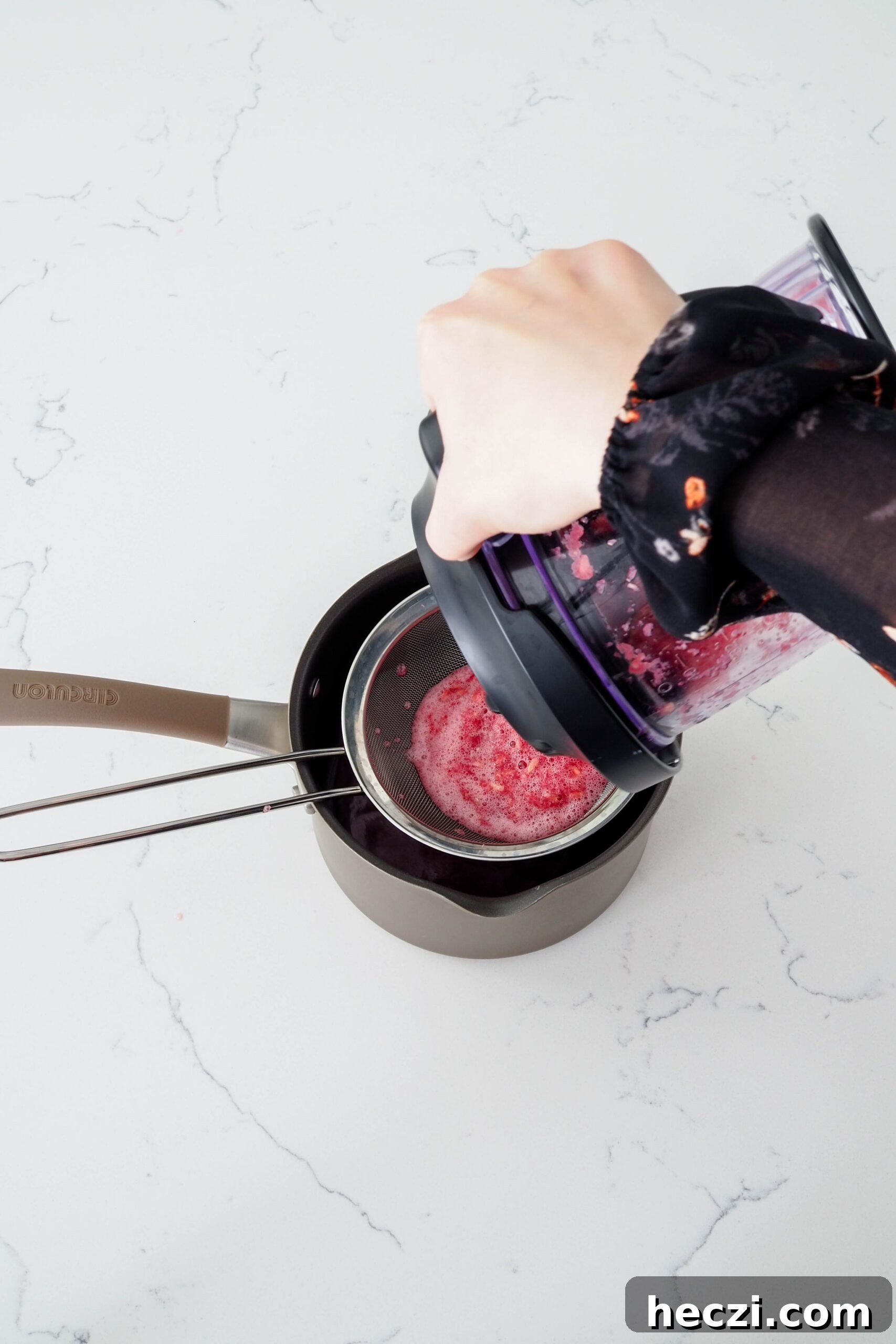
Pour the blended mixture through a fine-mesh strainer over a bowl to remove seeds and membrane. Use a spoon or whisk to press out the remaining juice. Now your pomegranate juice is ready—feel free to sip any leftovers.
Quick Tips for Making the Pomegranate Jam
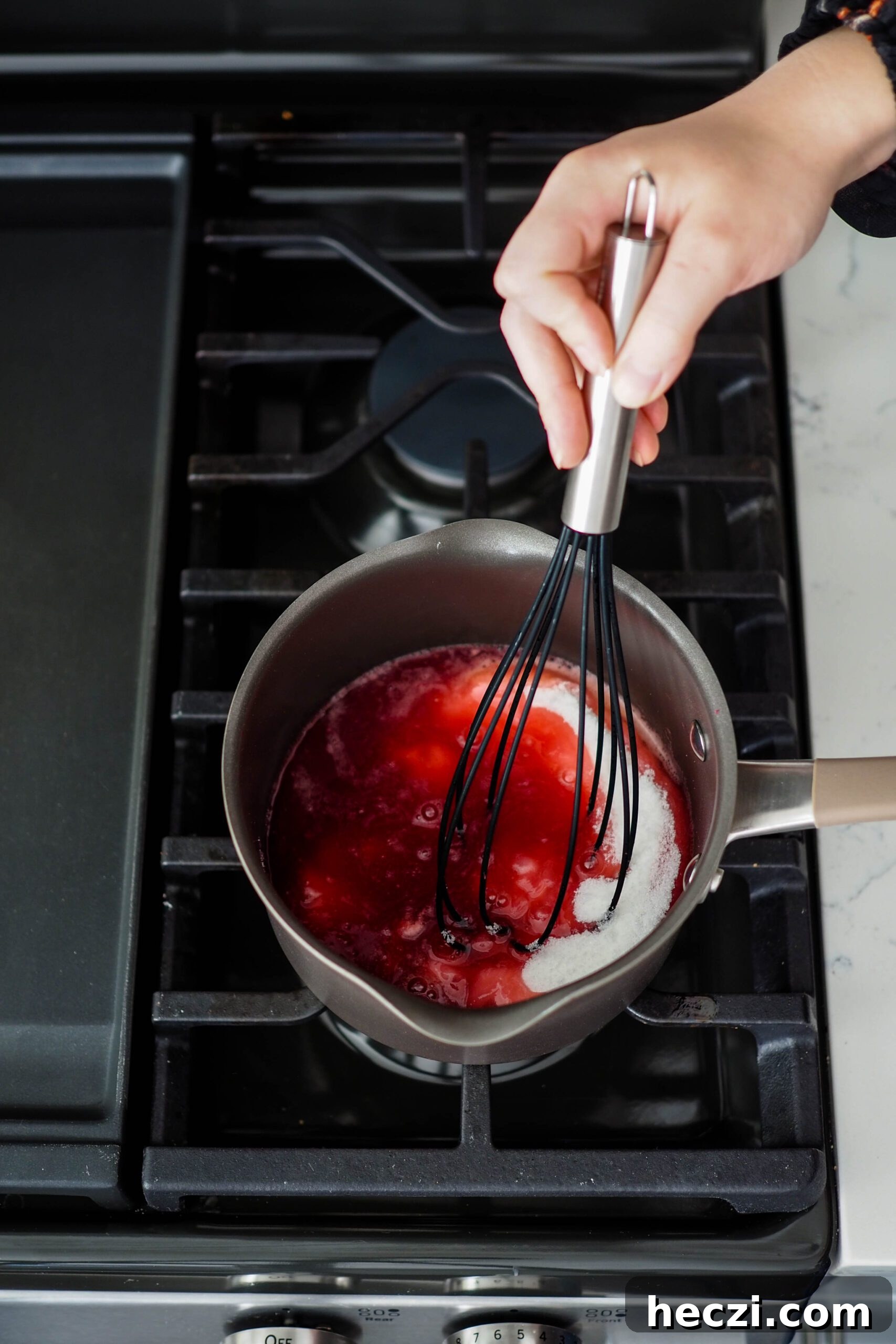
- Use a whisk for most steps to minimize utensil use: whisking works for combining pectin and stirring the jam as it cooks.
- Mix pectin into the pomegranate and lemon juice before heating to prevent clumping.
- After the sugar comes to a boil, cook the jelly for 2–4 minutes so some water evaporates and the jelly sets. Aim for about 220°F (104°C) if you have a candy thermometer.
What to Use Pomegranate Jelly In
Pomegranate jelly is as versatile as any fruit spread. Its bright tartness enhances both sweet and savory dishes.
Use it as a filling for layer cakes, macarons, or Linzer cookies. Swap it into savory breads for a sweet twist or pair it with apple in mini hand pies for a lively flavor contrast.

Dish Cleanup: Not Too Bad
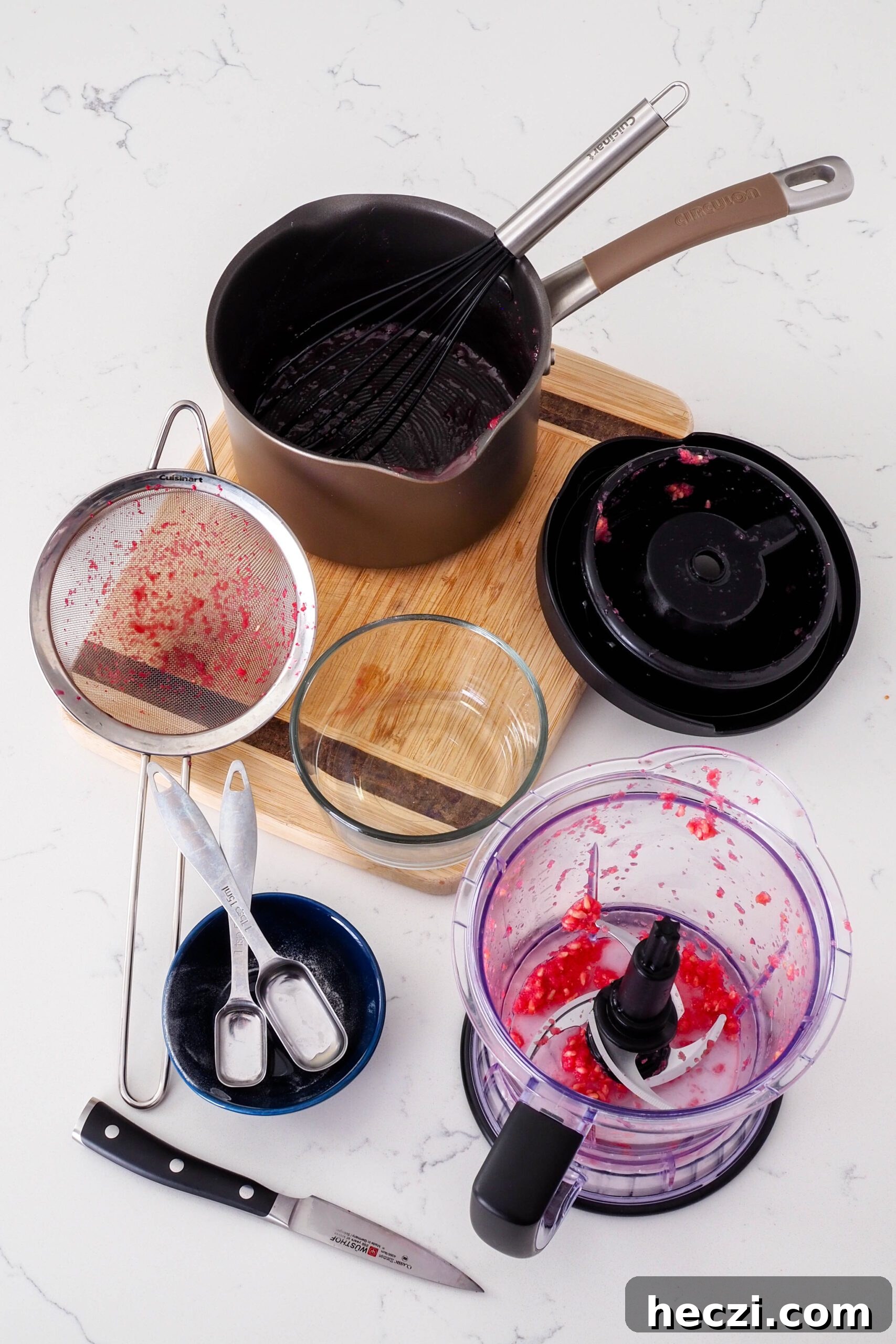
I rate cleanup on a scale from 1 (few dishes) to 5 (a full sink-to-ceiling cleanup). Using fresh pomegranates rates about a 2: cutting board, knife, blender, and strainer. Using bottled juice reduces that to a 1.
Pomegranate Jelly Recipe
Thanks for stopping by! If you make this jelly and enjoy it, please leave a review to let others know how it turned out.
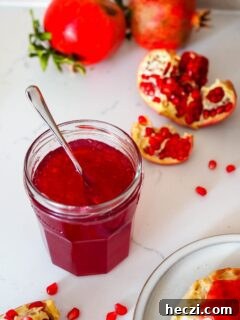
Small Batch Pomegranate Jelly
Pin Recipe
Ingredients
- 1 cup (240 ml) pomegranate juice, from about 2 pomegranates or bottled
- 1 Tablespoon (15 ml) lemon juice
- 4 teaspoons (12 g) pectin
- 1 ¼ cups (250 g) granulated sugar
Instructions
Making the Pomegranate Jelly
- In a medium pot over medium heat, stir together the pomegranate juice, lemon juice, and pectin. Bring the mixture to a boil.
- Add the sugar and stir to dissolve. Return to a boil, then cook for 2–4 minutes, stirring occasionally to prevent boiling over. The jelly should reach about 220°F (104°C) to set properly. Remove from heat.
Storing the Pomegranate Jelly
- For refrigerator jam: Pour into jars, seal, and refrigerate. The jelly thickens as it cools; allow it to set overnight for best texture.
- For shelf-stable jam: Pour into sterilized jars leaving about ¼” headspace. Wipe rims clean, apply sterilized lids, and process in a boiling water bath for 10 minutes.* Cool at room temperature, check that lids are concave, and store in a cool, dark place for up to a year.
Video
Notes
Once opened, refrigerate jars and use within about three months.
You can freeze unopened jars for up to three months.
Recommended Supplies
- Half-pint jelly jars with lids and bands
- Fruit pectin
- Candy or digital thermometer (optional but helpful)
Nutrition
| Calories: 67 kcal
| Carbohydrates: 17 g
| Sodium: 3 mg
| Fiber: 1 g
| Sugar: 15 g
I’d love to see how your pomegranate jelly turns out: take a photo and tag me on Instagram @floralapronblog or use the hashtag #floralapronbakes.