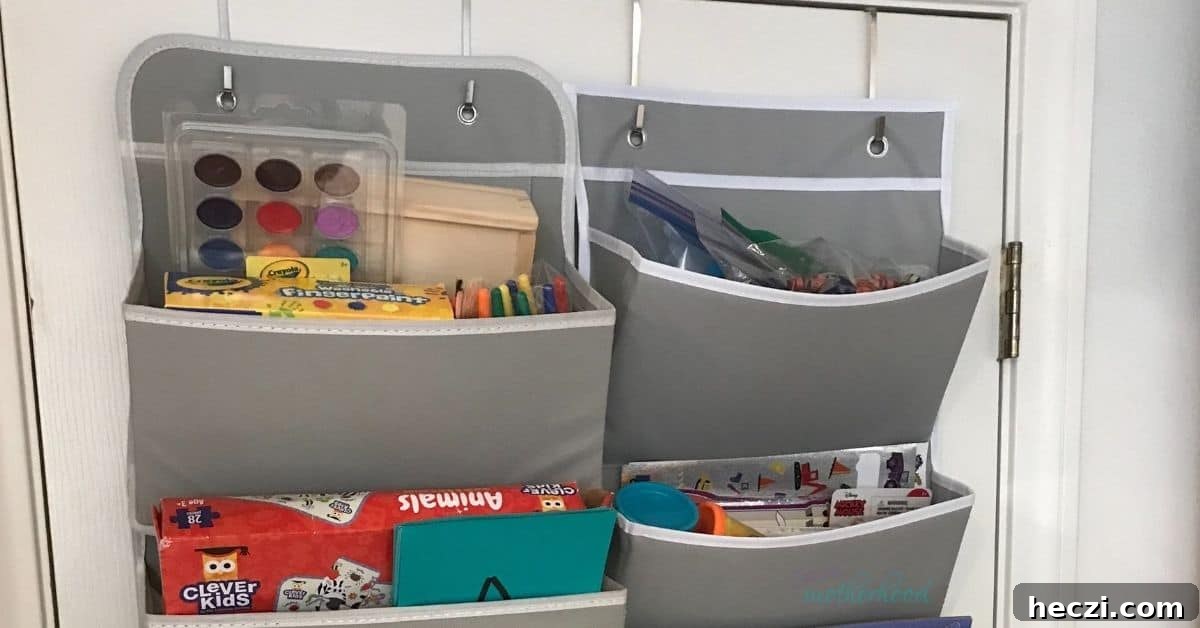
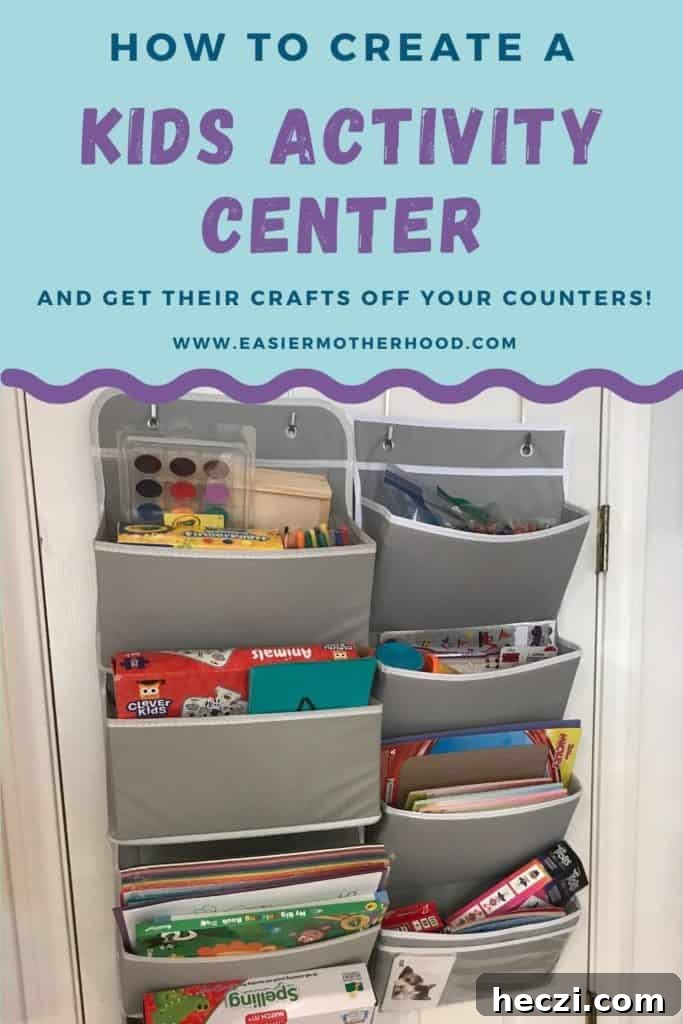
Do you have a toddler who needs something to do while you cook dinner? Or has your child’s stuff started to take over your counters and tables? This guide shows how to create a practical kids activity center that keeps daily crafts and toys organized and accessible. My toddler loves puzzles, so much of our activity center is dedicated to storing and organizing puzzles.
The project is simple — if you have a closet or pantry door to use, it can even be done without tools. If you want to mount organizers on a wall, you’ll need a few basic supplies.
This post contains affiliate links, which means I receive a small commission, at no additional cost to you, if you make a purchase using this link.
Step 1: Consider location — where will your kids activity center live?
Our activity center hangs on the front side of the kitchen pantry door. That keeps it within sight and reach during the day and was easy to install. Choose a location near where your kids spend time so the items will actually get used.
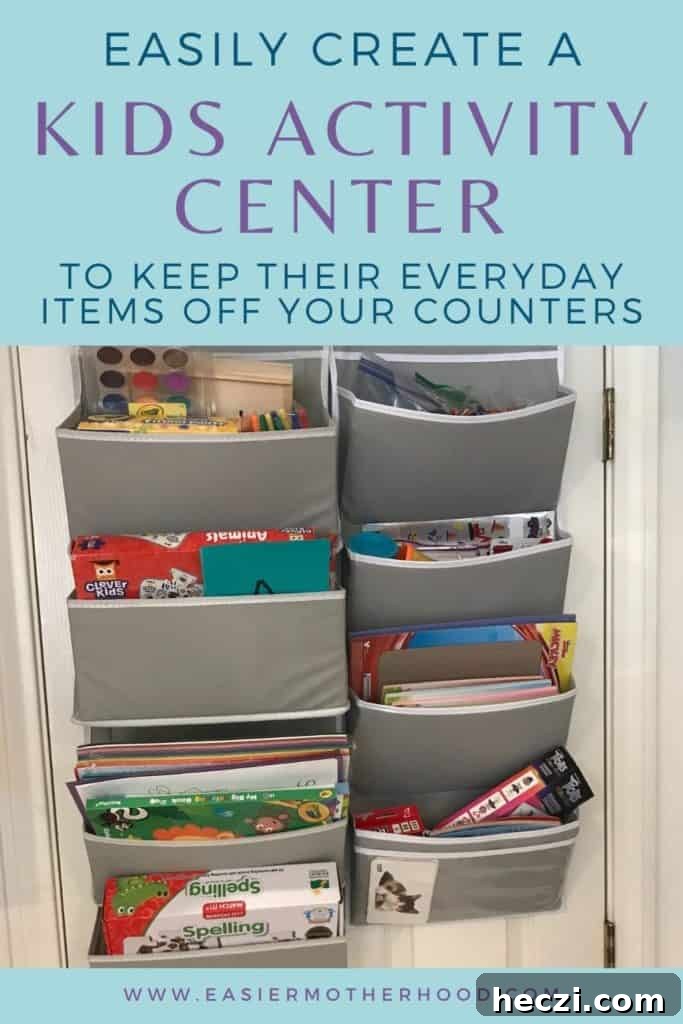
Think practically about your layout. A Pinterest-perfect idea that doesn’t fit your space won’t be useful. For example, I used two different over-the-door organizers because one side needed to be slimmer to avoid blocking the freezer. Measure and plan so the organizers don’t interfere with doors, appliances, or flow.
Step 2: Decide how much vertical storage you need
How many hanging organizers do you need — one, two, or more? That depends on how many children you have, their ages, and the types of activities they use most. If they paint often, you’ll need space for paint supplies; if puzzles are the favorite, allow room for boxes or pouches.
Consider whether you want shared storage or a designated shelf per child. These hanging organizers are easy to rearrange, so start with a plan and tweak it as your needs change.
Step 3: Hang the organizers
Over-the-door organizers are the quickest solution if you have a suitable door. If you’re mounting to a wall, there are three common methods:
- Heavy-duty picture hangers: quick and easy. Note the top may not sit perfectly flush against the wall, but installation is fast.
- Fabric straps: thread thick, sturdy fabric through the organizer holes, tie or sew securely, and hang the fabric from a single wall hook. This method distributes weight and keeps the organizer flush against the wall.
- Screws into studs: the most secure option, using a stud finder, screws, and tools. This usually requires a drill or hammer and is best for heavier setups.
Step 4: Fill the activity center with everyday items
Don’t try to put every single craft supply in this center — it’s for frequently used items. Keep puzzles, workbooks, paints, and commonly used craft supplies within easy reach. Store less-used items elsewhere so the center doesn’t become cluttered.
Tip: place items you don’t want toddlers accessing (paints, certain tools) on the highest shelves or in top pockets.
Step 5: Use it and enjoy the clear surfaces
Clearing clutter from counters and tables creates a calmer visual space and can reduce stress. Once your activity center is set up, take a moment to relax and enjoy the tidier kitchen or living area.
Additional tips for toddler-friendly organization
Many toddler households share similar items. Here are practical storage approaches for common supplies.
Puzzles
Original boxes can be bulky or get damaged. Alternatives that work well: zip-top bags, clear pencil pouches, or the plastic zip bags that sheet sets often come in. Puzzles are generally tidy, so keep them on lower shelves within easy reach.
Paint
Store paint on the highest shelf or in a top pocket so little hands can’t reach it. Keep paints in their original containers if possible, or use sturdy sealable bags so leaks are minimized.
Stickers
Stickers are tempting and hard to clean up once spread around. Tuck sticker sheets behind other items in higher baskets, or use file folders to organize a large collection so sheets stay flat and accessible but out of immediate reach.
Coloring supplies
Keep markers, crayons, and other coloring tools on a higher shelf if you want to limit unsupervised use. Coloring books and paper can live in lower baskets so the child can grab them without needing extra materials. Some parents prefer mess-free kits; others like washable markers that wipe up easily from tables.
How much to store in the activity center
When the organizers start to fill, remember their purpose: quick access to daily or weekly activities. This isn’t necessarily your long-term archive for every craft item. Store a few rotation items in the center — for example, keep a handful of play-doh tubs and rotate extras from a closet. Puzzles and crafts can live in rotation; others can be stored in a separate bin or closet.
If you prefer minimalism or have limited space, it’s fine to limit the number of coloring books, paints, and supplies in the center. Fewer choices often reduce overwhelm for little kids and make cleanup easier for you.
Do you have an activity center? What’s in yours and how do you use it?
Every family’s setup looks different. Think about the items your children actually use, place frequently used items where they can reach them, and keep hazardous or messy materials out of reach. With a little planning, a kids activity center can keep daily clutter off counters and make creative time easier for everyone.