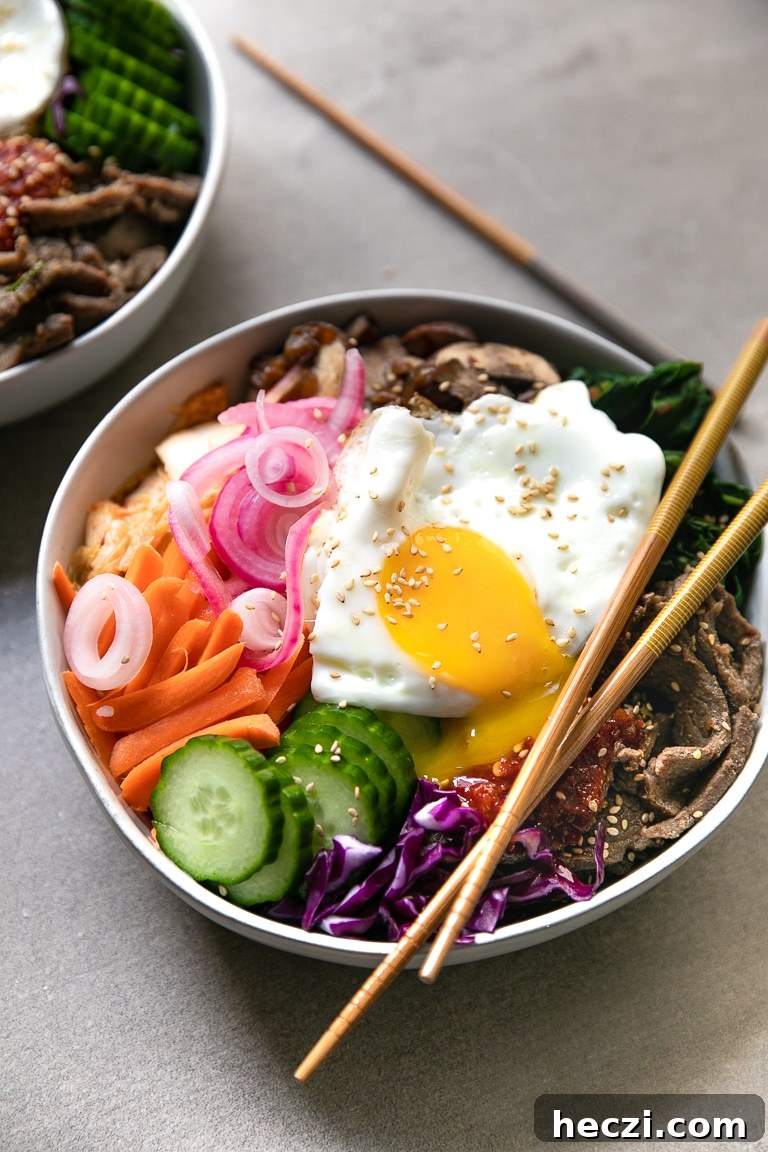
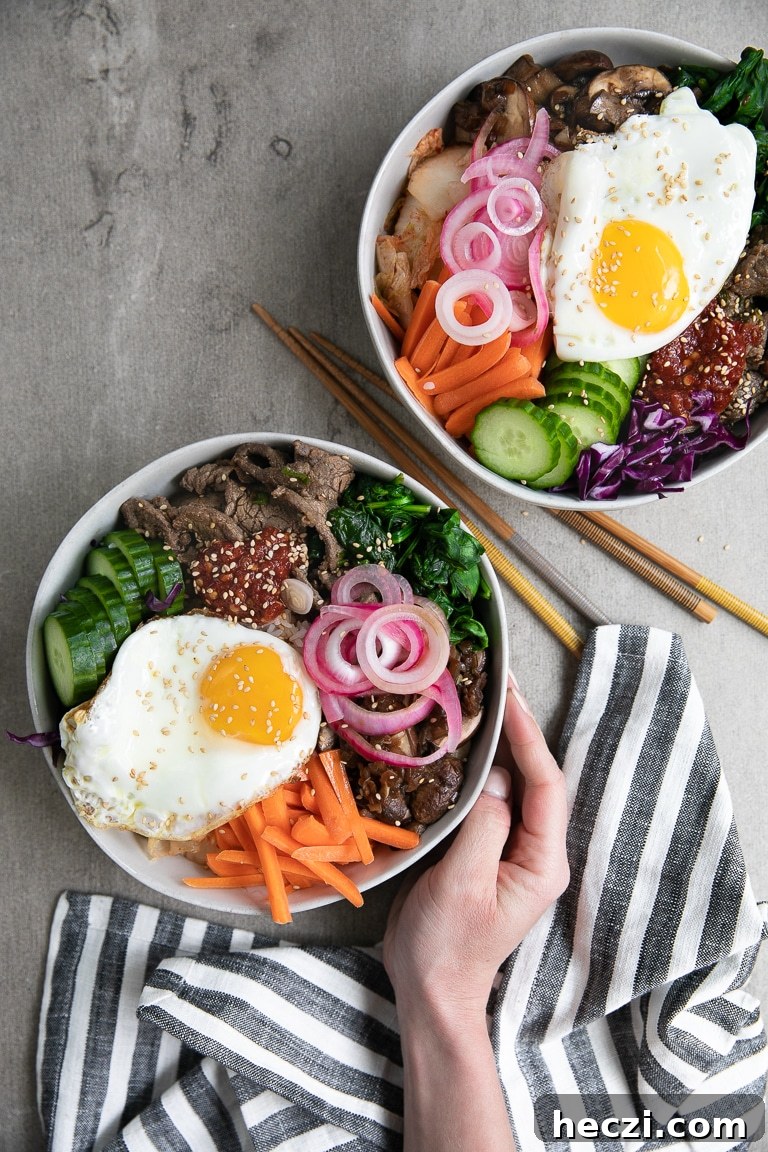
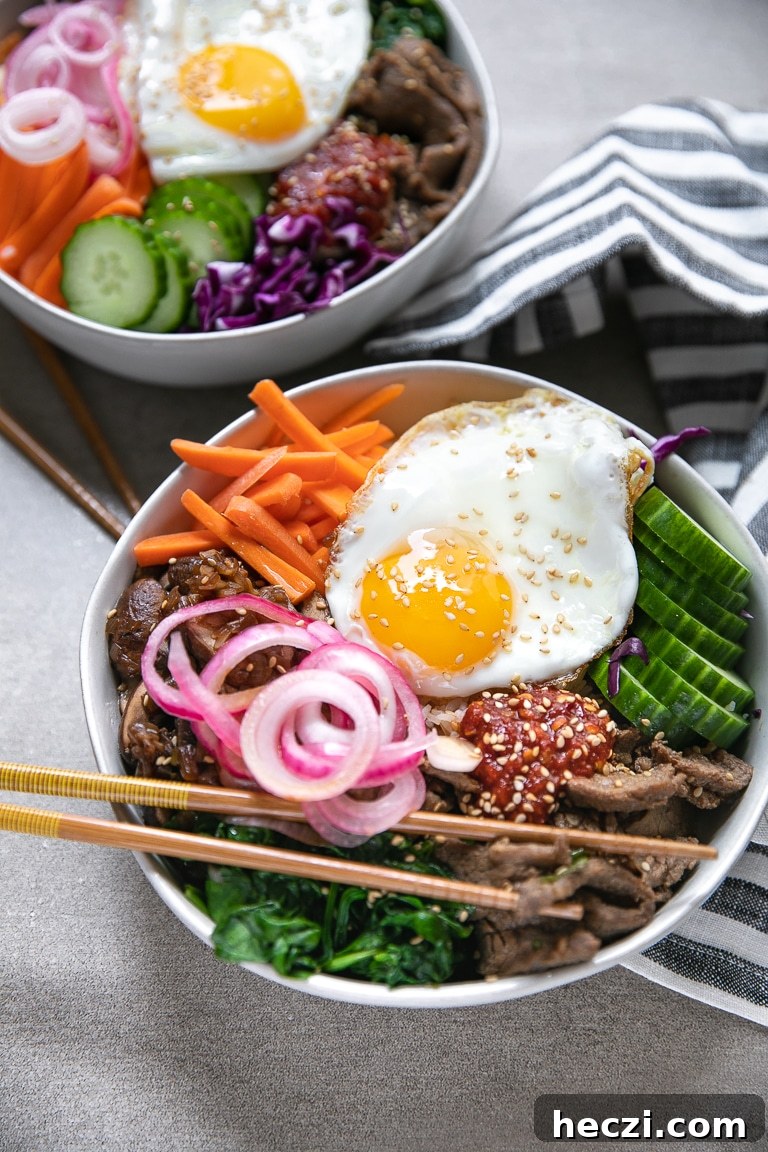
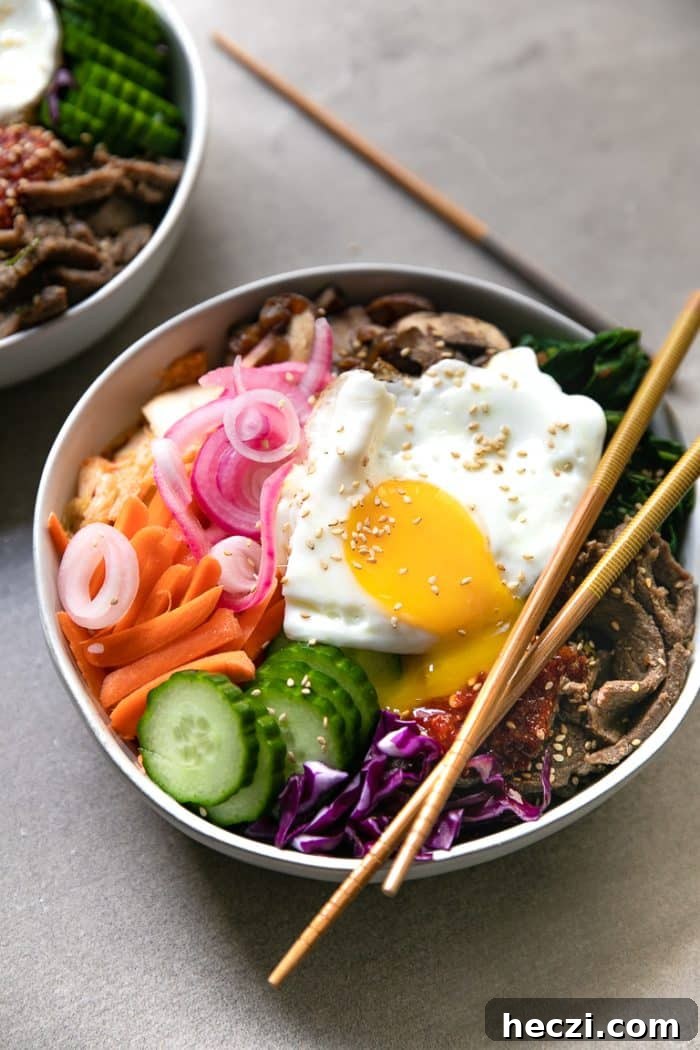
This Easy Korean Beef Bibimbap Recipe combines warm rice with thinly sliced bulgogi-style beef, an array of seasoned vegetables, kimchi, gochujang (or another preferred sauce), and a fried egg. Stir everything together for a comforting, flavorful meal that’s simple to prepare and sure to be a family favorite.
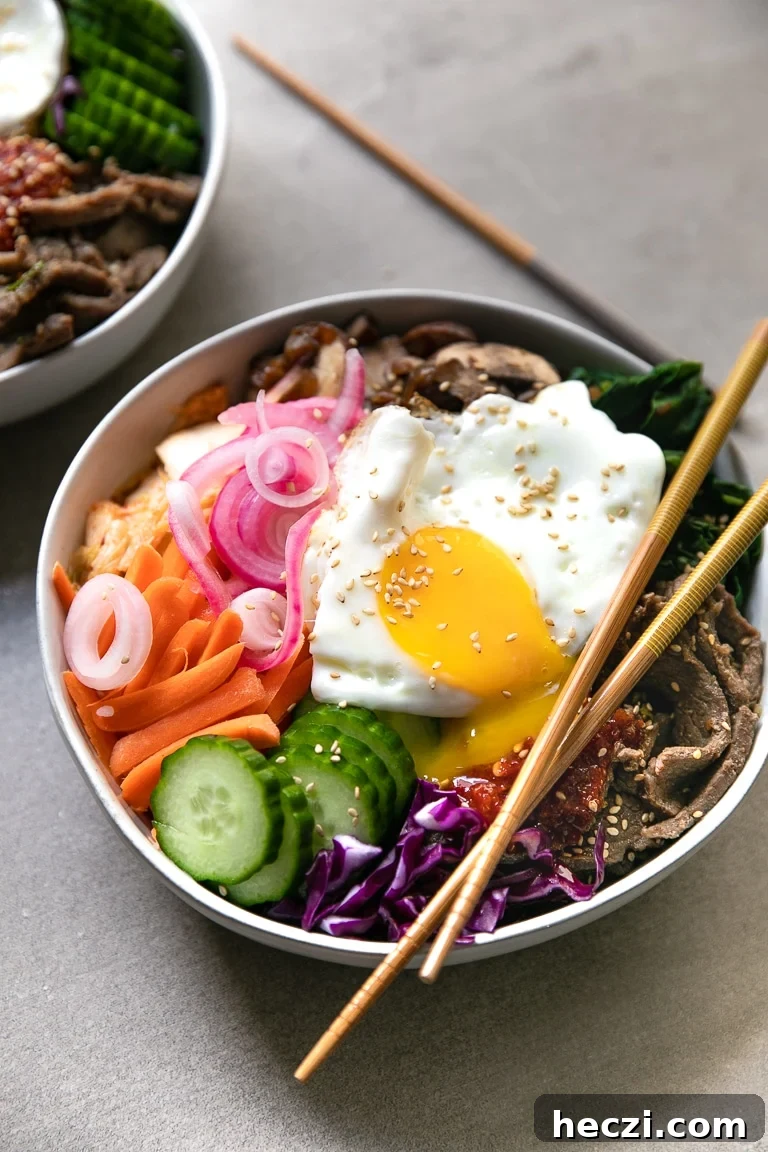
What is Bibimbap?
The word bibimbap literally means “mixed rice.” Pronounced BEE-bim-bap, bibimbap is a bowl of warm rice topped with an assortment of sautéed and seasoned vegetables, a spoonful of gochujang (Korean chili paste) or another sauce, a fried egg, and typically some sliced meat. Once served, the components are mixed together for a delicious harmony of textures and flavors.
Table of Contents
- What is Bibimbap?
- Ingredients
- How to Make Bibimbap
- Why This Recipe Works
- Easy Korean Beef Bibimbap Recipe
Bibimbap traces back to the Joseon period, when it was also called goldongban, meaning rice mixed with a variety of foods. Traditionally, it was a practical, flavorful way to use leftover side dishes, especially before the lunar new year. Modern versions range from rustic home-style bowls to refined restaurant preparations.
Authentic bibimbap may be served with raw egg and raw beef in some variations; however, many people prefer cooked ingredients. This recipe uses cooked components for a comforting, family-friendly meal.
Traditional bibimbap vegetables often include:
- Julienned cucumber
- Zucchini
- Radish
- Gim (dried seaweed)
- Mushrooms
- Doraji (bellflower root)
- Spinach
- Soybean sprouts
- Gosari (bracken fern stems)
If you can’t find some of the more traditional ingredients locally, you can still make an excellent bibimbap using ingredients you likely already have at home.
Ingredients
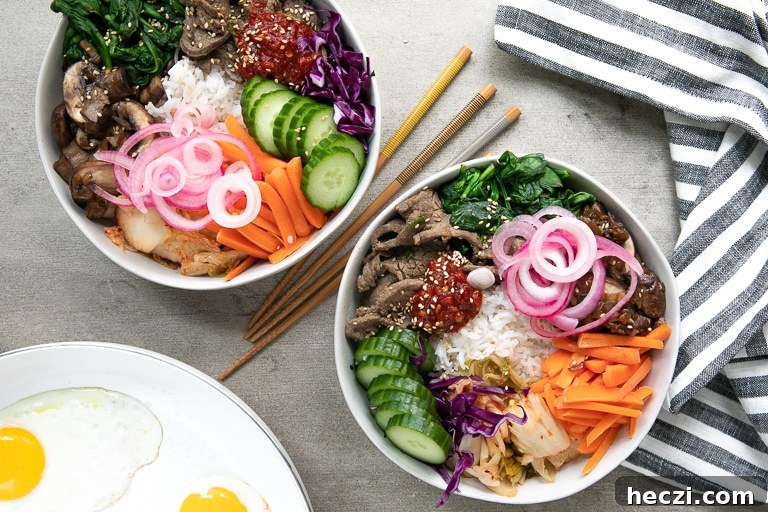
This version blends classic and approachable elements. I include kimchi as an optional component—while it’s not always placed directly in the bibimbap bowl, it’s a distinctly Korean addition and pairs wonderfully alongside or in the bowl.
- Thinly sliced beef (Bulgogi-style)
- Cooked white rice
- Kimchi
- Carrots (julienned)
- Cucumber (sliced or julienned)
- Olive oil
- Fresh ginger (optional)
- Spinach
- Soy sauce (or tamari for gluten-free)
- Mushrooms (sliced)
- Eggs (fried)
- Pickled red onions (optional)
- Toasted sesame seeds
- Gochujang (Korean hot pepper paste)
Many of these ingredients are common in grocery stores. If something unfamiliar appears on the list, it can often be substituted or ordered from specialty retailers, but you can also make a delicious bowl with simple, everyday produce and pantry items.
How to make Bibimbap
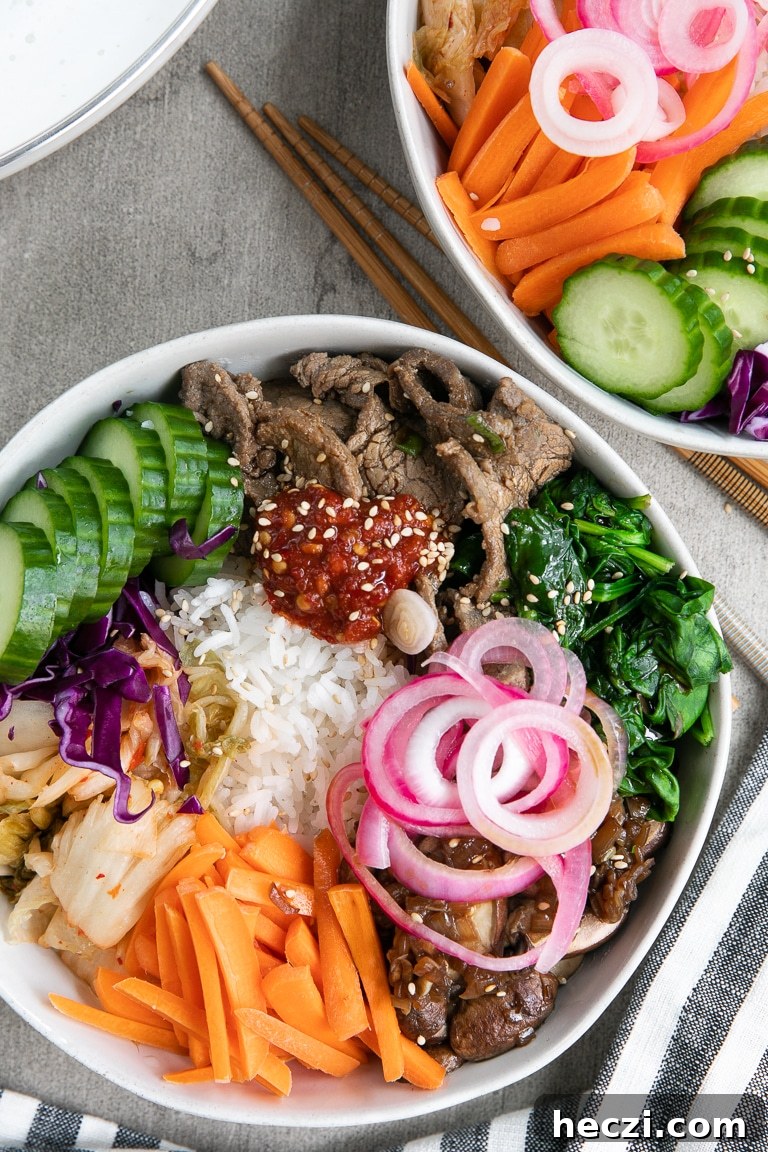
The secret to an efficient bibimbap cook-through is sequencing. Each component is straightforward, but coordinating everything so it’s ready at the same time makes for a smooth assembly. Here’s a practical order to follow:
- Marinate the beef first. Bulgogi benefits from time to marinate—overnight if you can. If time is short, aim for at least 30 minutes.
- Cook the rice and prep fresh vegetables. If you’re not using leftover rice, start it before you chop the vegetables that remain raw, such as cucumber and carrots. Julienne vegetables when possible to make mixing easier.
- Cook the greens and mushrooms. Wilt the spinach quickly with a bit of oil, garlic, and a splash of soy sauce. Saute the mushrooms separately until they release their juices and are tender.
- Cook the beef. Grill or pan-sear the marinated beef in a single layer until cooked through, working in batches if needed.
- Assemble the bowls. Divide rice among bowls, arrange cooked and raw vegetables around the edges, add cooked beef, dollop gochujang, sprinkle sesame seeds, and top with pickled onions or kimchi if using.
- Fry an egg for each bowl. Fry eggs sunny-side up with runny yolks, then place one on top of each bowl before serving. Mix everything together at the table for best results.
Why This Recipe Works
- The variety of contrasting flavors and textures—savory beef, crisp vegetables, tangy kimchi, and spicy-sweet gochujang—creates a balanced, satisfying bowl.
- The fried egg brings richness and helps bind the ingredients when mixed.
- Each bowl can be customized, so picky eaters can pick and choose the components they enjoy.
- Many elements can be prepared ahead of time, making weeknight assembly quick.
- Leftovers reheat well and make excellent meal-prep portions.
If you enjoy Asian-inspired recipes, similar dishes to try include pho, garlic noodles, edamame, kimchi fried rice, bok choy stir-fries, and classic moo goo gai pan. Feel free to adapt the vegetables and proteins to suit your pantry and preferences.
If you make this Easy Korean Beef Bibimbap Recipe, please leave a comment to share how it turned out—I love hearing feedback from home cooks.
Easy Korean Beef Bibimbap Recipe
Ingredients
For the Korean Beef (Bulgogi)
- 2 pounds thinly sliced beef sirloin
- 1/2 cup soy sauce
- 1/4 cup brown sugar
- 1/4 cup rice cooking wine (or red wine)
- 1 tablespoon sesame oil
- 8 cloves garlic, minced
- 2 tablespoons sesame seeds
- 2 teaspoons freshly ground black pepper
- 1/4 cup finely chopped green onion
- 1/2 large pear, pureed (optional, for tenderizing)
- Olive oil for frying
For the Bibimbap Bowls
- 4 cups cooked white rice
- 2 cups kimchi
- 3 carrots, cut into matchsticks
- 1 English cucumber, sliced or julienned
- 3 teaspoons olive oil, divided
- 18 ounces fresh spinach
- 5 cloves garlic, minced, divided
- 2 tablespoons soy sauce, divided
- 12 ounces crimini mushrooms, sliced
- 4 large eggs
- 1 cup pickled red onions (optional)
- 1/4 cup toasted sesame seeds
- 1/4 cup gochujang (Korean hot pepper paste)
Instructions
For the Korean Beef (Bulgogi)
- Whisk all marinade ingredients together in a large bowl. Transfer thinly sliced beef to a large zip-top bag, pour in the marinade, remove air, and massage to coat. Marinate at least 30 minutes or up to overnight.
- When ready to cook, heat a cast-iron skillet or preferred pan over medium-high heat. Brush with sesame or olive oil and cook the beef in a single layer until browned and cooked through, about 4–5 minutes per batch.
For the Bibimbap Bowls
- If rice is not already cooked, prepare it according to package instructions. Divide rice among 4 bowls.
- Prepare raw vegetables—kimchi, carrots, and cucumber—and arrange them around the rice.
- Heat 1 teaspoon olive oil in a large skillet over medium heat. Add half the minced garlic, then the spinach, and cook until wilted. Add 1 tablespoon soy sauce (half of the divided amount) and sauté for another minute. Remove and divide among bowls.
- In the same skillet, heat another teaspoon of oil, add the remaining garlic, then the mushrooms. Cook until the mushrooms release liquid and begin to brown, add the remaining 1 tablespoon soy sauce, and cook 1–2 more minutes. Divide mushrooms among bowls.
- In a clean nonstick skillet, heat the final teaspoon of oil and fry the eggs sunny-side up until whites are set but yolks remain runny, about 2–4 minutes.
- Top each bowl with the cooked beef, pickled red onions if using, a sprinkle of sesame seeds, and a scoop of gochujang. Place a fried egg on each bowl and serve immediately. Mix everything together before eating.
Notes
- Marinate the meat from 30 minutes to overnight for best flavor.
- For a lighter option, substitute cauliflower rice for white rice.
Nutrition
Calories: 891 kcal | Carbohydrates: 87 g | Protein: 75 g | Fat: 27 g | Saturated Fat: 6 g | Cholesterol: 319 mg | Sodium: 2468 mg | Fiber: 8 g
Nutrition information is an approximation.