In earlier times, wandering vagabonds often crossed the countryside, relying on their wits to secure a hot meal and shelter during long, cold nights. One such clever wanderer came near a small village and spent lonely hours at the edge of the forest in a beech clearing. During his travels he met a poor widow living in a simple hut by the river and asked for a little charity: a warm place to sleep and something to eat.
The widow reluctantly offered him shelter but explained there was almost nothing to eat; the pantry was bare. The wanderer smiled and said he knew a simple magic—stone soup. All he needed, he said, was water and a smooth river stone. “Put a pot of water on the fire, Grandma; I’ll take care of the soup,” he told her.
He walked along the riverbank until he chose a pretty gray stone with red veins. After rinsing it, he returned to the kitchen where an old blackened pot simmered over the fire. He dropped the stone into the pot and sat down to wait while the widow watched skeptically as she knitted by the hearth.
Breaking the silence that was filled only by the crackling fire, the wanderer murmured, “If only we had a pinch of salt, the soup would be even better.” The woman shuffled to the cupboard and found a pinch of salt in the bottom of a jar.
He stirred the pot and added, “If we had a potato, even an old one, the soup would be nicer.” The widow fetched a shriveled potato and a cabbage leaf scorched by frost from her garden.
Not yet satisfied, the wanderer said, “If only we had an old ham bone, the soup would be really good.” The woman remembered a bare bone tucked away in the pantry and handed it over. The ham bone joined the pot, which was beginning to give off an inviting aroma. “And now, Grandma, the soup is ready—if only we had a morsel of stale bread…”
“I see, I see…” the widow interrupted. She dug to the back of the cupboard, found a dry piece of bread and sliced it into two thin pieces to place in the bottom of each bowl.
The wanderer ladled generous portions into the bowls and shared a warm, tasty dinner with the widow. Before he went to sleep in the barn, he returned to the pot, lifted the magic stone, washed it, wrapped it in a rag and placed it in the cupboard. “Grandma,” he said, “whenever you want a good stone soup, just simmer a pot of water and add the magic stone. Goodnight, and thank you for your hospitality.”

This well-known folktale appears in many versions: sometimes the stranger is a beggar, sometimes a wily monk or a soldier. The lesson remains the same: with a little imagination and a few shared ingredients, something nourishing and comforting can be made—a metaphor for resourcefulness and generosity in lean times.
The recipe for acquacotta
The first time I heard the folktale I immediately thought of acquacotta, literally “cooked water,” a traditional soup from the Maremma region of Tuscany. Acquacotta grew out of poverty and peasant cooking, where stale bread and seasonal vegetables are the foundation of many classic dishes. It is a nomadic dish that traveled with workers who moved from the Amiata mountains to the Maremma plains each winter, carrying only a few staple ingredients—especially onions. The core elements of acquacotta are simple: water, bread and onions.

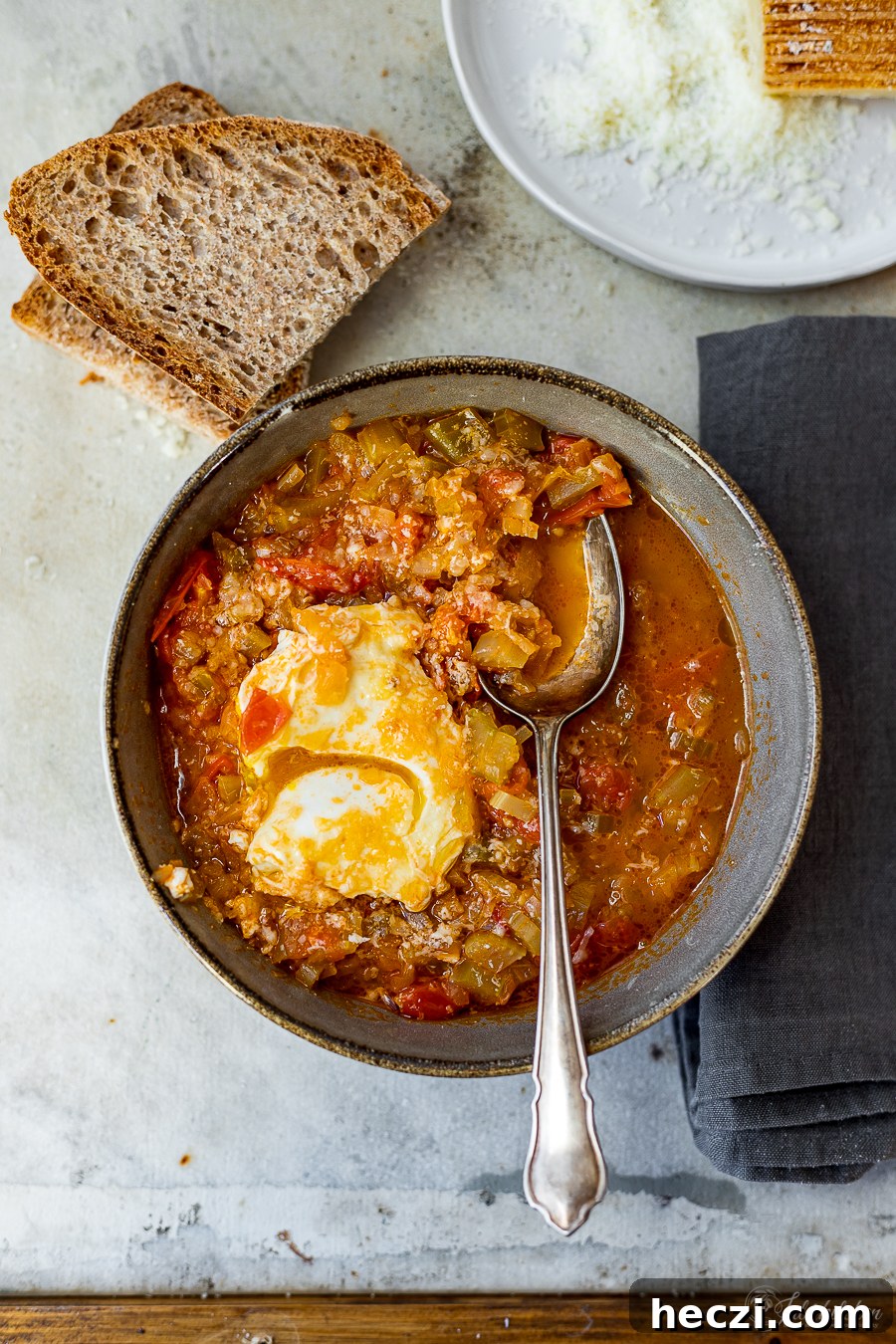
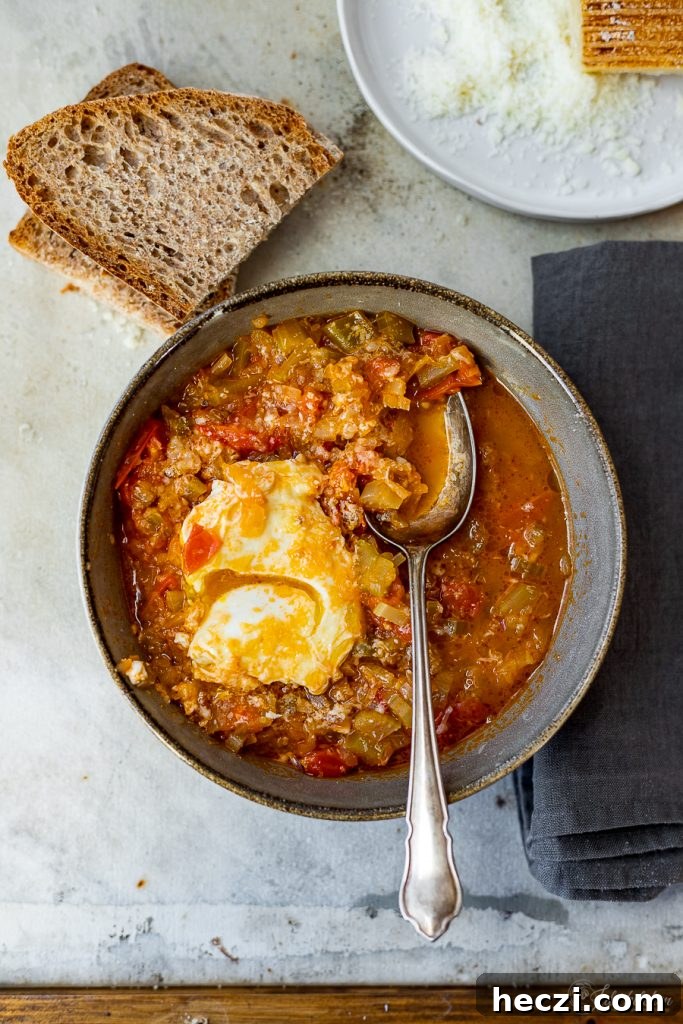
Here is a richer version of the soup—what families would reserve for holidays or fortunate days when a few extra ingredients were available. Alongside bread, water and onions, this version includes canned tomatoes (preserved in summer), eggs poached directly in the broth, and a generous grating of pecorino cheese, which melds beautifully with the warm egg yolks.
Acquacotta
Ingredients
- Extra virgin olive oil
- 1 clove garlic
- 3 stalks celery
- 2 onions
- 500 g canned peeled tomatoes
- Hot chilli pepper (to taste)
- Salt
- 8 slices stale bread
- 4 eggs
- Grated pecorino cheese
Instructions
- Peel the onions, wash the celery and dice the vegetables. Roughly mash the canned tomatoes with a fork.
- In a saucepan or large cast-iron pot, sauté a lightly crushed garlic clove in 4 tablespoons of extra virgin olive oil. Add the diced vegetables, chilli pepper, mashed tomatoes and a good pinch of salt.
- Cook for a few minutes, stirring, then add 2 liters of hot water. Cover and simmer on the lowest heat for about 2½ hours.
- When the soup is almost ready, toast the bread slices, rub them with a garlic clove for extra flavor and tear them into pieces. Place the bread pieces in the bottom of four bowls.
- Carefully crack the eggs into the simmering soup one by one, taking care not to break the yolks. As soon as the whites set, lift the eggs with a slotted spoon and keep them warm.
- Ladle the soup over the bread in each bowl, place an egg in the center, drizzle with extra virgin olive oil and finish with a generous sprinkling of grated pecorino cheese. Serve hot.