Recently I realized the most effective way to keep readers up to date with A Duck’s Oven was email. Social platforms are increasingly limiting organic reach unless you pay for exposure, and relying on them alone felt risky. Twitter’s character limit and Instagram’s barriers to directing people to the blog make them less reliable for meaningful updates. With email, I control what’s sent, how often, and how it looks.
I already had an email following, but it was small compared with my other channels. I wanted more consistent subscribers, so after researching options I implemented a few changes that significantly improved signups.
Disclaimer: MailChimp is the email service I used and mention often because it worked well for me — this is my personal experience, not an endorsement.
1. Use a proper email service. If you don’t have a subscription option or are using Feedburner, switch to a dedicated email service like MailChimp. For small lists (under 2,000 subscribers and fewer than 12,000 sends per month) MailChimp offers a free plan. It provides much more control than Feedburner and tools to build professional campaigns.
When I switched, I moved from immediate post notifications to a weekly newsletter. Previously Feedburner sent an email every time a post went live, which was too frequent during busy periods. I emailed my subscribers to explain the change and gave them the option to remain on the Feedburner list if they preferred real-time post alerts.
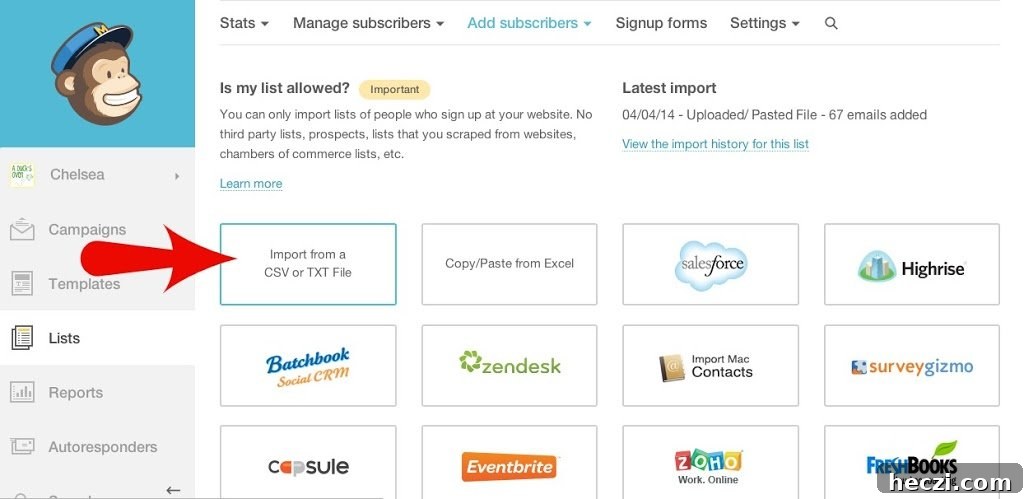
MailChimp made transferring my list straightforward. From Feedburner go to Publicize > Email Subscriptions > Subscription Management, export your list as a CSV, then upload that file into MailChimp. After importing, deactivate the subscribers in Feedburner so you don’t send duplicate messages.
Uploading the file and switching services was surprisingly simple. One big advantage of a service like MailChimp is campaign analytics: you can track open rates, click-throughs, and other engagement data to fine-tune future emails.
2. Make your signup form easy to use and visible. I added a subscribe button to the blog’s Facebook page and placed a clear, simple signup form in the blog sidebar. Reducing friction makes people more likely to sign up.
3. Offer something of value for signing up. Give subscribers a reason to join that feels worthwhile. If you sell products, a coupon or special offer works well. For my food blog, I created a free eCookbook compiled from my most popular recipes.
Initially I worried an eCookbook would be complicated or expensive, but an eBook can simply be a PDF. I used Apple Pages to assemble recipes and exported a PDF. The cover was made with simple graphic tools. That became my lead magnet.
Once complete, I built a MailChimp campaign that included a clear “Download” button and uploaded the PDF so new subscribers could access it immediately. This approach avoided paid document-hosting services and allowed me to deliver the file directly to new subscribers.
I wrote a short blog post explaining the eCookbook and embedded a signup form directly in that post so readers could join with one step. I also promoted the offer via Facebook, Twitter, and Instagram. After posting, I began seeing a noticeable increase in signups. Whereas I previously got one or two new subscribers a week, I started getting a consistent 3–5 per week following the eCookbook promotion.
Results: My list grew 25% in three weeks. The eCookbook resonated with readers, the blog post link was shared, and visibility increased. To keep the offer prominent, I added a “Free eCookbook” tab to the blog and placed the cover image linked to the post in the sidebar.
Why this worked:
- It cost only time — no money spent, just effort to compile and format the PDF.
- The offer had genuine value for my audience: they were willing to exchange an email address for useful content.
- The signup process was simple — asking only for an email removed barriers to joining.
I hope these tips help you grow your blog’s email list. What strategies have you used to increase subscribers?