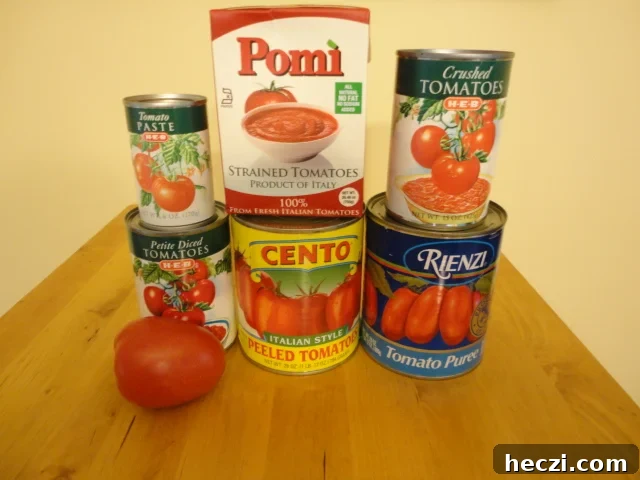
Different Types of Tomato Products
There are so many tomato products available, and each has specific uses and limitations. I love growing tomatoes, but I don’t produce enough to supply year-round cooking, so I rely on canned, jarred and boxed tomatoes for many dishes. Below I explain the most common types of tomato products, how they differ and where I find them useful. Note: the descriptions reflect United States usage and labeling; products and terminology can differ in other countries.
Crushed: Crushed tomatoes can be inconsistent between brands—differences in liquid-to-solid ratio, presence of skin, seed content and chunk size are common. When I picture crushed tomatoes in an Italian-style sauce, I imagine a rustic, substantial texture where the tomatoes haven’t been overprocessed. Because brands vary so much, I don’t use crushed tomatoes as often as I might otherwise, unless I’ve found a brand with the texture and flavor I prefer.
Diced: Diced tomatoes also vary by brand, but I find them more forgiving because they work well in many dishes despite those differences. I often drain diced tomatoes for recipes such as pasta e fagioli or for a quick pasta sauce that will simmer about 30–45 minutes. In that time the tomato pieces soften without turning to mush, giving a pleasant texture and fresh tomato flavor.
Fresh: By “fresh” I mean garden-ripe or farmers market tomatoes, not the often mealy supermarket varieties. My favorite fresh tomato pasta is simple: peel the tomatoes, hand-crush them, season with fresh basil and salt, chill, and toss with angel hair pasta. At the end of the growing season I freeze whole tomatoes to use later as one component in a cooked sauce.
Paste: Tomato paste is concentrated pulp with skin, stems and seeds removed. It’s a versatile thickening agent that adds concentrated tomato flavor with minimal cooking time to reduce watery content. Be aware some commercial pastes contain added sweeteners like high fructose corn syrup, which can be undesirable when you want a pure, savory tomato flavor. I use paste sparingly.
Puree: Tomato puree varies widely depending on processing. Some purees include skins and seeds; others are more refined. The presence of seeds and skin can introduce a slightly bitter or gritty note, so picking a brand with a texture and flavor you like matters. Puree works well when you need a smooth base but still want a straightforward tomato taste.
Strained: Strained tomatoes are processed to remove stem, leaves, skin and seeds, leaving a smooth, clean tomato pulp. This product can be hard to find in some grocery stores, but it’s my go-to for marinara and long-simmered sauces because of its superior texture and consistency. Strained tomatoes create a silky base without the need for extensive straining or blending at home.
Sauce (not shown): Prepared tomato sauce is typically tomato puree with added seasonings and salt. Because it’s already seasoned, I rarely use ready-made sauce as my base—I prefer to control seasoning and acidity myself, especially when making sauces that will simmer for a long time.
Whole Peeled: Whole peeled tomatoes used to be my standard for marinara. I would blend a can with garlic, grated cheese and basil to create a quick sauce. Over the years I’ve reduced how often I use whole peeled tomatoes, though they’re still handy in a pinch or when a recipe calls for crushed or diced tomatoes.
Additional Notes: Choose a tomato product based on the final result you want for flavor, texture and aroma. Whether making a quick salsa, a short-simmer pasta sauce, a long-cooked ragù, stew or soup, the starting product makes a noticeable difference. Always read the ingredient list to check for added salt, sugar or herbs. For diced and whole peeled tomatoes, there is often a significant amount of packing liquid; I usually drain that and save it frozen to add later to sauces that will simmer for a long time.
Personal Bias: Ultimately the choice comes down to personal preference and what brands you trust. I tend to favor certain products and processors—especially some Italian-made brands—even if they cost a bit more. My preferences aren’t objective rules, but they reflect what I’ve found consistently works well in my cooking.