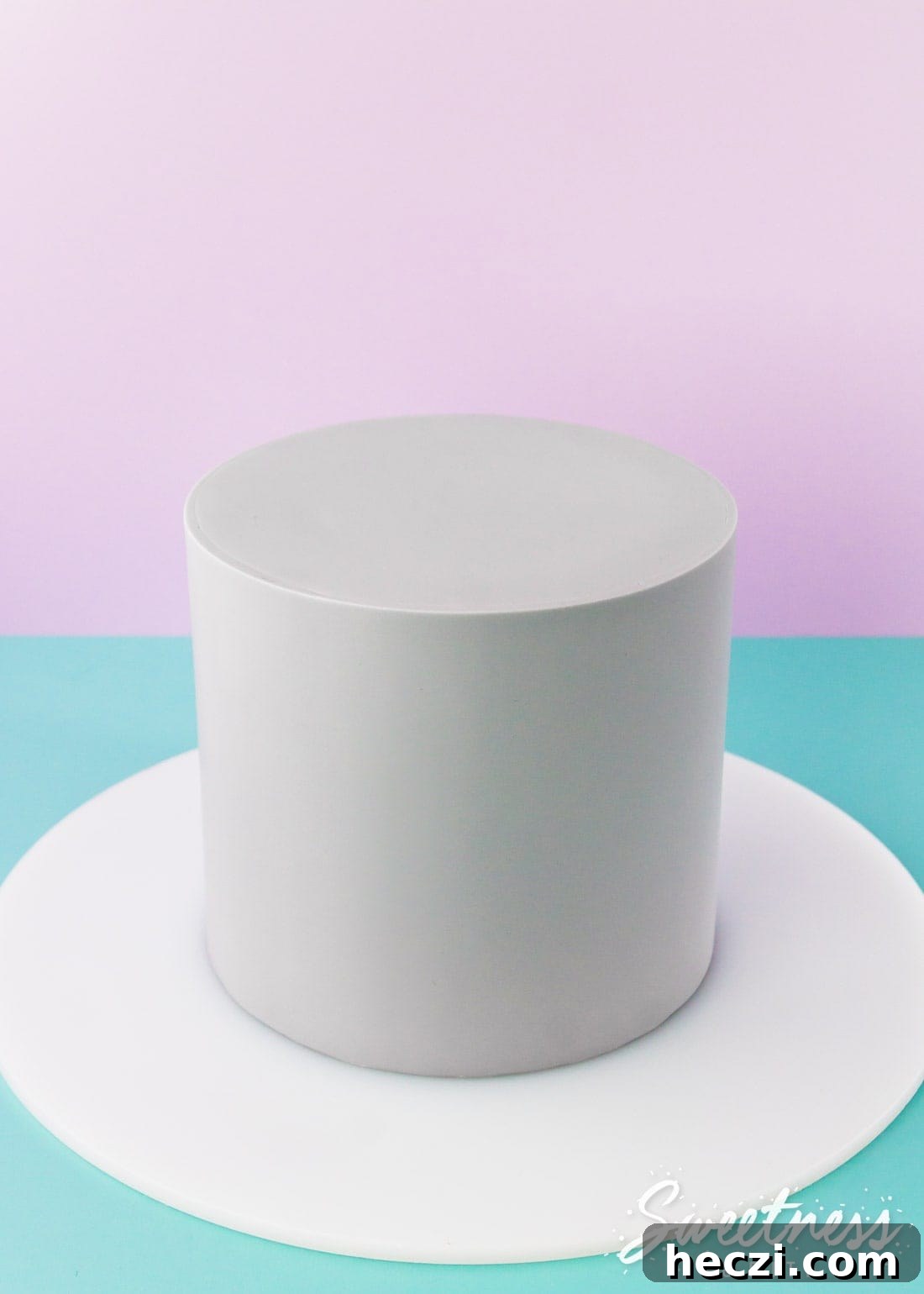
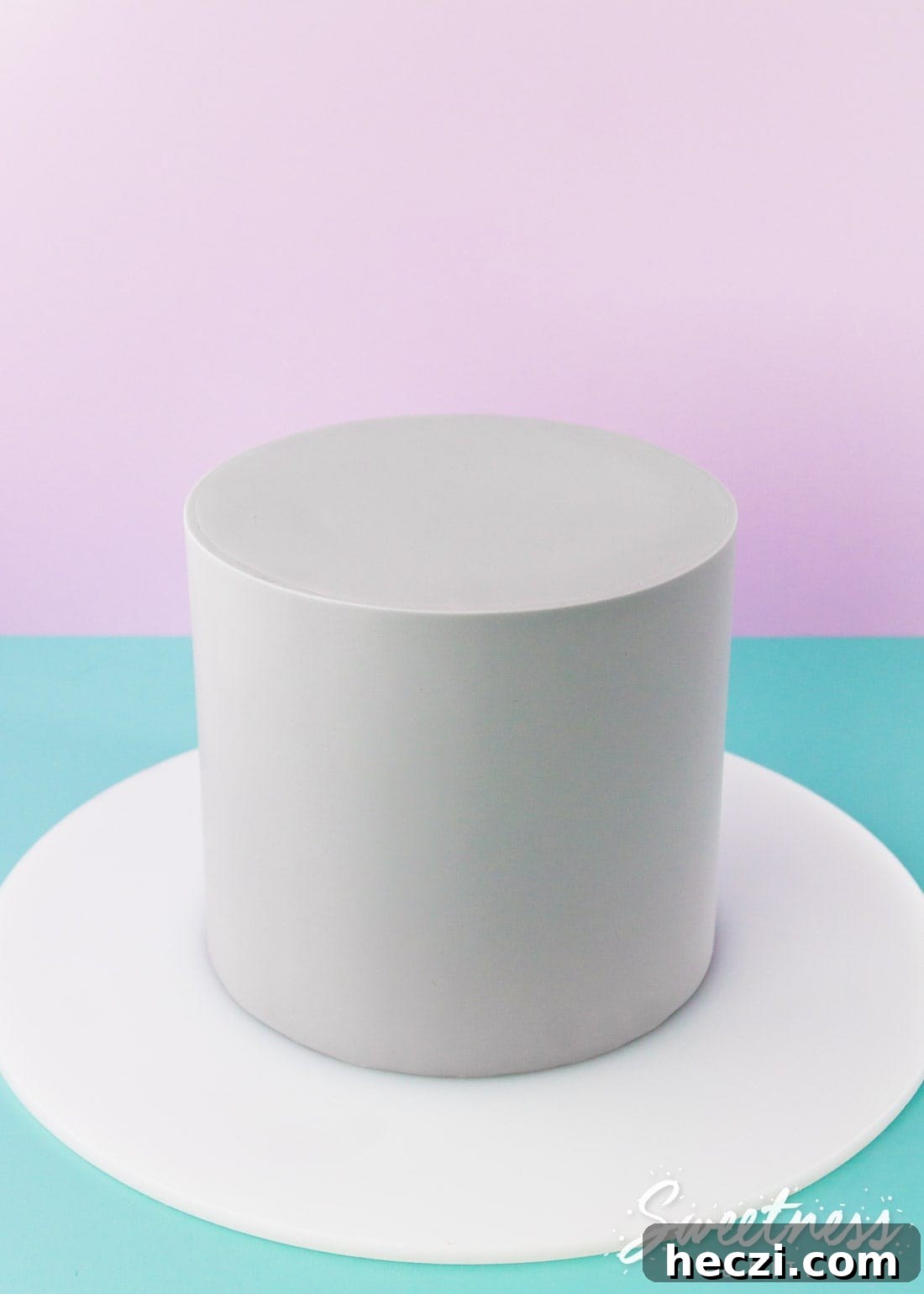
Learn to cover a cake with fondant using my preferred upside-down wrap method. If the traditional single-piece covering has frustrated you, this step-by-step guide will show you how to wrap a cake to get smooth sides, sharp edges, and tidy seams.
When I first started blogging, I would have said I’d never teach how to cover a cake with fondant. For a long time fondant and I did not get along. Every attempt brought problems: dryness, stickiness, air bubbles, tears, stretching — and plenty of frustration. Square and tall, sharp-edged cakes were the worst offenders.
I admit I’m picky: I like tall cakes with razor-sharp edges. Those preferences make covering a cake trickier because the fondant can tear on edges or dry and form “elephant skin” before you’ve smoothed it all the way down. Plenty of talented decorators can cover a cake quickly and perfectly; I’m not one of them. After a lot of trial, error and experimentation, I found a different approach that works reliably for me: wrapping the cake rather than draping one large sheet over it.
Wrapping does create seams, but done correctly the seams are neat and almost invisible unless you’re looking closely. I now wrap most of my cakes, tall or not, because it reduces stress and consistently gives a tidy finish.
Wrapping is commonly recommended for tall or multi-barrel cakes, but it’s equally useful for shorter cakes if you want a neat result. Earlier tutorials I tried involved messy trimming or multiple cut-to-size pieces that could stretch or distort. My upside-down wrap method avoids most of those problems: cover the top first, flip the cake over, then wrap one long strip around the sides. With the cake upside down you don’t need to trim along the top seam, which helps protect sharp edges and keeps your seam tidy.
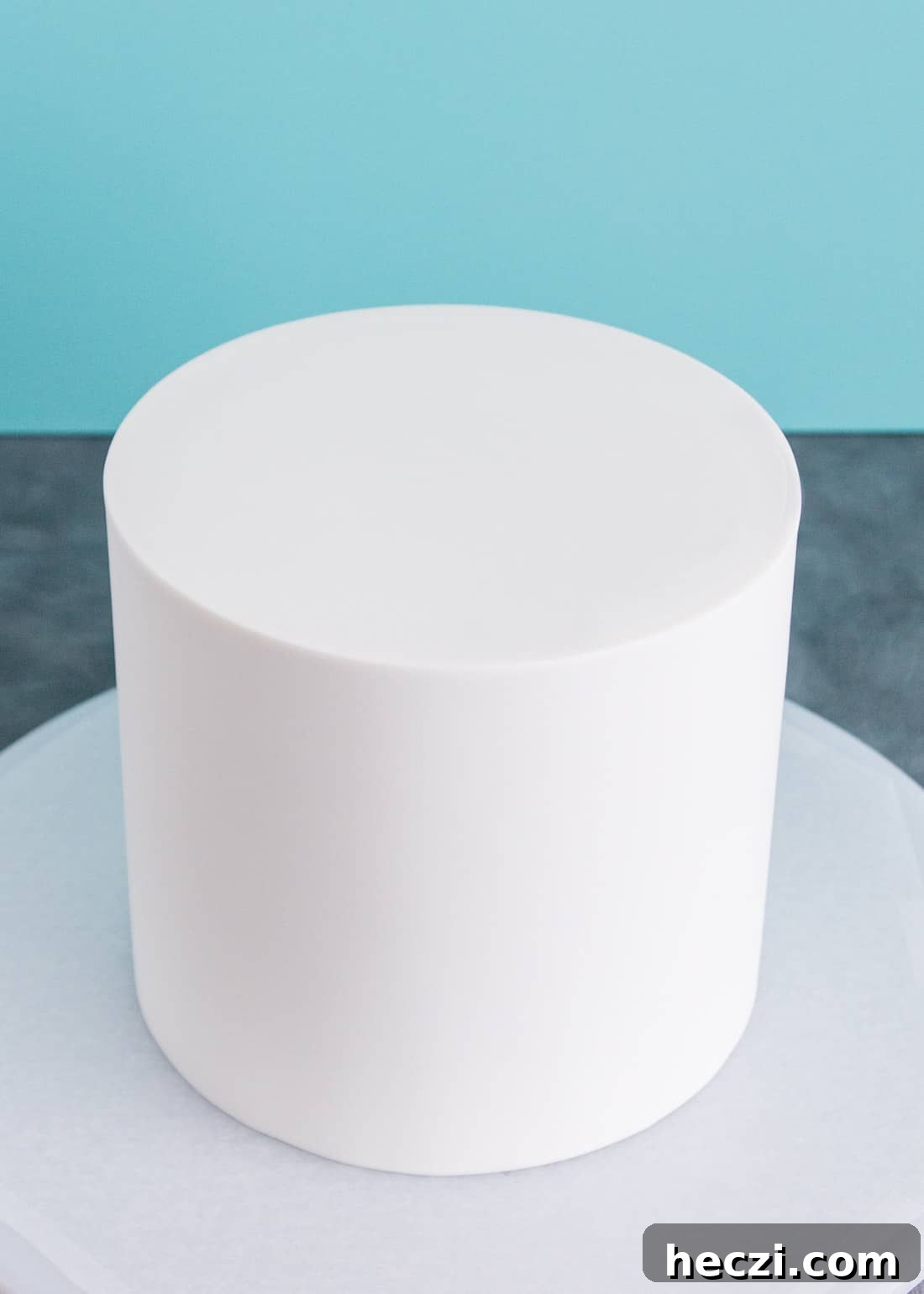
My basic process: cover the top first, flip the cake upside down, then wrap a single long strip of fondant around the sides.
Having the cake upside down moves the seam to the top of the cake rather than the side, which I prefer because it’s less visible from the front. If you need the seam on the side for design reasons, you can skip the top-first step and flip the cake immediately, then follow the wrapping steps and finish by covering the top afterwards.
Table of contents
- My Top Three Keys to Neatly Covering a Cake with Fondant
- How to Wrap a Cake With Fondant
- What You’ll Need
- The Prep
- Wrapping the Cake
- How to Store a Fondant Cake
- Fondant FAQs
My Top Three Keys to Neatly Covering a Cake with Fondant
- A good ganache base. A sharply ganached cake gives you the best foundation for sharp fondant edges. If you prefer buttercream, it must be very firm and well chilled; otherwise use ganache on the outside for a firmer surface to cover.
- Thin fondant. Roll fondant to about 3–4 mm for a tidy top seam. Thinner is better when your fondant allows. Spacers on a rolling pin make this easier and ensure even thickness.
- Neat cuts. Use a pizza cutter for the bottom/top edge that becomes your visible seam and a very sharp knife or scalpel to trim and neaten the back seam.
One useful tool is a rolling pin with flat ends for rolling the fondant strip around; it helps the edge stay even as you roll. A length of straight PVC pipe also works in a pinch.
How to Wrap a Cake With Fondant
What You’ll Need
- Ganached cake – ganache the cake the day before and let it set overnight.
- Fondant – colour and rest overnight if needed. Any good-quality fondant should work.
- Vodka or cake decorator’s alcohol – for joining seams.
- Vegetable shortening / Crisco – to help stick the fondant to ganache where needed.
- Cornstarch or icing/powdered sugar – for dusting; I prefer cornstarch.
- Waxed paper – to cover your setup board (non-stick baking paper can be used if waxed paper is unavailable).
- Long metal ruler, craft knife or scalpel and cutting mat
- Rolling pin
- Plastic and flexible fondant smoothers
- Sharp knife and/or scalpel
- Pizza cutter/wheel
- Pin or acupuncture needle – for removing air bubbles.
- Two setup boards – boards should be 3–4″ wider than the cake; one square board is handy.
- Paintbrushes – a flat brush for vodka, a fluffy brush for dusting, a flat brush for easing fondant and a small brush for seams.
- Grippy/non-slip mat – cut into a circle slightly smaller than the cake width.
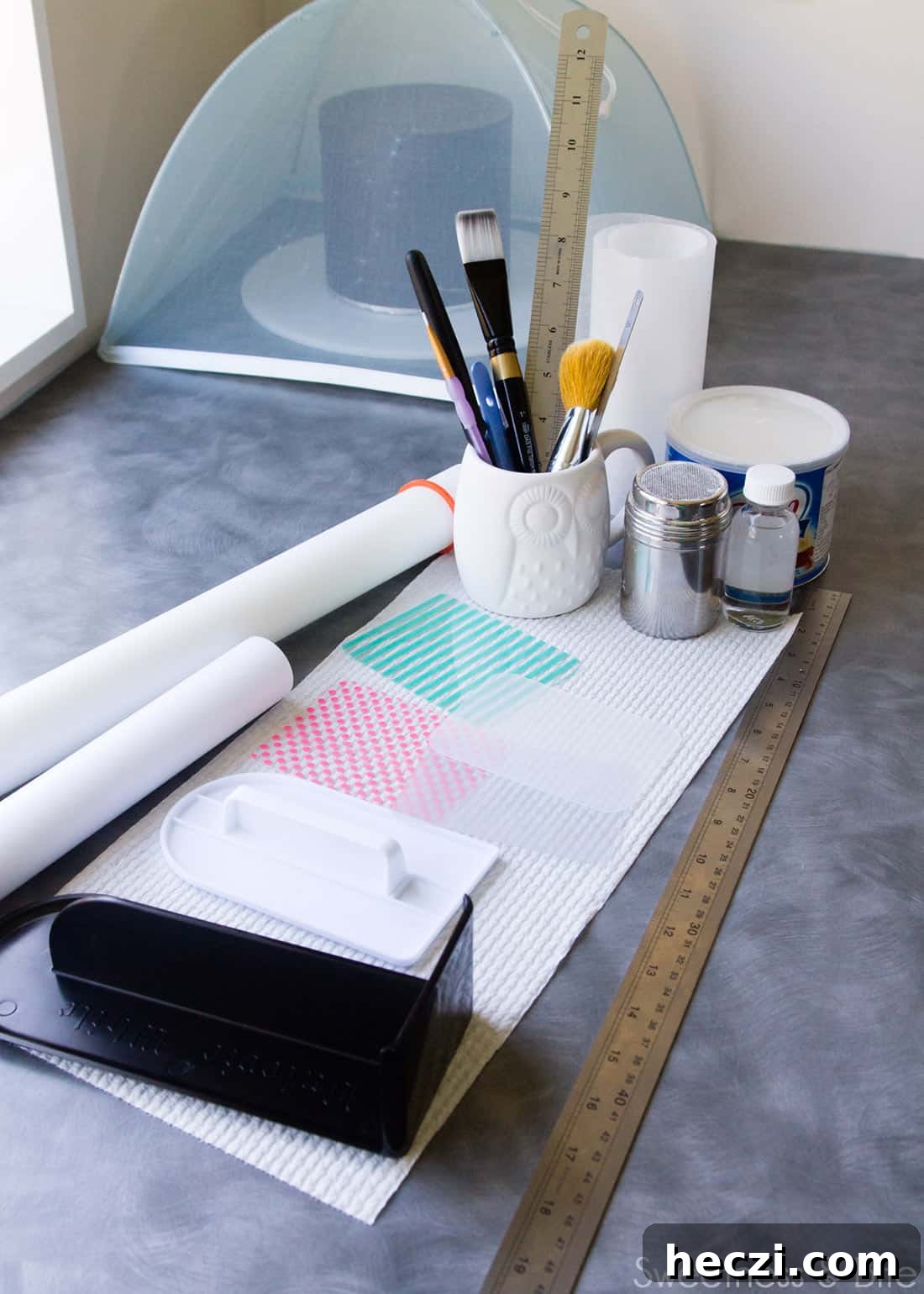
The Prep
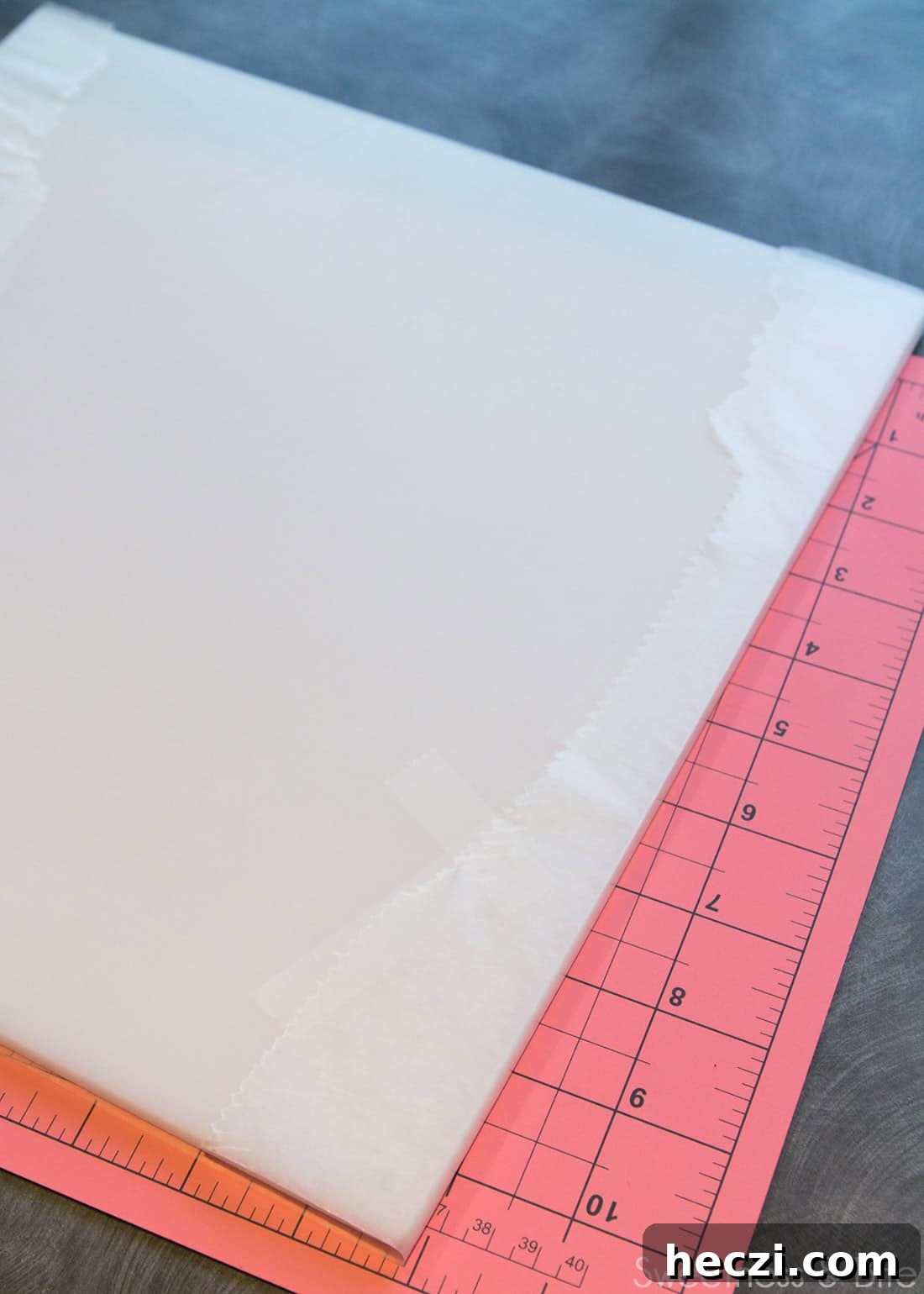
Cover a setup board with waxed paper, wax-side down, and tape it tightly on the underside so the surface is smooth. This will be the board you place on top when you flip the cake.
Create a rectangular template for the side panel: measure the cake’s circumference and height, then add 2–3″ to the circumference and 1″ to the height. Mark these dimensions on waxed or baking paper and cut the template out. This ensures one straight edge for the top seam and speeds up cutting the fondant.
Organise your tools and lightly grease knives and pizza wheel with a little shortening to prevent fondant sticking.
Wrapping the Cake
Knead the fondant until pliable but not sticky. If covering the top first, paint vodka or water on the cake top, roll a thin circle of fondant (3–4 mm) and smooth it into place with a fondant smoother. Place your waxed paper-covered board on top and flip the cake upside down. Trim excess fondant flush to the cake with a small knife.
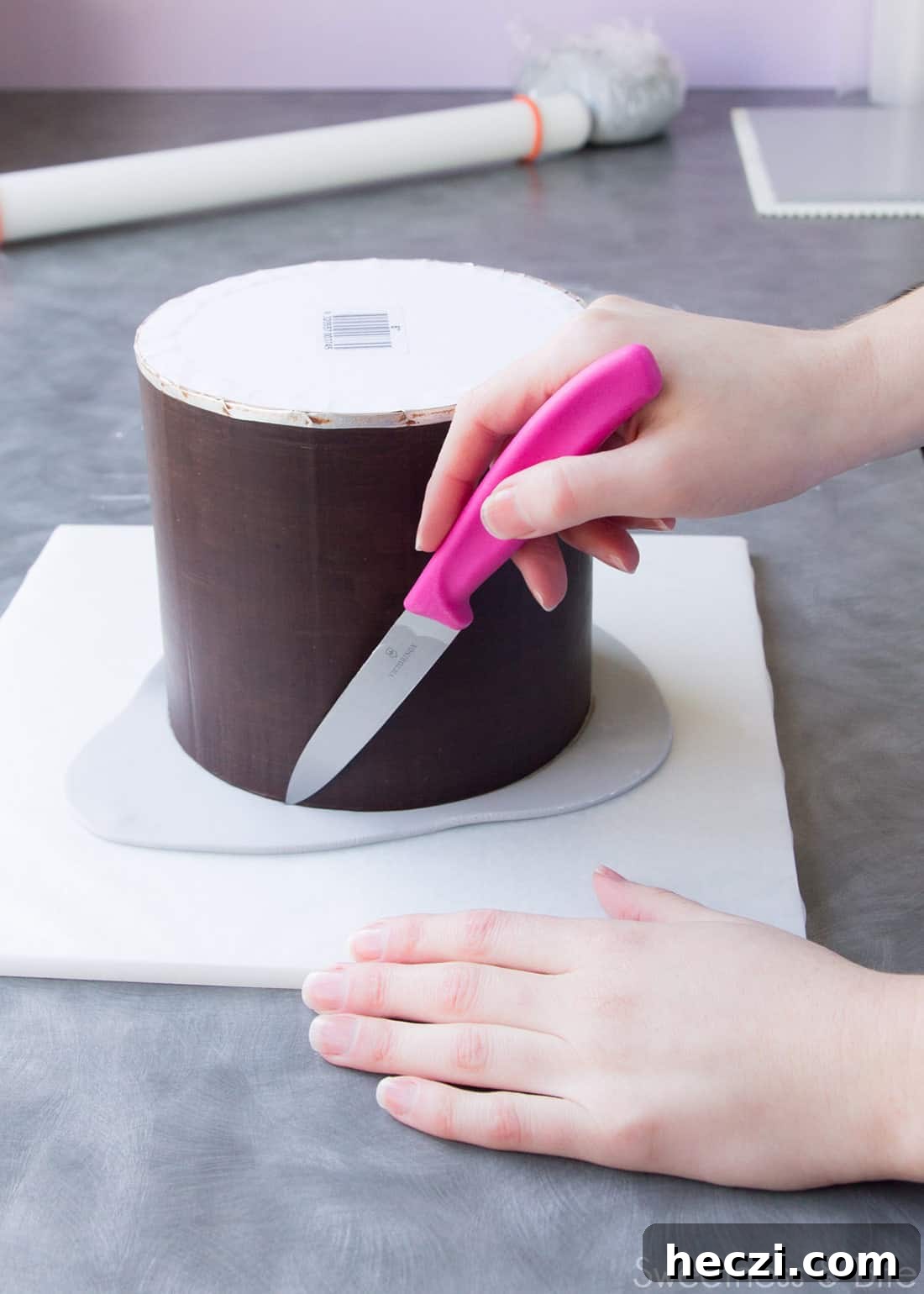
Lightly rub a thin layer of shortening on the sides of the cake (avoid the top edge covered with fondant). Knead and roll the remaining fondant into a rectangular panel on a cornstarch-dusted surface to the template size, keeping thickness even. Use the template and a pizza cutter or ruler plus knife to make a clean cut; the long edge nearest you should be the neatest, because it becomes the visible top seam.
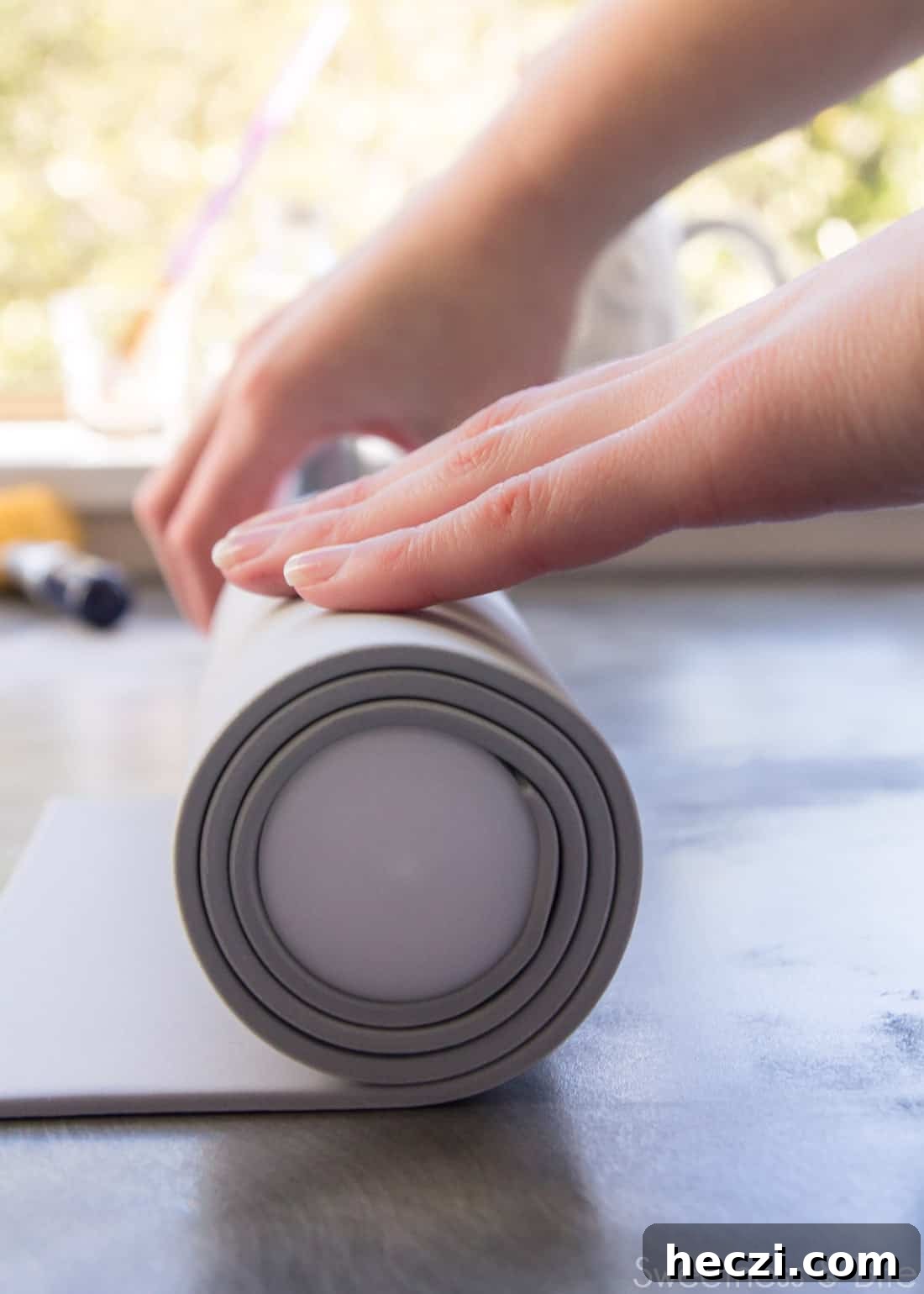
Gently roll that long edge around a flat-ended rolling pin, dusting the underside very lightly with cornstarch so the fondant won’t stick to itself. Keep the rolled edge flush and even as you roll.
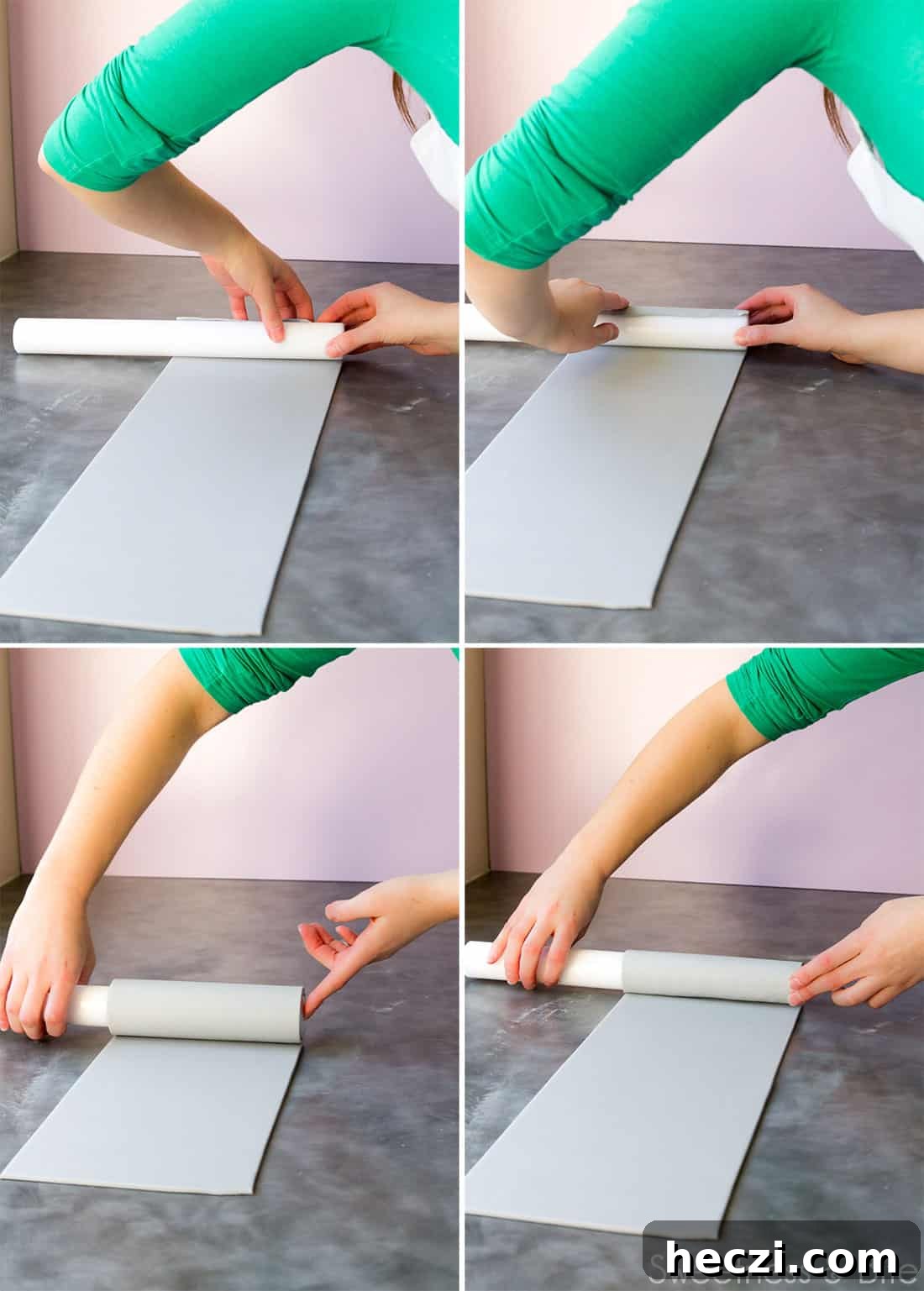
Bring the rolling pin to the cake and press the end of the fondant against the side so it adheres. Slowly unroll the fondant around the cake, smoothing with your hand as you go and checking the bottom edge so it stays flush with the board.
If the fondant sticks to itself, don’t yank it. Use a flat paintbrush to ease the layers apart, using a bit of cornstarch on the brush if needed. Keep an eye on two critical points while wrapping: the bottom edge and any sticking of fondant to itself. Air bubbles and bumps can be fixed later.
When the panel overlaps, place a ruler in the middle of the overlap and cut down through both layers with a scalpel. Remove the outer off-cut and ease the opposite edge back to take out the inner off-cut. Press the cut edges flush together — don’t overlap them — and dampen lightly with vodka if they won’t stick. Rub the seam with your fingers and then buff it with a thicker flexible smoother in gentle circular motions to avoid distorting the line.
Work around the cake with smoothers, checking and releasing air bubbles with a needle where needed. Trim the excess fondant from the top (which will be the visible top of the finished cake) by running a knife flush to the setup board for a clean cut.
Place a non-slip mat on top of the board, put your original setup board back on and flip the cake right-side-up. If you taped the waxed paper, cut through the tape and remove the board; peel off the paper carefully. Gently smooth the top seam with your fingers and apply a rigid smoother to the side and a flexible smoother to the top edge to sharpen the join.
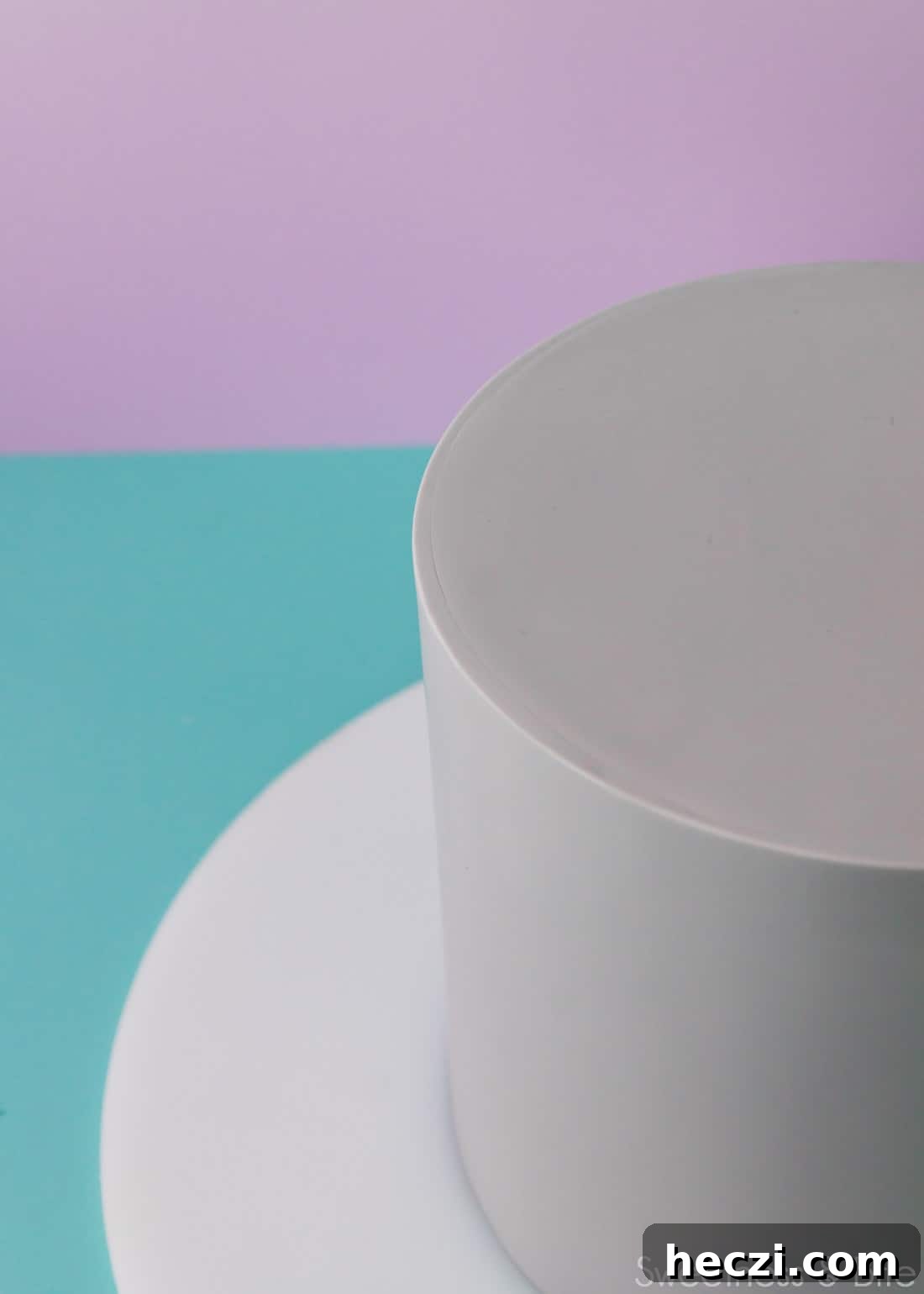
Finish by refining any small bumps with a thinner flexible smoother and tidying the back seam if needed. When you’re finished you’ll have a neat fondant-wrapped cake with a tidy top seam and sharp edge.
How to Store a Fondant Cake
Storage depends on fillings. Cakes ganached before fondant can be kept at cool room temperature for 2–3 days in a covered box away from light. Buttercream-filled cakes that are only buttercream-covered should be fine at room temperature for about a day; longer storage is best in the fridge inside a clean cake box to avoid moisture and odours. Bring refrigerated cakes to room temperature inside the box before serving to reduce condensation on the fondant. Cakes with perishable fillings such as fresh fruit should be refrigerated.
Fondant FAQs
Try the all-in-one drape method first. If you struggle with that or need a more forgiving approach, try this wrap method. Read the instructions fully, have all tools ready and allow plenty of time the first few attempts.
Yes, but the buttercream must be very chilled and firm. You’ll need to work quickly before it softens. For best results, fill with buttercream and coat the outside with ganache, then cover with fondant.
Use the same method, deciding whether the back seam sits on a corner or the middle of a side. Smooth gently around the corners to avoid trapped air and use two smoothers to sharpen the edges when finished.
Different brands behave differently. Avoid fondants that are overly soft or sticky. Firmer commercial fondants often work better for wrapping; try a few to find what suits your environment and technique.
Work efficiently, keep tools and materials ready, use only minimal cornstarch on surfaces, and prefer a little shortening when kneading instead of extra dusting. If fondant is dry, knead in a small amount of shortening or a touch of food-grade glycerine, but avoid over-softening.
Now you know the upside-down wrap method for covering a cake with fondant. If you have questions about this technique, try it out and refine the steps that work best for you. Happy wrapping!
~Natalie