
With their small size and concentrated flavor, French cornichons occupy a distinctive place among pickles. Whether served as a garnish, a condiment, or an ingredient, these tiny pickles bring bright acidity and crunchy texture to many dishes. Below is a concise guide to what makes cornichons unique and how to use them in your cooking.
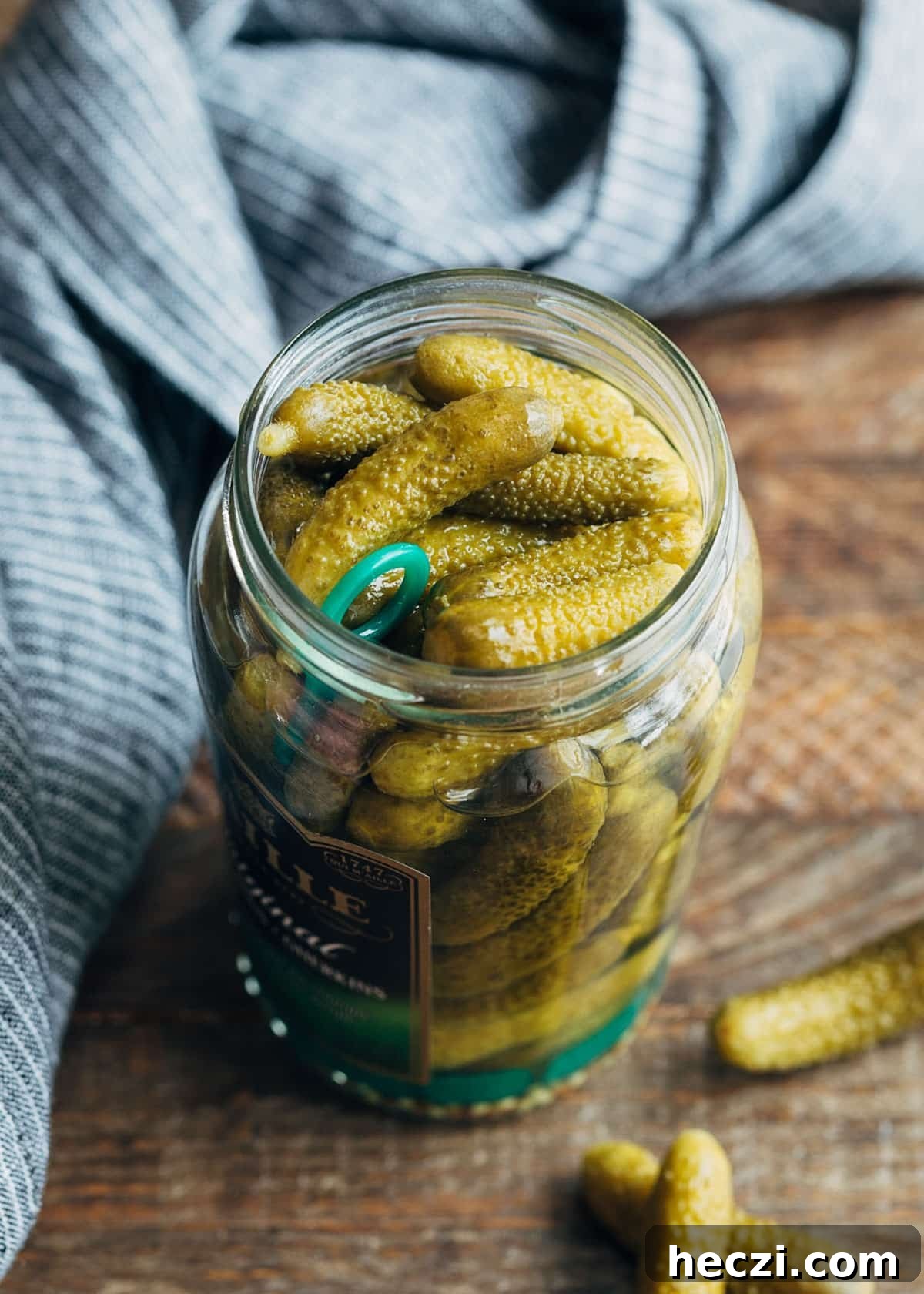
What Are Cornichons?
Cornichons (pronounced KOR-nee-shohns) are small French pickles made from young gherkins picked before they fully mature. Typically 1½ to 2 inches long, they have a bumpy skin and a firm, crunchy bite.
Because they’re harvested early, cornichons retain a compact texture and a concentrated, tangy flavor. Compared with larger dill pickles, they taste sharper and more herbaceous, with a balance of savory, slightly sweet, and vinegary notes derived from their brine.
How These French Pickles Are Made
The traditional process begins with salting the freshly picked gherkins—often overnight—to draw out moisture and help preserve firmness. After rinsing, they’re packed into jars with a vinegar-based brine and aromatics such as dill, tarragon, mustard seeds, coriander, or cloves. Many recipes also include garlic, shallots, or pearl onions for added flavor.
The combination of quick pickling and aromatic spices produces the bright, assertive taste that defines cornichons.
Ways to Use Cornichons
Cornichons are versatile and elevate a variety of dishes by adding acidity, crunch, and herbal notes. Common uses include:
- Charcuterie: Whole cornichons are a classic match for cured meats, pâtés, and terrines, offering a sharp counterpoint to rich, fatty flavors. They also complement cheese boards and creamy spreads.
- Cheese Pairings: Cornichons are traditionally served with melted cheeses like Raclette and with other cheese-focused dishes, where their tang cuts through richness.
- Sandwiches: Sliced cornichons add a bright, vinegary kick to sandwiches—think ham and Gruyère with Dijon, jambon-beurre, or burgers.
- Bound Salads: Chopped cornichons bring lively acidity to egg, tuna, and potato salads, and they work well in mayonnaise-based fillings and vinaigrette-dressed salads alike.
- Steak Tartare: Finely diced cornichons are commonly mixed into beef tartare, where their acidity balances the richness of the raw meat.
- Condiments: Minced cornichons brighten sauces like Russian dressing and tartar sauce, adding complexity and bite.
- Cocktail Garnish: For a savory twist, use cornichons as a garnish for Martinis or Bloody Marys.
- Relish Trays: Cornichons fit naturally on relish trays alongside olives and other pickled vegetables, serving as a zesty starter or side.
Shopping Tips
Cornichons are commonly found in grocery stores near other shelf-stable pickles. If they’re not available locally, specialty cheese shops and gourmet markets often carry them. When selecting jars, look for uniformly sized pickles and a clear brine free of cloudiness.
Some brands offer variations, including spicy versions flavored with chili. Jar features such as a pickle lifter—sometimes visible as a small plastic insert—can make serving easier.
Storage
Unopened jars of cornichons store well in a cool, dark pantry for an extended period; consult the product label for specific shelf-life guidance. After opening, keep cornichons submerged in their brine, seal the jar tightly, and refrigerate. Properly stored, they will remain good for several months and retain their crisp texture and bright flavor.
Cornichons are a small but powerful ingredient: a few slices or a single whole pickle can transform a rich bite into a balanced, memorable one. Keep a jar on hand to add acidity, crunch, and French flair to everyday meals.