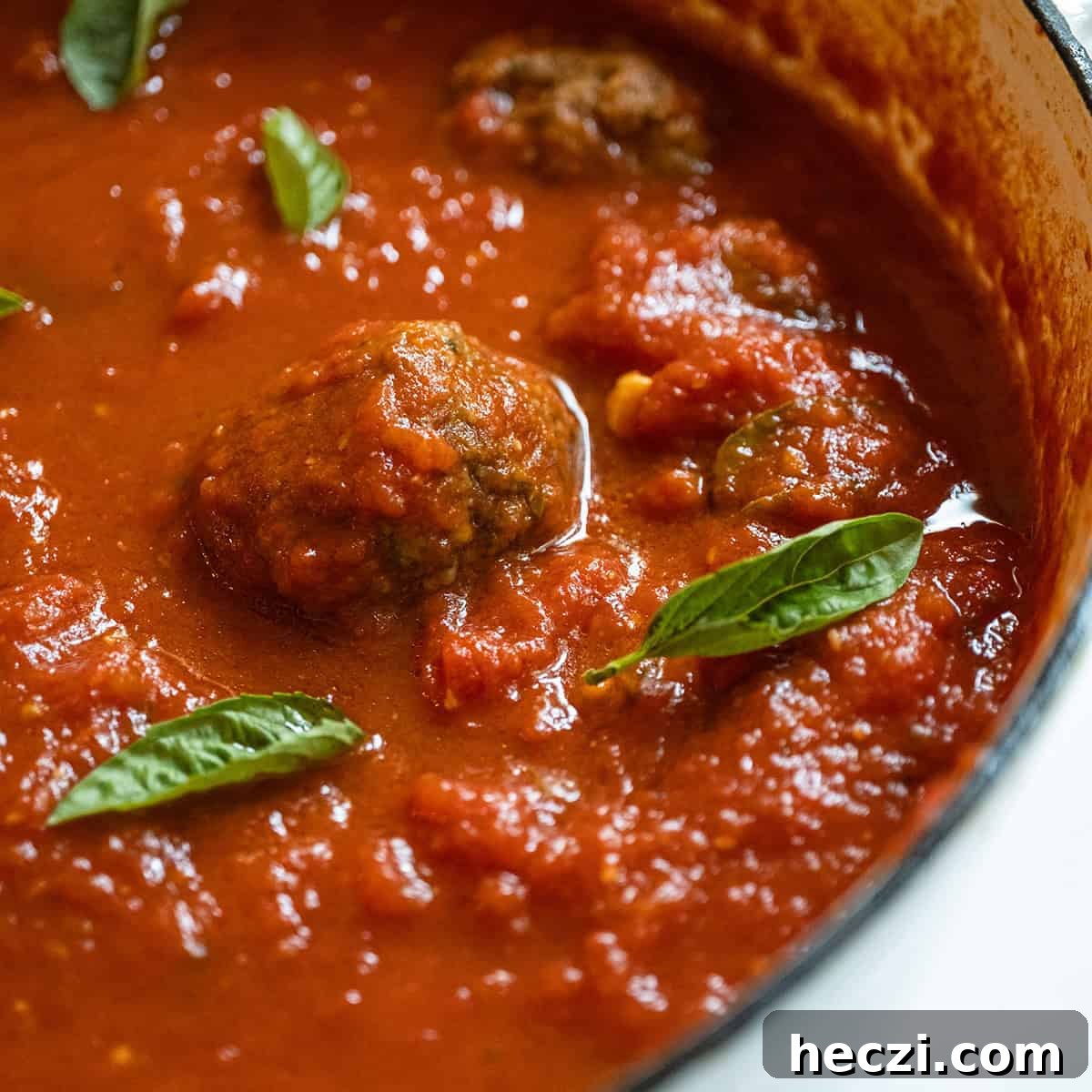
There’s no mystery behind an authentic Italian Sunday sauce. No nonna has a hidden trick; the secret is simply quality ingredients, a few straightforward steps, and a long, patient simmer. Below is my not-so-secret Sunday sauce with practical tips and a classic approach that yields rich, nostalgic flavor.
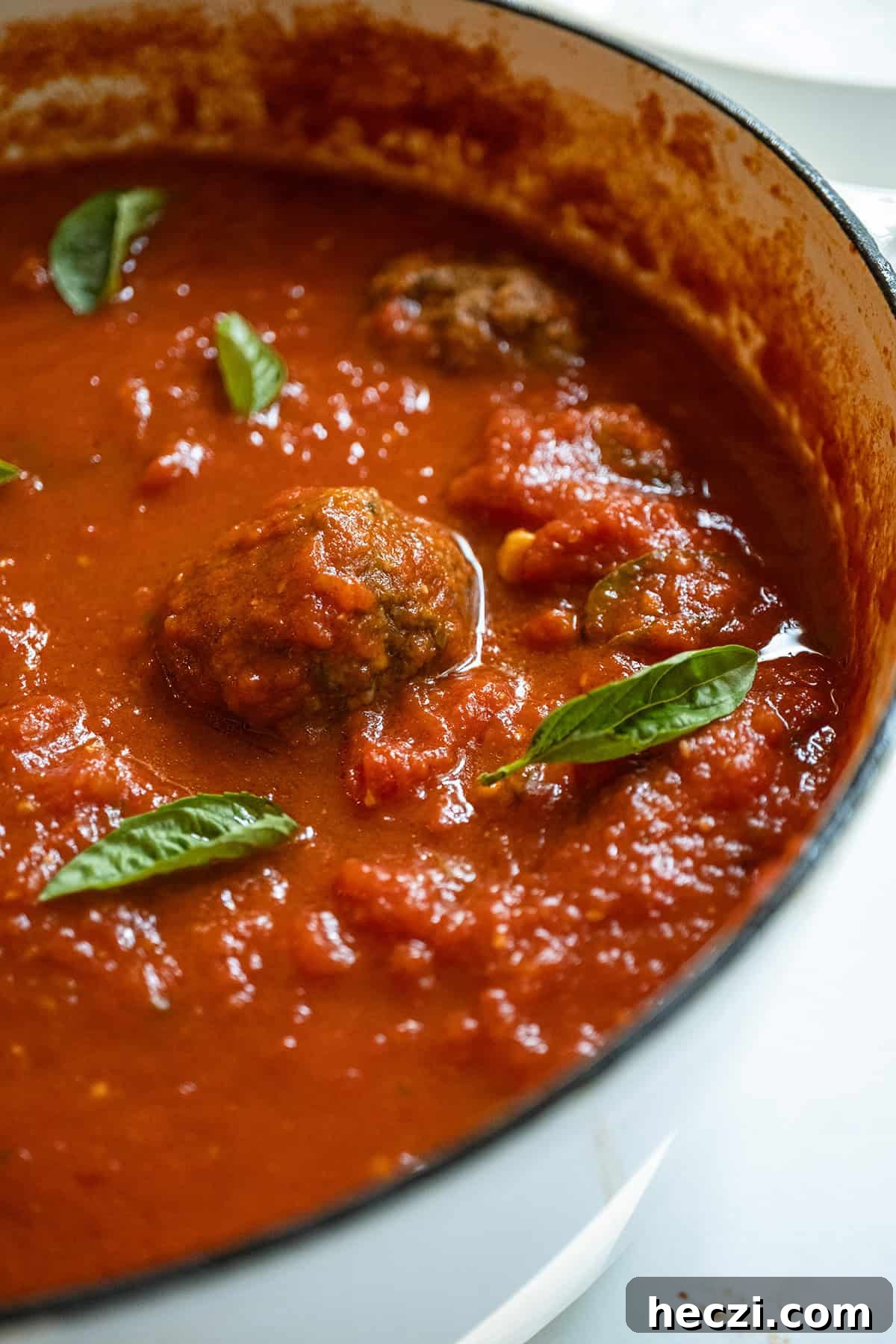
If you enjoy all-day cooking projects, you might also like Bison Ragu or Authentic Bolognese for other slow-simmered Italian sauces.
[feast_advanced_jump_to]
There are No Secrets to Sunday Sauce
Lots of people swear theirs is the best. I won’t claim mine is the single best—you’ll always have fondness for your mother’s or grandmother’s version—but the fundamentals are the same: fresh ingredients, balanced seasoning, and time. Braised tomato sauces like this, or a ragu, make perfect Sunday meals because they reward patience with deep flavor.
Sunday sauce is about more than taste; it’s about memory. Most of us prefer the sauce we grew up with because it brings back family dinners: conversation, laughter, the occasional argument about frying versus baking meatballs, and a table full of people. Use this guide to build a sauce that becomes your family’s tradition.
If you want a simpler tomato sauce, check out The Ultimate Guide to Marinara Sauce, but if you’re making a true Sunday sauce, read on and learn each step and ingredient.
Ingredient Notes and Substitutions
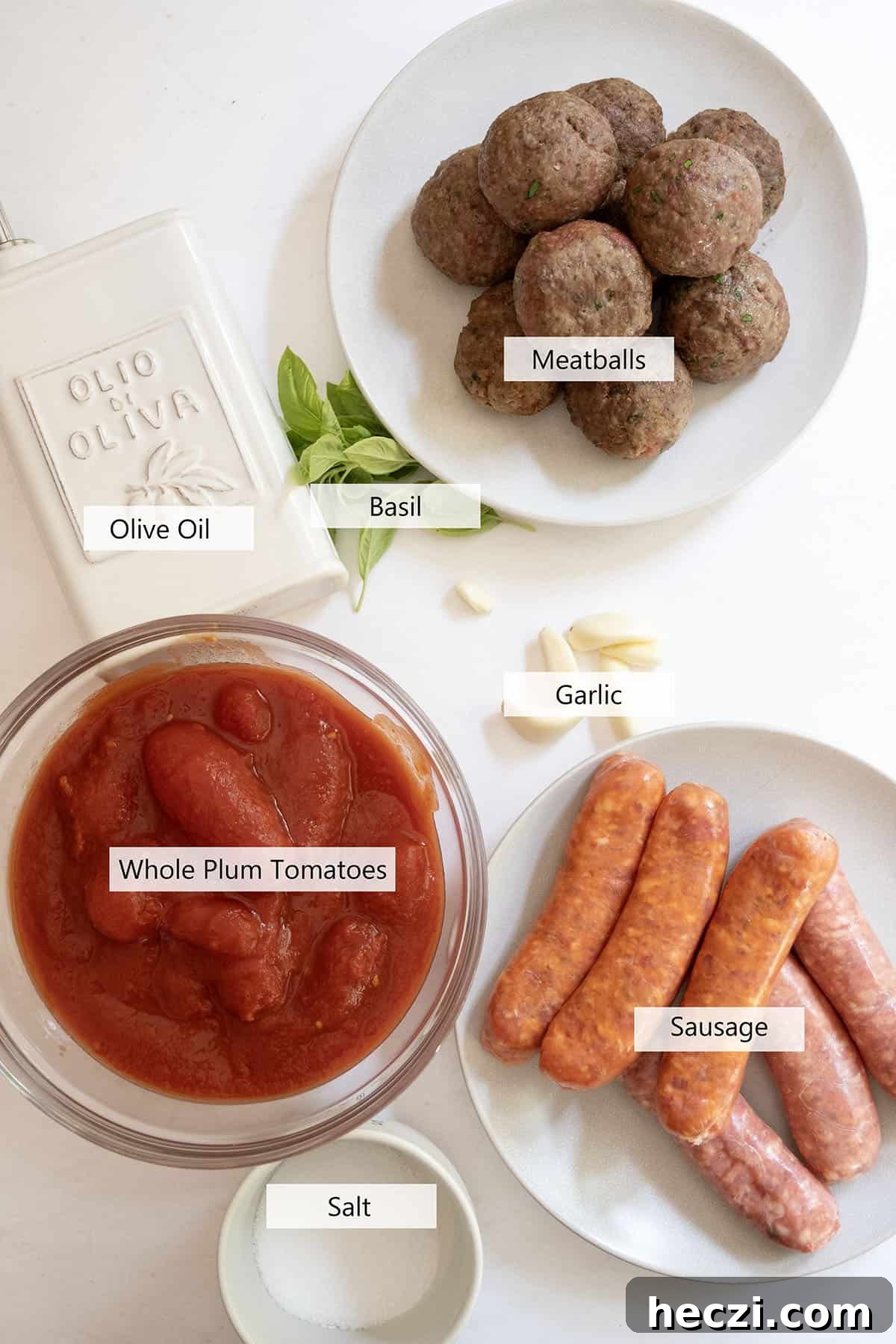
- Garlic. Use fresh garlic for the cleanest flavor. Pre-peeled cloves are fine, but avoid powders or bottled substitutes that can taste artificial. Slice or mince just before cooking for the best aroma.
- Extra Virgin Olive Oil. A good-quality olive oil makes a difference. Choose one you trust and use it for the initial sauté to build flavor.
- Tomato Paste. Browning tomato paste concentrates flavor and adds depth. Cook it a minute or two before adding tomatoes so it starts to caramelize.
- Whole Plum Tomatoes. San Marzano-style peeled tomatoes are my choice for a balanced, sweet-tart base. Brands vary—pick a reliable brand or the best canned tomatoes you can find.
- Basil. Use fresh basil: add half early in the cook and reserve the rest to finish the sauce for a bright herbal lift.
- Salt. Add salt gradually and taste as the sauce reduces; slow cooking often needs incremental seasoning.
- Meat.
- Classic fried meatballs are an ideal pairing and I include them most often.
- Sausage (sweet, hot, or mixed) is a favorite; homemade sausage lets you control seasoning.
- Other options: pork ribs, neckbones, or short ribs for rich braised flavor.
- For holidays, stuffed braciole (rolled flank steak) makes a special addition.
- Additions. A Parmesan rind simmered in the sauce adds a subtle nutty, savory note—if you have one, toss it in while it cooks.
Mix and match ingredients to create a Sunday sauce that fits your family’s taste and traditions.
How to Make an Authentic Sunday Sauce

Step 1: Slice garlic thinly and evenly so it cooks uniformly.
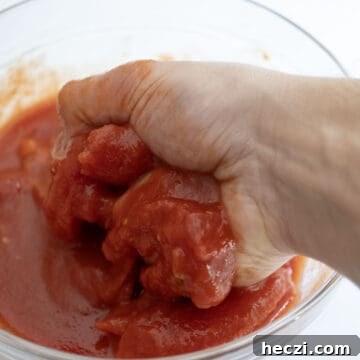
Step 2: Hand-crush your canned tomatoes in a bowl to keep some texture.

Step 3: Sear or par-fry meats (meatballs, sausages, ribs) and set them aside. Browning adds flavor and color before simmering.
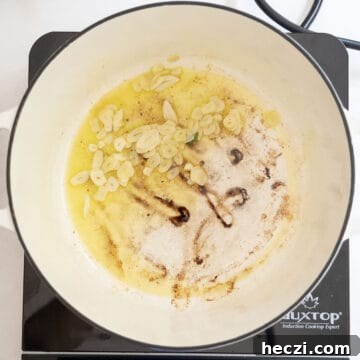
Step 4: In the same pot, warm extra virgin olive oil over medium heat. Add the garlic and stir frequently for about one minute.
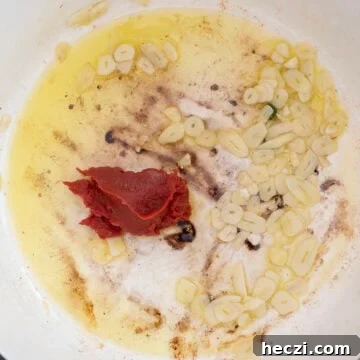
Step 5: Add tomato paste away from the garlic and let it sit briefly so it can caramelize, then stir to combine. This step deepens the tomato flavor.
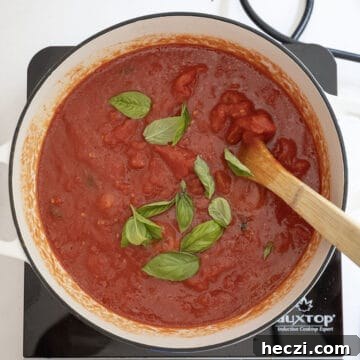
Step 6: Add the crushed tomatoes, half the basil, and about ½ teaspoon of salt. Bring the sauce to a simmer.

Step 7: When the sauce simmers, return the seared meat to the pot. Cover and keep it at a low simmer for about 3 hours, stirring every 20–30 minutes. Taste and adjust salt as it reduces.
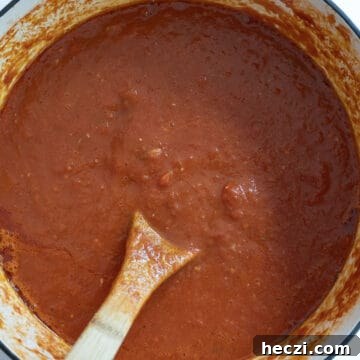
Step 8: Remove the meat from the sauce. If you prefer a smoother texture, pulse the sauce briefly with an immersion blender; otherwise leave it slightly chunky. Return the meat to serve alongside the pasta.
Finish by cooking your preferred pasta, drain and return it to the pot, then combine with a generous amount of sauce while both are hot so the pasta absorbs flavor. Serve with freshly grated Parmesan.
Scaling Sunday Sauce Conversion Chart
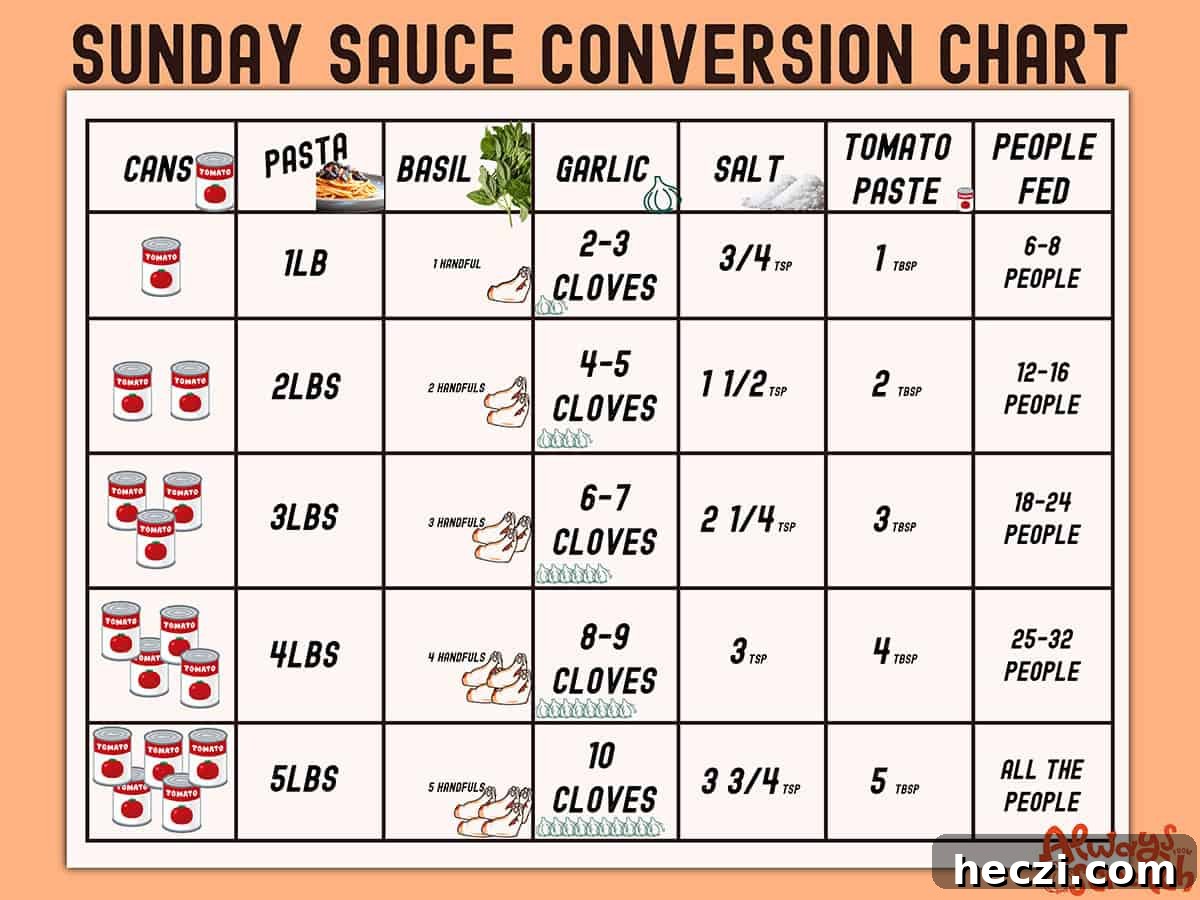
Use this conversion chart to scale the sauce for larger groups—double or triple quantities to feed a crowd and save time on future meals.
Pro Tips!
- Time and patience are the real keys. Tomatoes need time to cook through and develop flavor.
- Stir regularly to prevent scorching on the bottom of the pot.
- Add salt gradually throughout cooking; the sauce’s flavor concentrates as it reduces.
- Caramelize the tomato paste to unlock its sweetness and deepen the sauce.
- Do not add sugar—slow cooking will naturally balance acidity.
- Finish with fresh basil for brightness.
- For a silky texture, use an immersion blender at the end, pulsing to your desired consistency.
- Make large batches and freeze portions for quick meals or to repurpose in dishes like stuffed shells or baked ziti.
Recipe FAQs
It’s the sauce that would commonly simmer in Italian households on Sundays, filling the house with slow-cooked tomato and meat aromas. In colder months it becomes a weekly tradition; in summer, families might choose a lighter pomodoro instead.
Yes. Portion the cooled sauce into airtight containers or freezer bags and store for future meals. Making double batches saves time later.
Bolognese is a meat-forward ragù cooked with ground meats and soffritto (onion, carrot, celery). Sunday sauce is a tomato-based braise often cooked with whole meats like meatballs or sausages that are returned to the dish for serving.
What to Serve with This Sauce
Serve this Sunday sauce over a hearty pasta with meatballs and sausage on the side for a classic, comforting meal. Complement it with simple Italian sides:
- Sauteed rapini with garlic, garlic Parmesan green beans, radicchio salad, or a Caesar salad.
- Fresh cast-iron focaccia or crusty bread and, if desired, crispy chicken cutlets.
- Italian-style antipasti like eggplant caponata or marinated eggplant and onions before the main course.
- Finish with an Italian dessert such as a layered cookie cake or a creamy tiramisu for a festive touch.
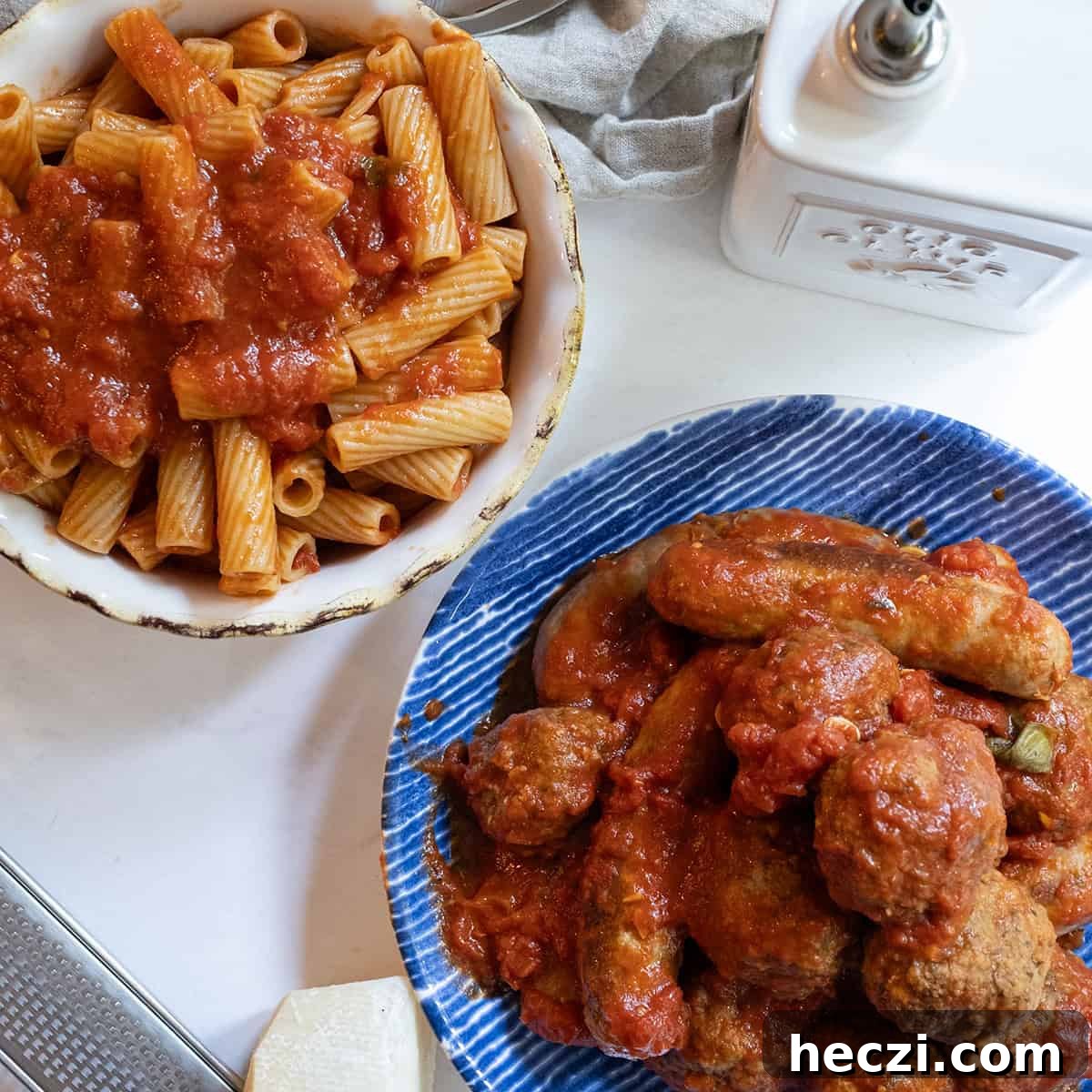
Some Sunday Sauce Meat Recipes!
- Classic Italian Fried Meatballs
- How to Make Homemade Italian Sausage
- Authentic Italian Braciole
- Authentic Italian Baked Ziti
Follow us on Instagram @vindelgiudice for more video tips and recipe inspiration. Leave a comment and share the “secrets” to your sauce if you’d like—tradition grows when people swap ideas.
Authentic Italian Sunday Sauce
Vincent DelGiudice
Pin Recipe
Equipment
-
1 large pot
-
Immersion blender or blender (optional)
Ingredients
- 8 cloves garlic, minced
- 3 tablespoon tomato paste
- 3 24 oz cans San Marzano peeled tomatoes
- 9 basil leaves
- 1-2 tablespoon kosher salt
- 10 meatballs
- 6 Italian sausages (hot, sweet, or both)
- 3 tablespoon extra virgin olive oil
- 1 lb pasta
Instructions
-
In a large pot, heat extra virgin olive oil over medium heat. Once hot, add the garlic and stir often for 1 minute. Add the tomato paste away from the garlic and let it sit briefly to caramelize, then stir together and cook another minute.
-
Pour in the crushed San Marzano tomatoes and use a wooden spoon to break them up as they heat. Stir in half the basil and about ½ teaspoon salt, and bring the sauce to a simmer.
-
Keep the sauce at a low simmer and add par-cooked meatballs and sausages. Let the sauce cook undisturbed on low for about 3 hours, stirring periodically and adjusting salt to taste.
-
Cook pasta according to package directions. Remove meat from the sauce. If you want a smoother sauce, pulse with an immersion blender now. Combine the pasta and sauce in the pasta pot and serve immediately with fresh Parmesan.
Video
Notes
- Time and patience are essential; tomatoes need to cook through to develop the right flavor.
- Stir frequently to avoid burning the sauce on the bottom of the pot.
- Add salt in small increments as the sauce reduces.
- Caramelizing tomato paste amplifies sweetness and depth.
- Avoid adding sugar; slow cooking will temper acidity naturally.
- Finish with fresh basil for a final burst of aroma.