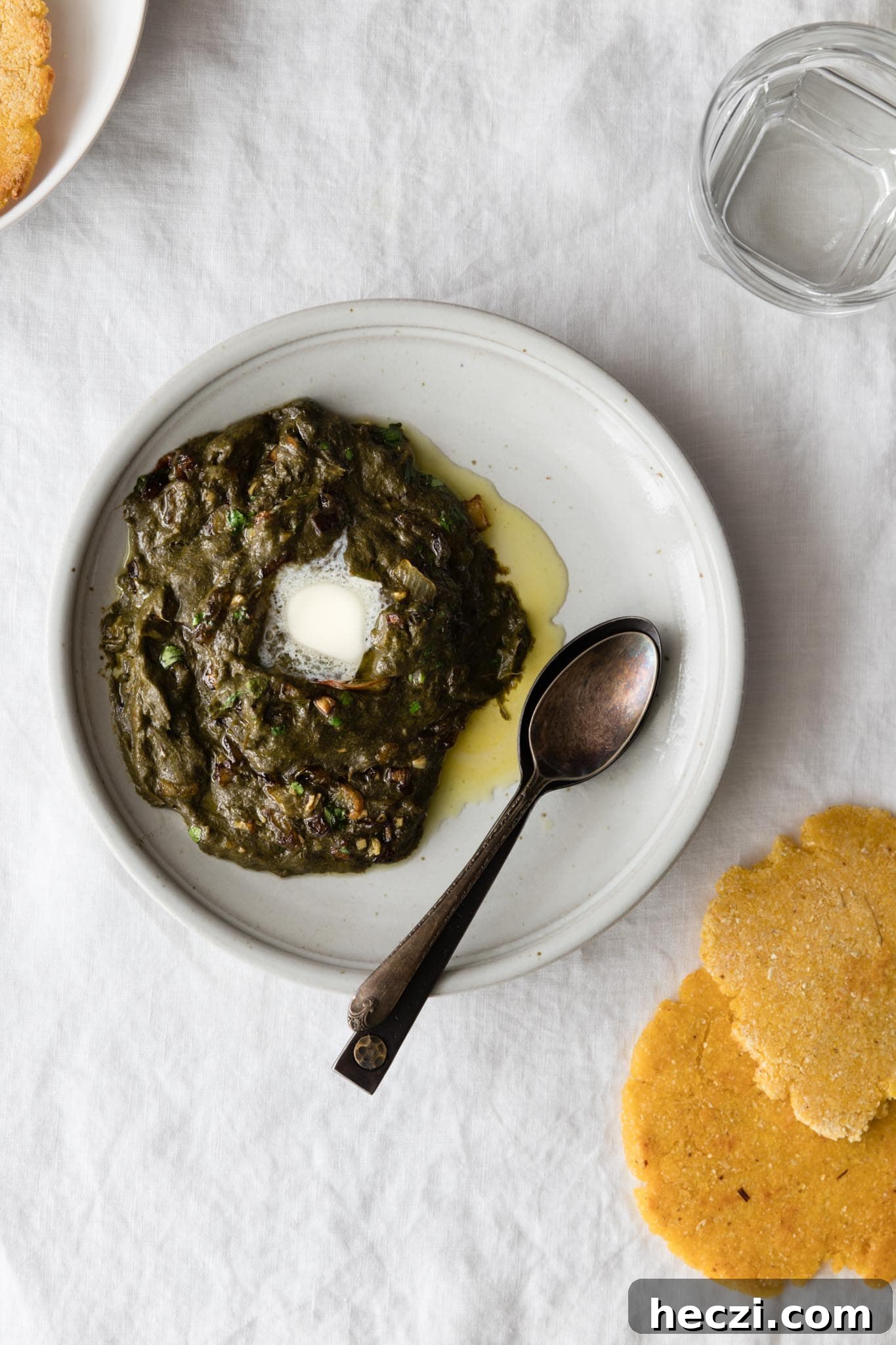
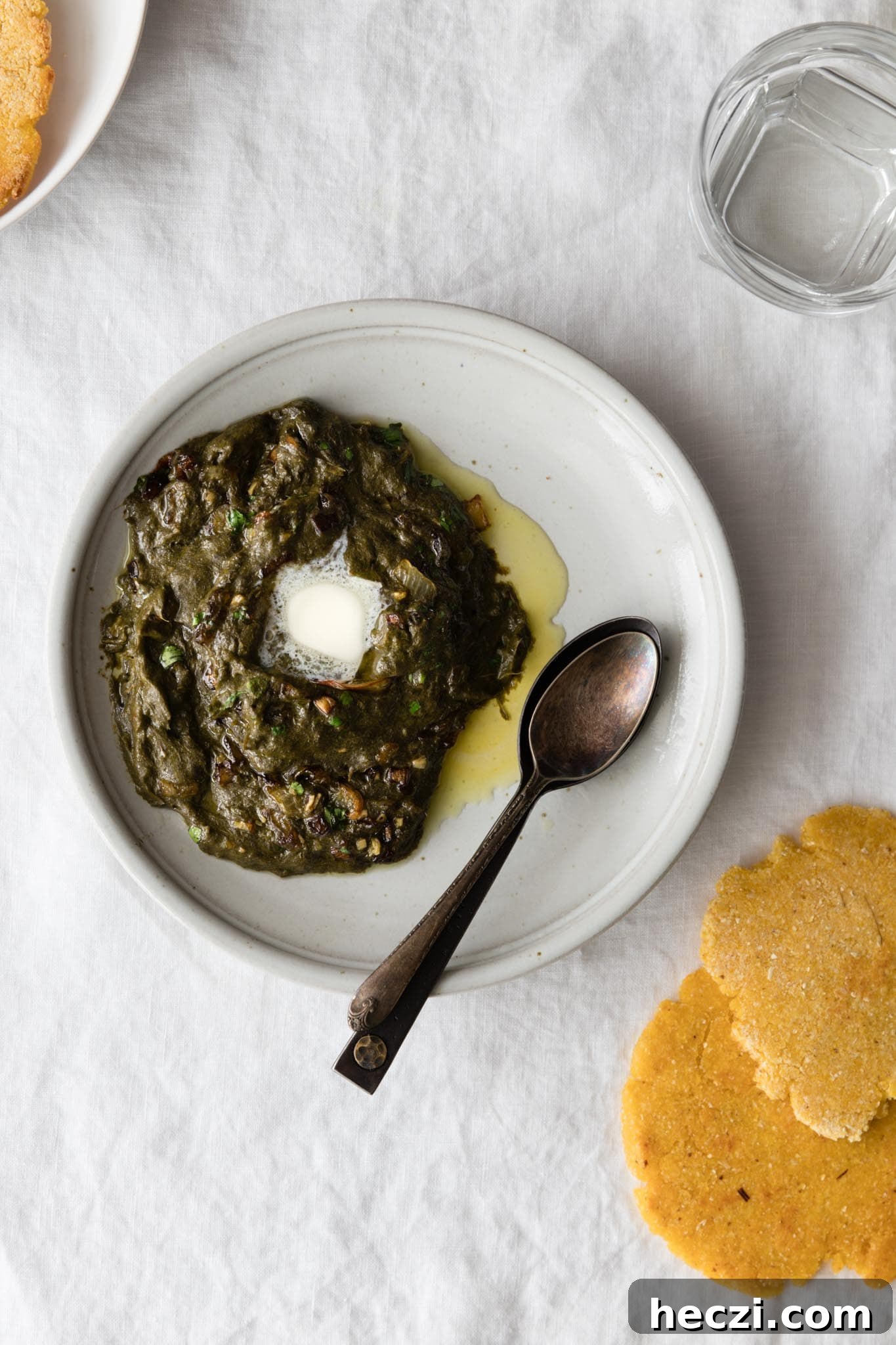
Here’s an easy, authentic Punjabi-style Sarson Ka Saag (mustard greens and spinach curry). This version includes stovetop and Instant Pot instructions, plus substitutions if mustard greens aren’t available. Ready in under an hour and tested to deliver the nostalgic, comforting flavor of the classic dish.
“I’ve made this 3 or 4 times now, and it always comes out delicious! Thank you so so much for sharing!”
Gabby
Sarson Ka Saag is a celebration of leafy greens—packed, earthy, and warming. At first you might expect a strong bitterness, but well-balanced saag is savory, rounded, and irresistible when scooped up with makai ki roti (cornmeal flatbread) on a cold evening. This recipe keeps things simple: a few core ingredients, a short cooking time, and a final tadka (tempering) that lifts the whole dish.
More Greens: Palak/Saag Paneer, 30-Minute Aloo Palak, Palak Chicken
Navigation
- What Is Saag, Particularly Sarson Ka Saag?
- Notes On The Ingredients
- How To Make Sarson Ka Saag (Instant Pot or Stovetop)
- About Mustard Greens
- Greens You Can Substitute
- How To Double This Recipe
- Tips On Making Sarson Ka Saag
- What To Serve With Sarson Ka Saag
- Easy Sarson Ka Saag Recipe
What is Saag, particularly Sarson Ka Saag?
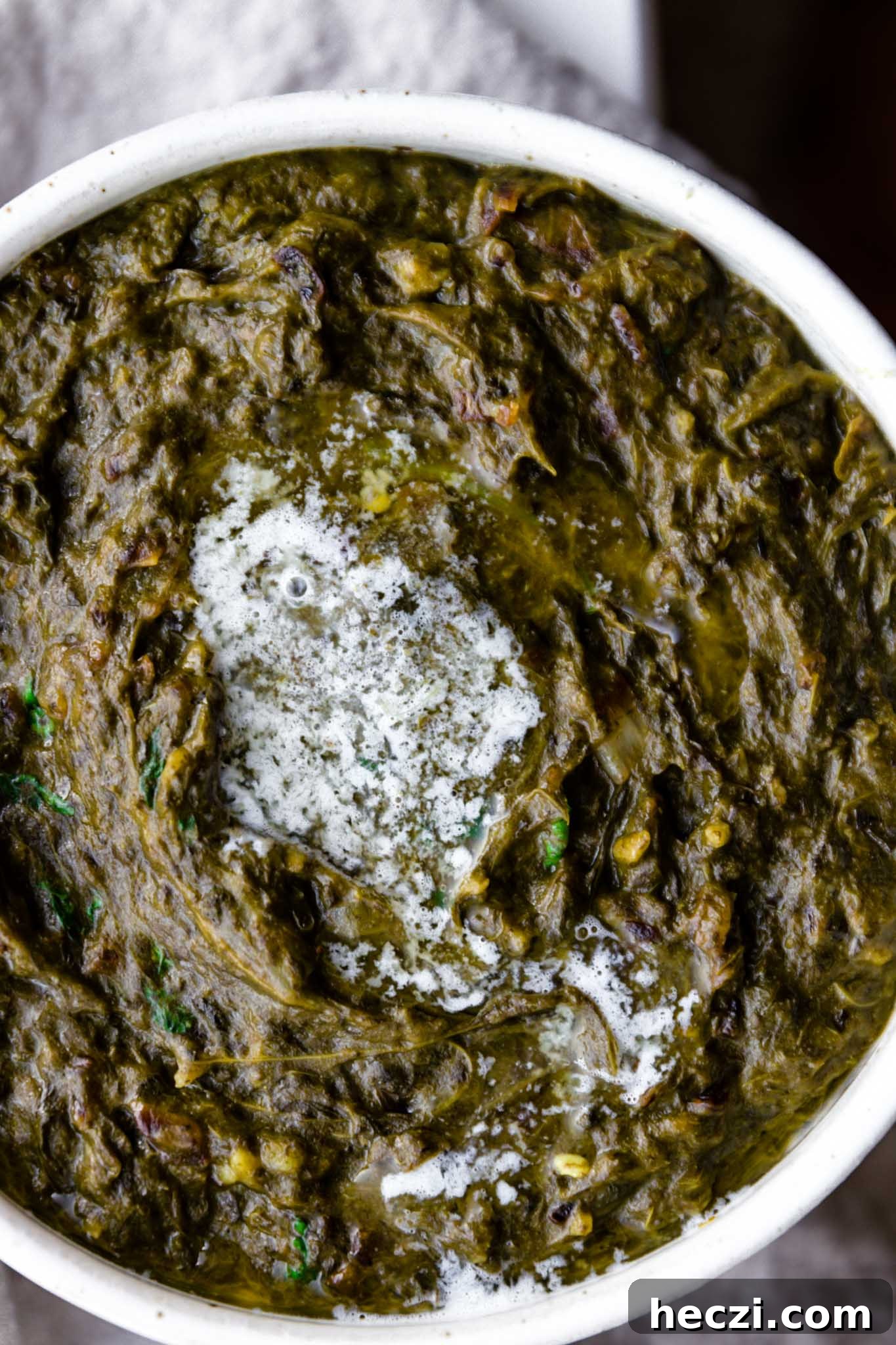
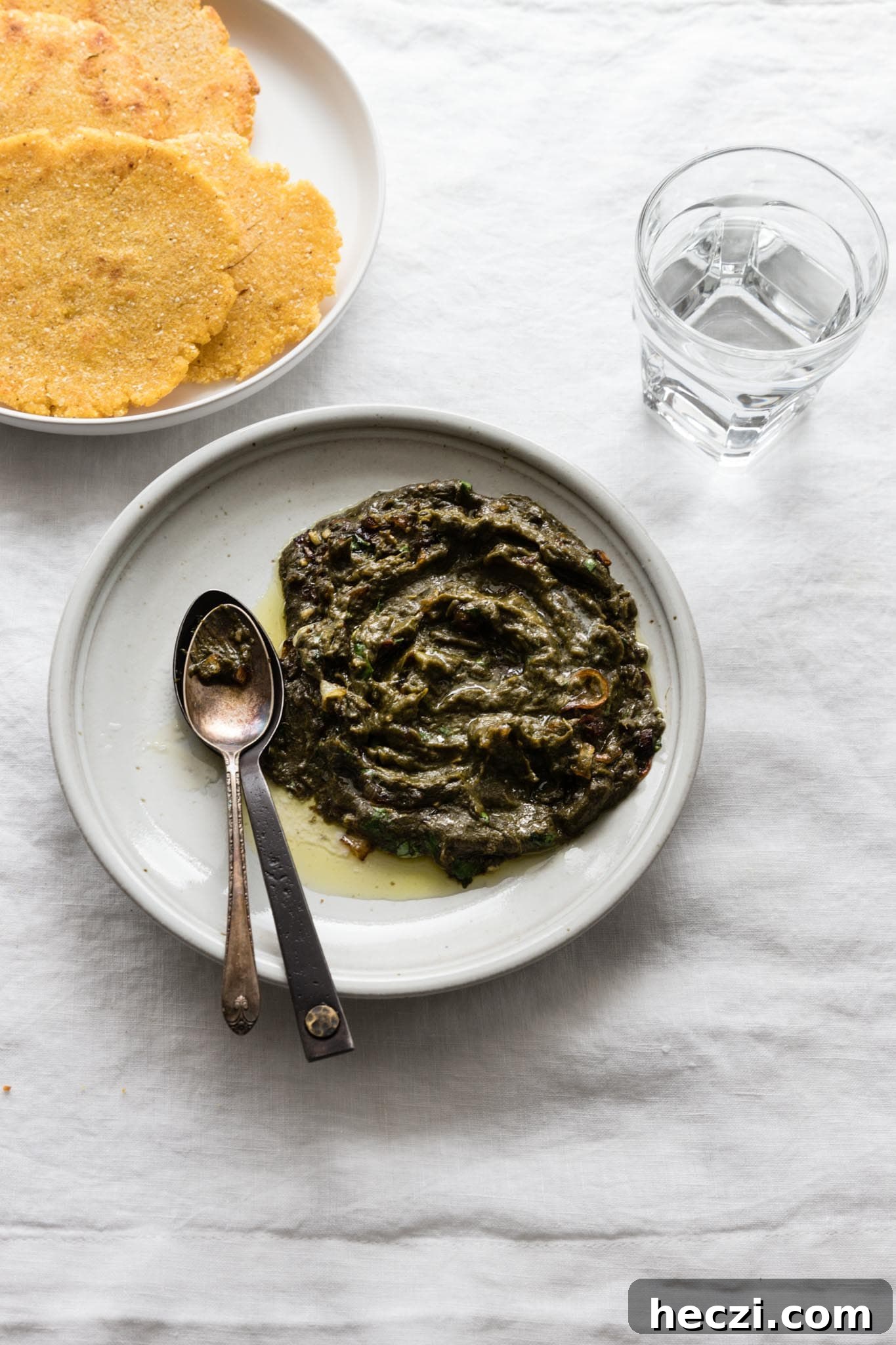
The word saag refers broadly to leafy greens. In culinary terms it usually means greens that are stewed and often puréed into a textured curry. While many greens work, mustard greens (known as sarson) are the defining ingredient in Sarson Ka Saag across Punjabi kitchens. This dish is traditionally served with makai ki roti—thin, flaky cornmeal rotis that balance the saag’s richness.
I learned this recipe from my mother-in-law after spotting mustard greens at a farmers’ market. The method and the final tadka are what make the flavors sing.
Ingredients for Sarson Ka Saag
This version uses a short, focused list of ingredients to highlight the greens: mustard greens and spinach, green chiles for heat, garlic, turmeric, corn flour to thicken, and dried fenugreek for flavor. The tadka adds onion, ginger, and fat (oil/ghee or butter) to finish.
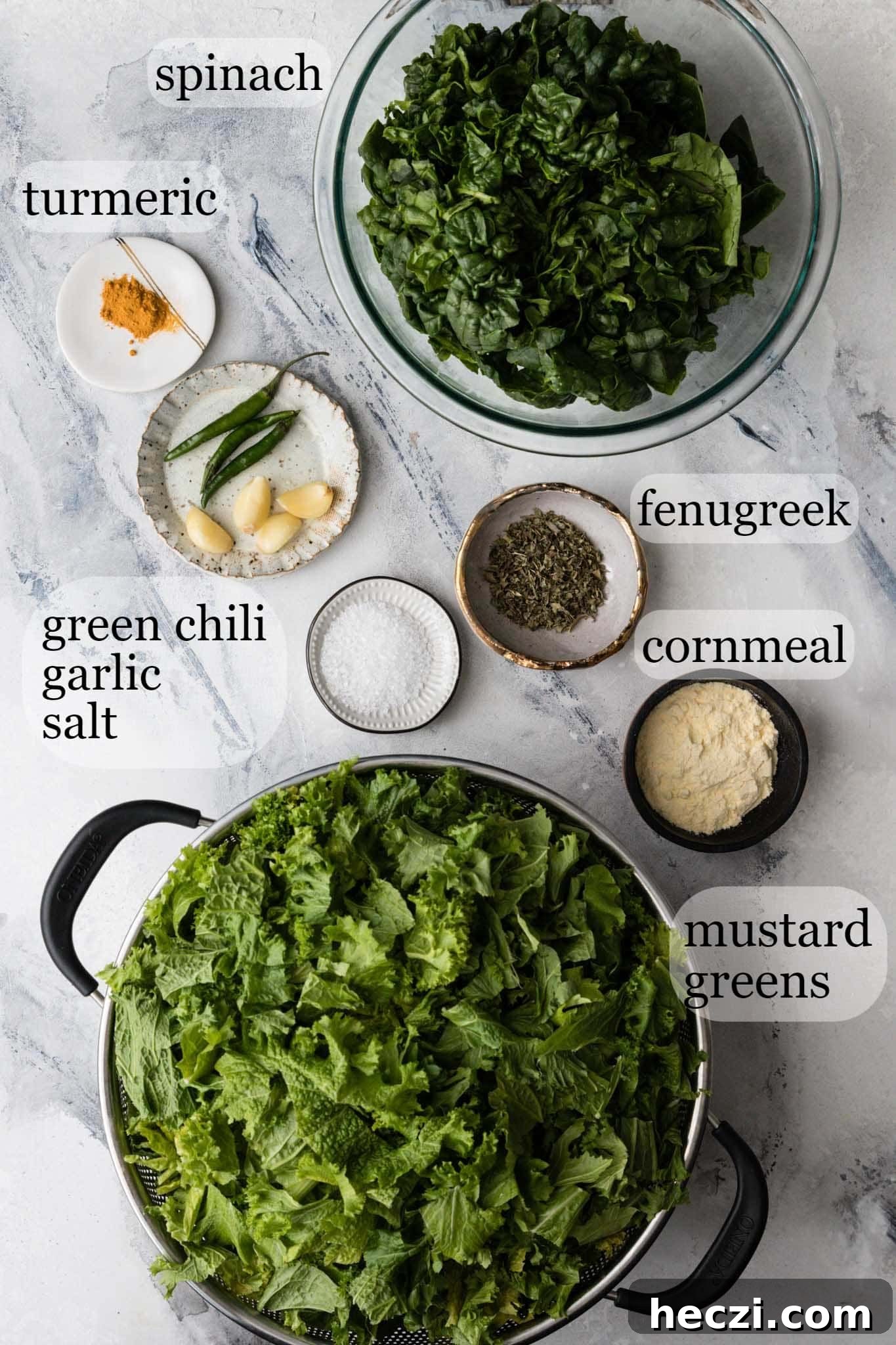
- Mustard greens – the main ingredient. Use fresh bunches, pre-packaged, or frozen. Remove thick stems and chop.
- Spinach – helps balance mustard greens’ bite. Baby or frozen spinach works.
- Green chilies – Serrano, Thai, or bird’s eye chiles add heat and brightness.
- Garlic – left whole during cooking and crushed when blending.
- Turmeric – a pinch for color and warmth.
- Yellow corn flour or fine cornmeal – used to thicken; besan (chickpea flour) or masa harina can substitute.
- Dried fenugreek leaves (methi) – essential for authentic flavor; fresh methi can be used if available.
Tarka (Tempering) Ingredients
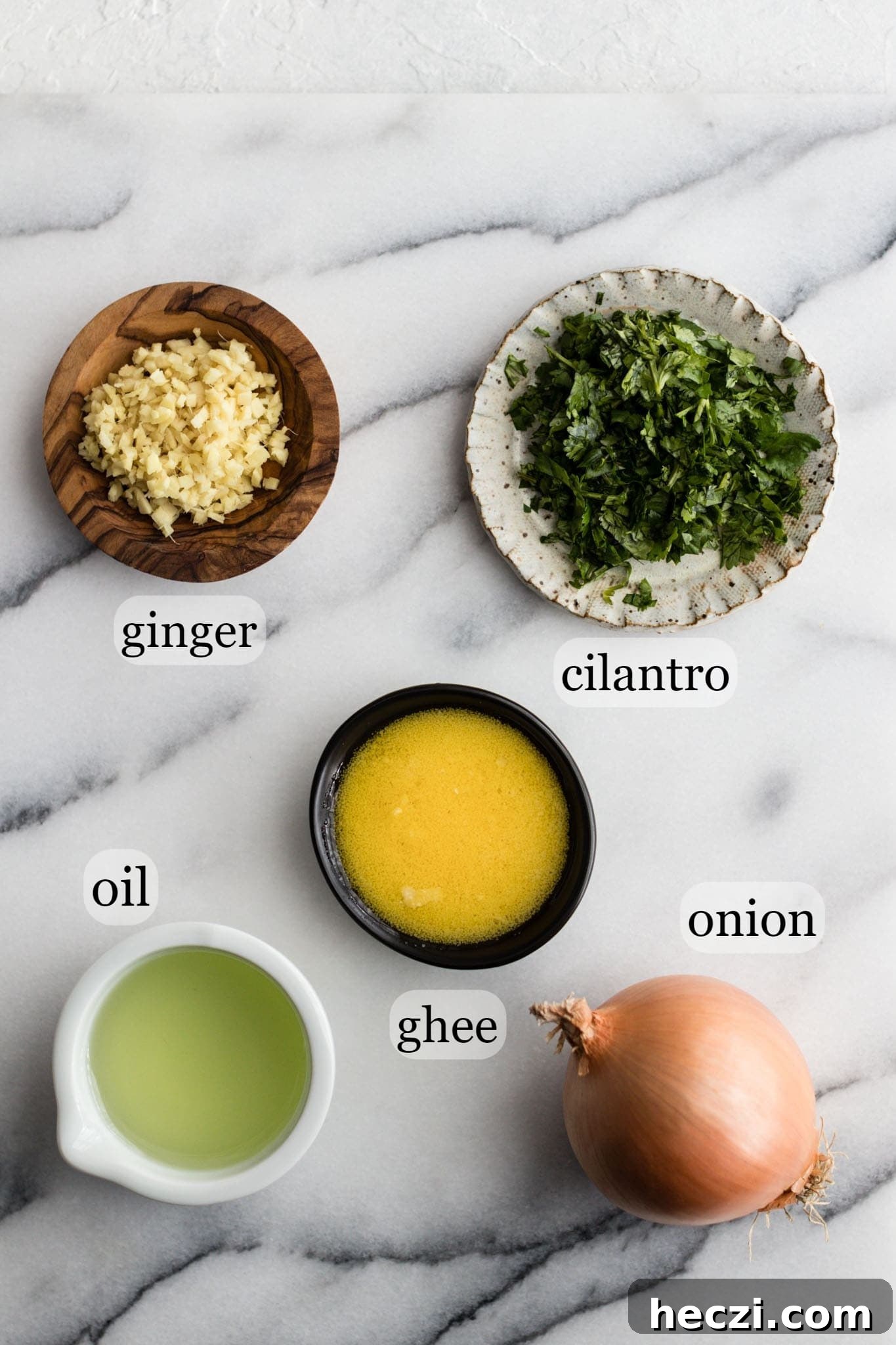
- Onion – a small onion, finely chopped and browned until deep golden.
- Neutral oil and ghee or butter – use oil for a vegan option, or combine oil and ghee for richer flavor.
- Ginger – minced for the tadka so it distributes evenly.
- Cilantro – chopped, for garnish; a pat of butter is optional at serving.
How to make Sarson Ka Saag
- Cook the greens, green chiles, garlic, turmeric, and salt with a little water in an Instant Pot (or a Dutch oven on the stovetop) until fully wilted and tender. There’s no need to crush the garlic during this step.
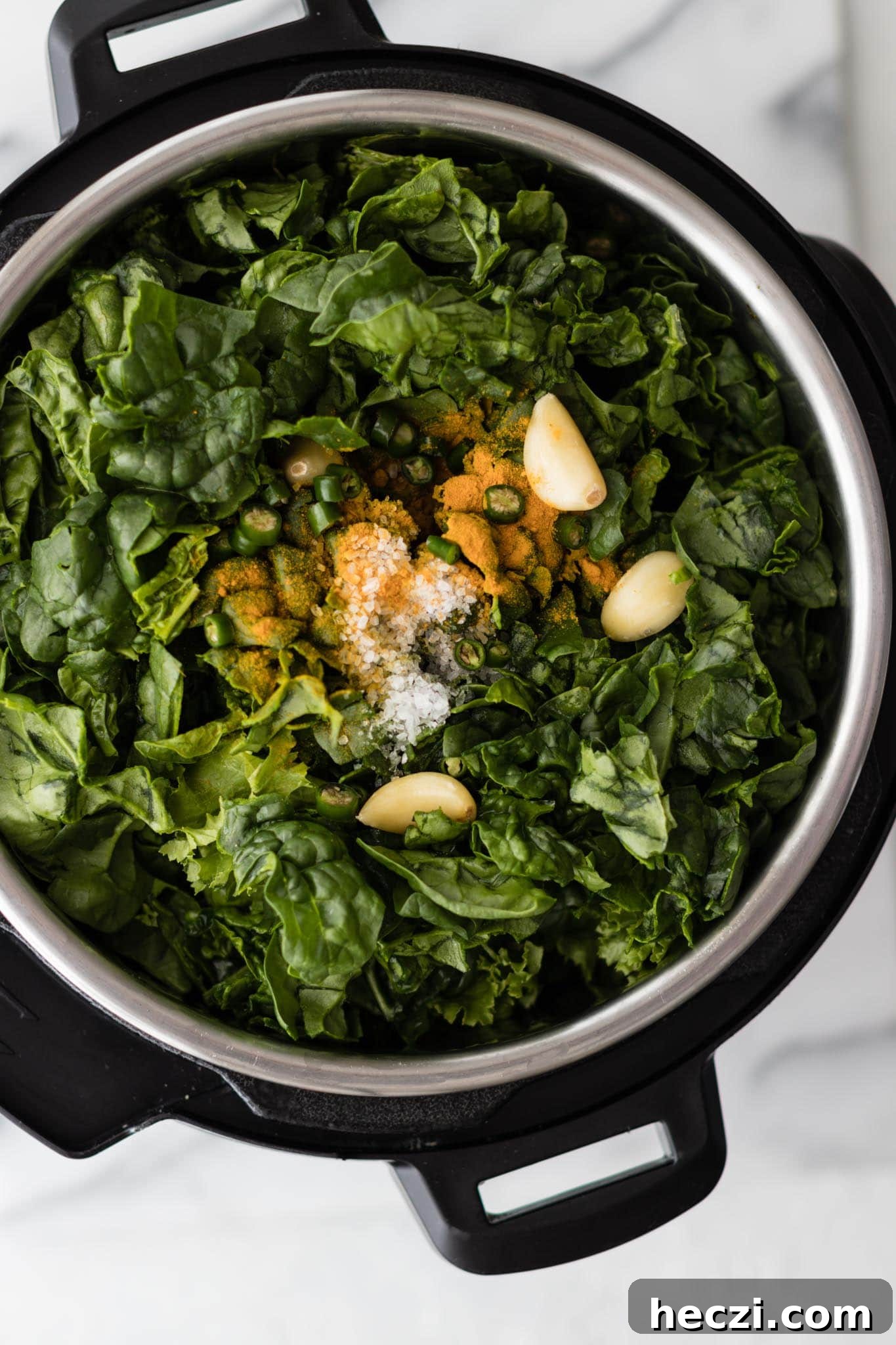
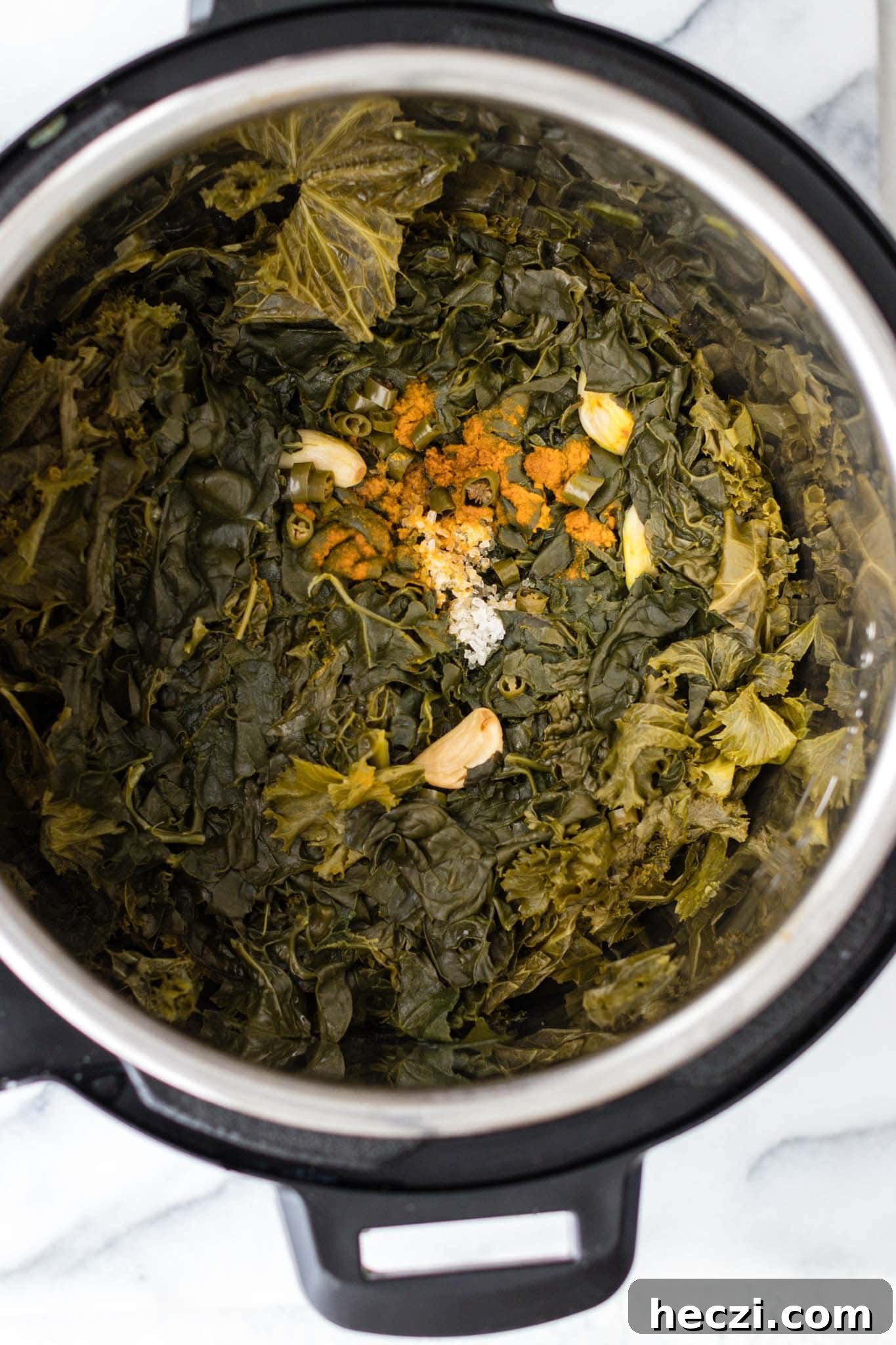
- After cooking, stir and crush the garlic into the greens. Use an immersion blender or a food processor to pulse the mixture into a coarse purée—smooth enough to eat easily but still slightly textured.
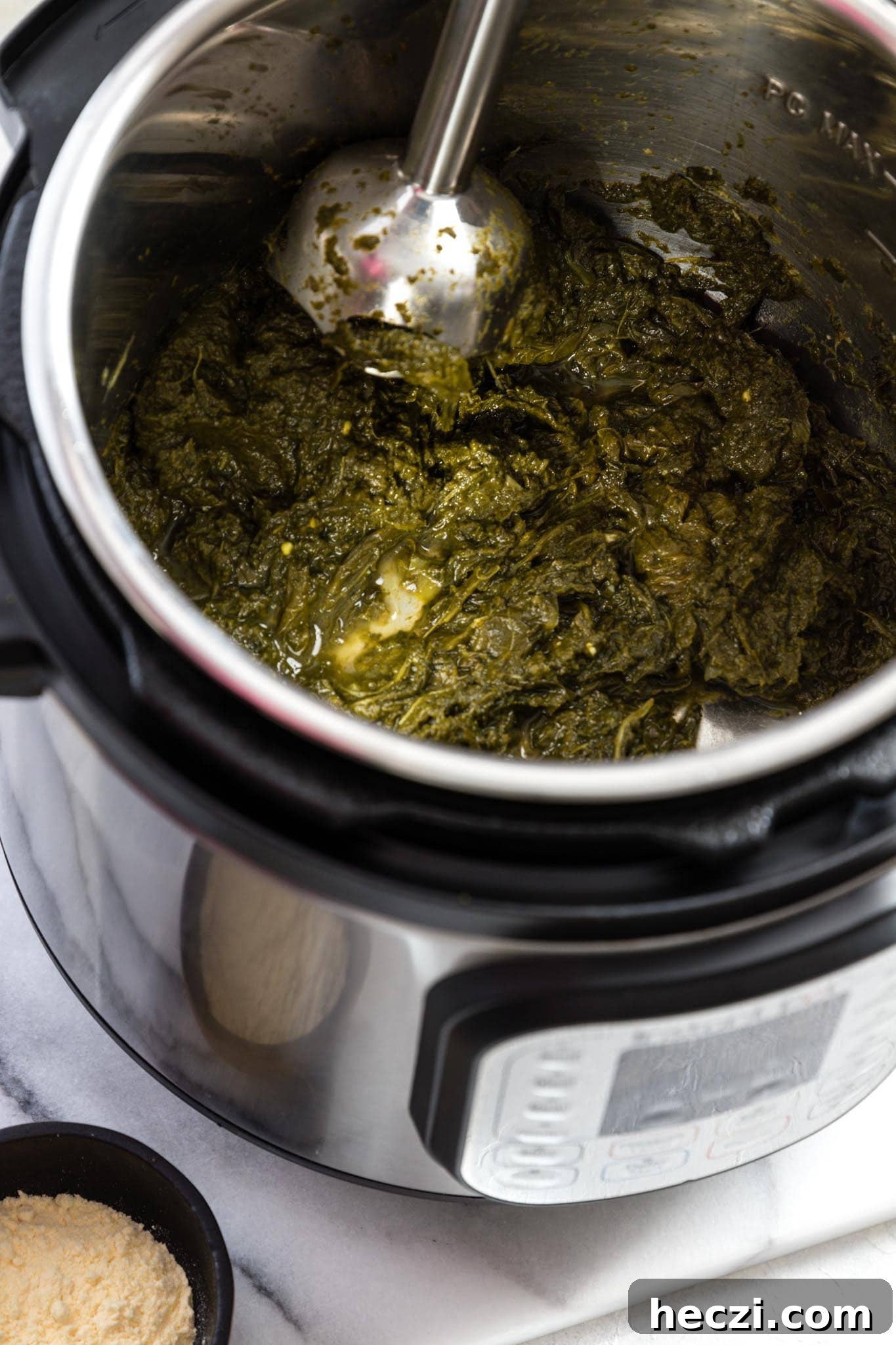
- Return the blended saag to heat and add the corn flour (or alternative) to thicken. Cook briefly to remove any raw flour taste.
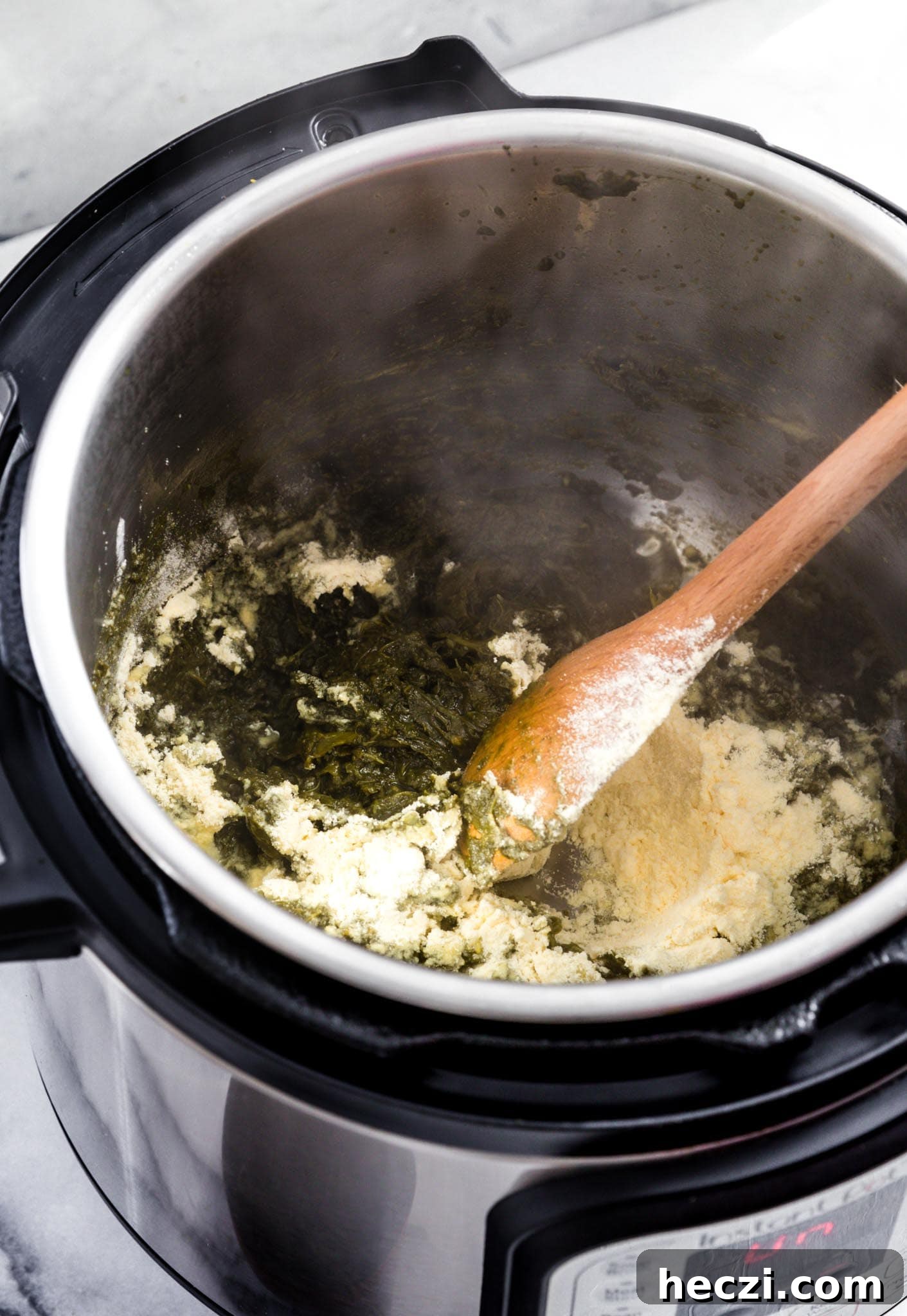
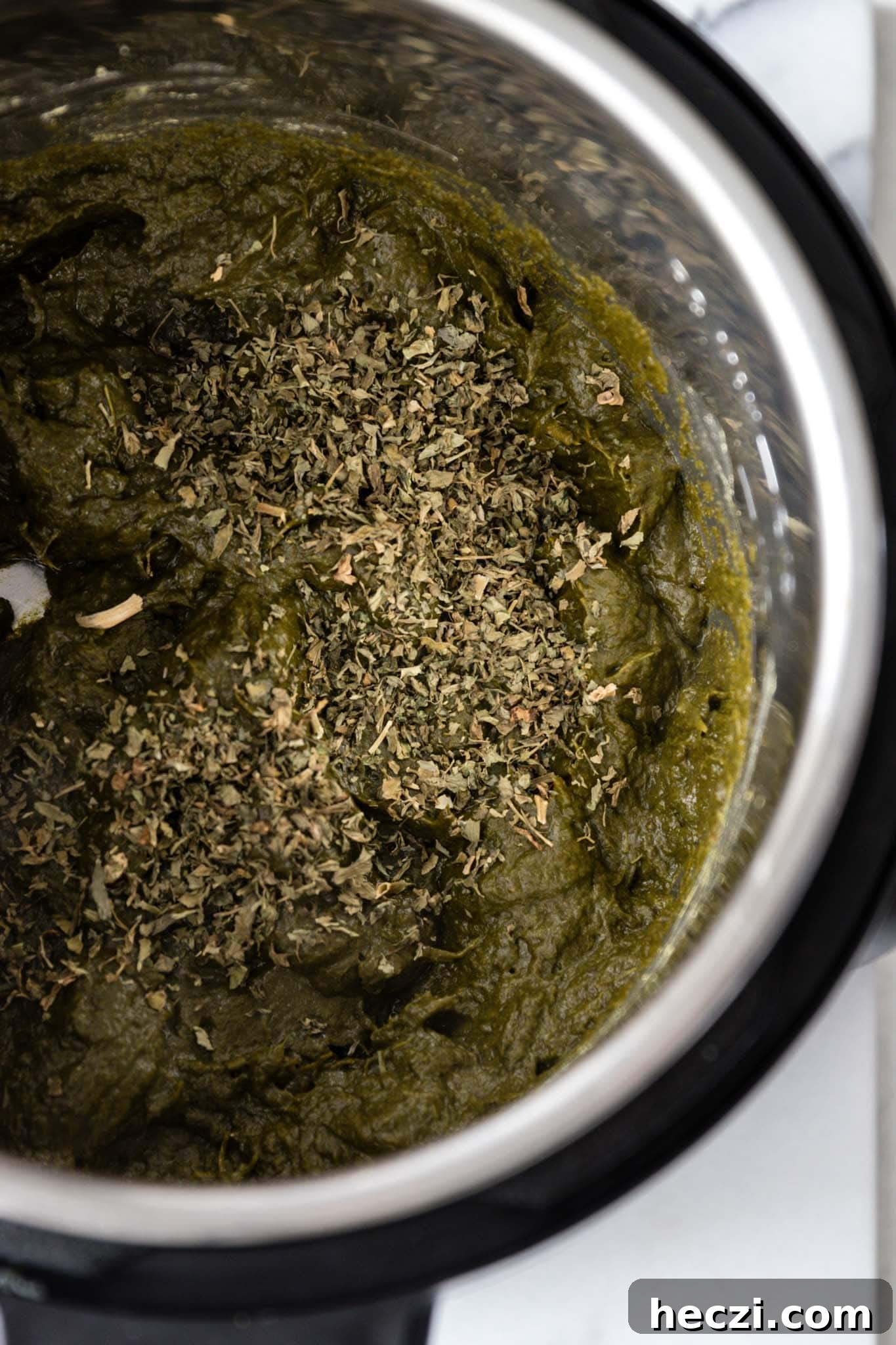
- Stir in dried methi and add about 1 cup of boiling water to adjust consistency. Simmer gently and adjust salt to taste.
- If using a stovetop pot, lower the heat and prepare the tadka in a separate pan. For Instant Pot, switch to Sauté (Low or Less) while you make the tadka so the saag stays warm.
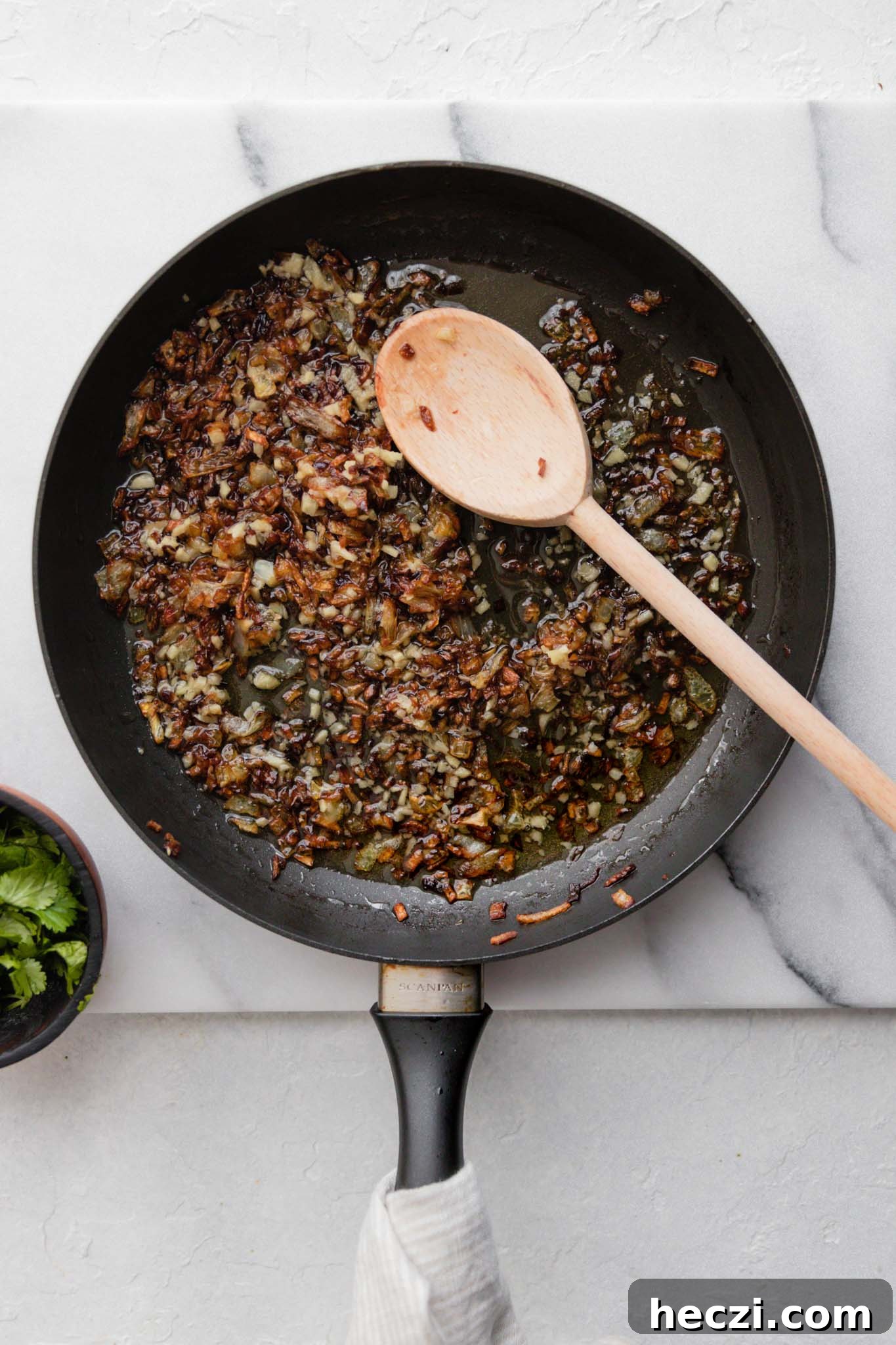
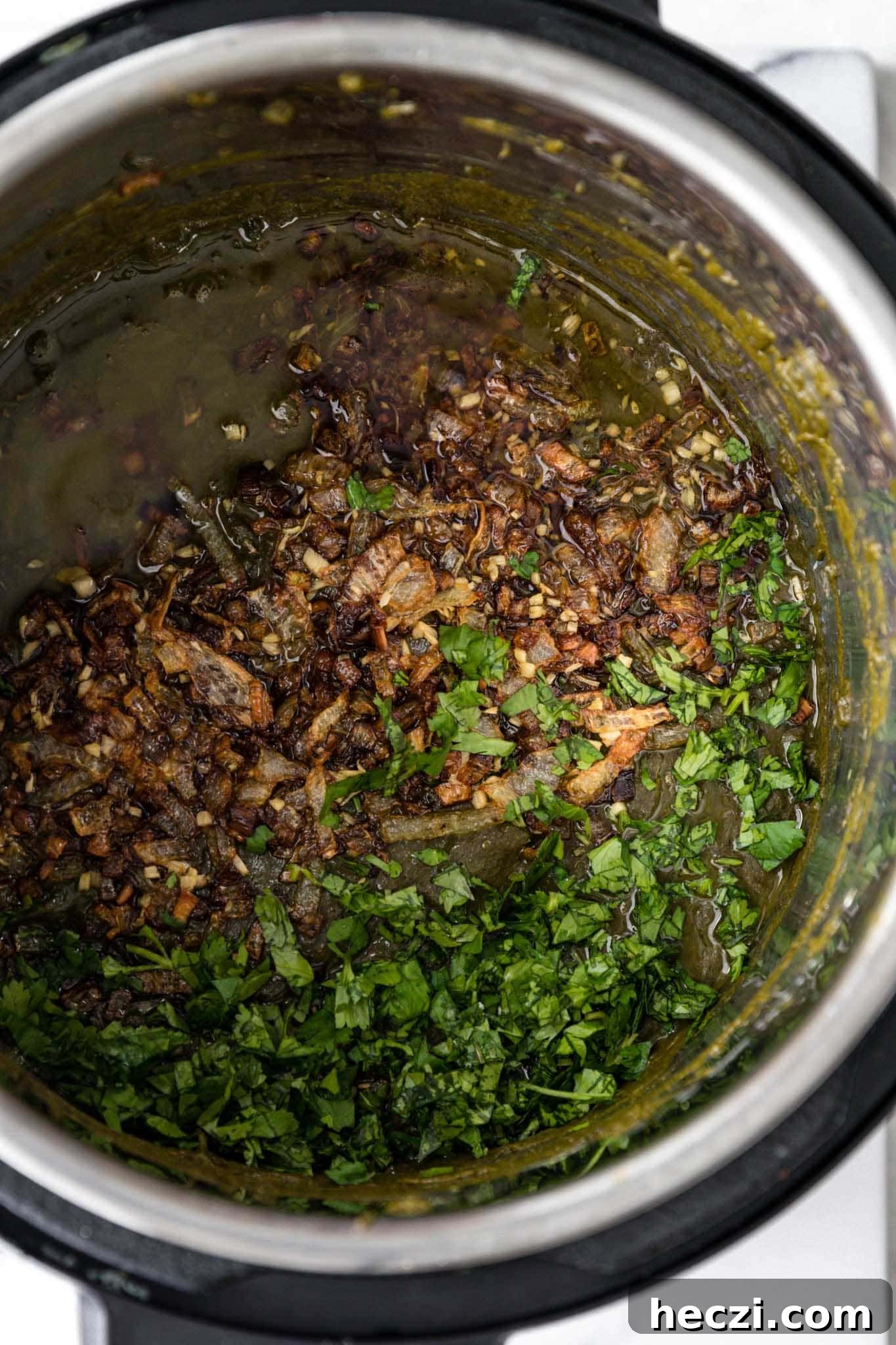
- Tadka: In a skillet, heat oil and ghee, sauté chopped onion until deep golden, then add minced ginger and cook a further minute. Pour this hot tadka into the saag, mix, and finish with chopped cilantro and an optional pat of butter.
About Mustard Greens
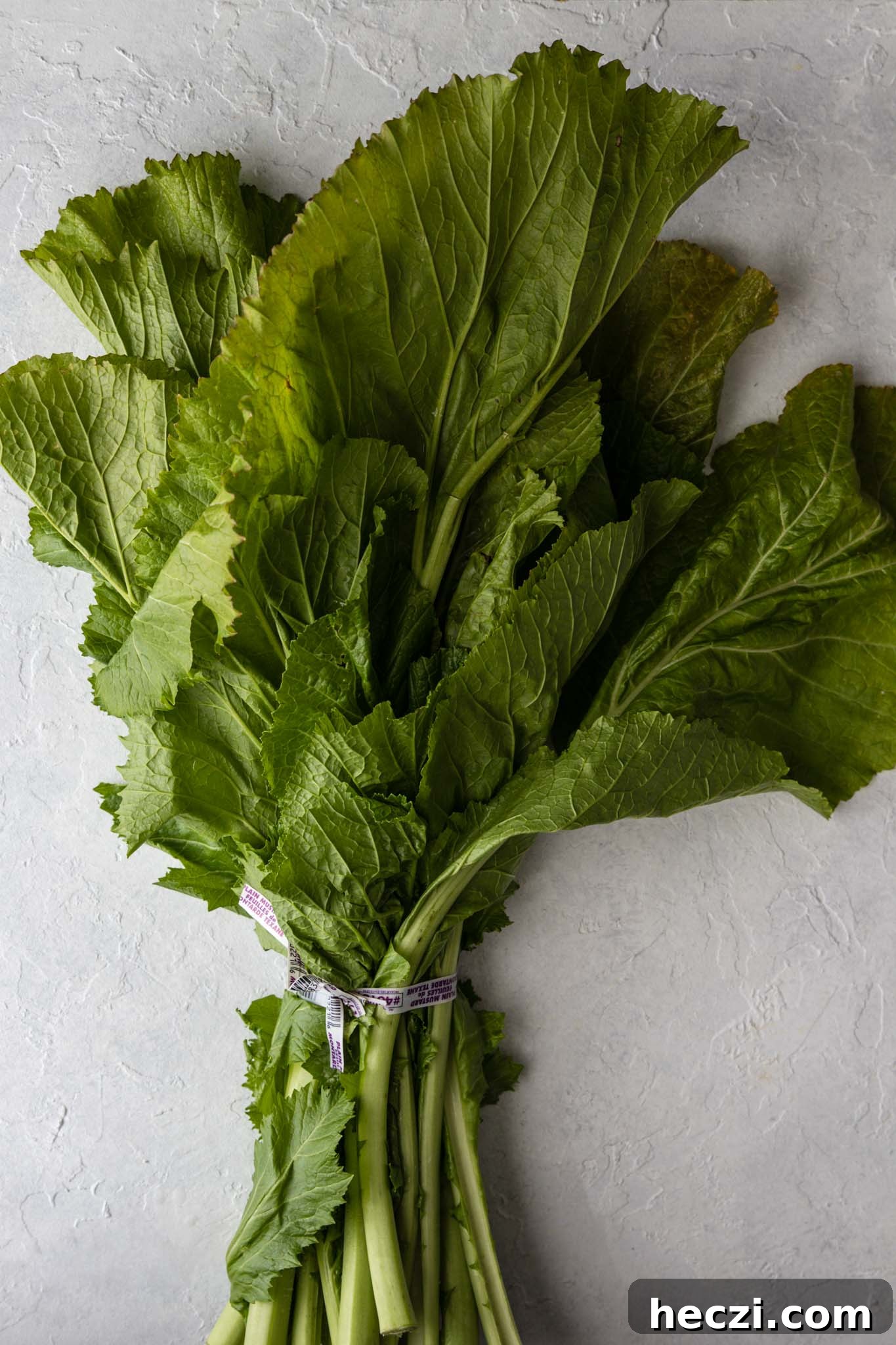
Mustard greens are the leafy part of the mustard plant and have been used as a vegetable for centuries. The plant’s seeds are also used to make mustard condiments and oils. Varieties vary by region; the greens sold in the U.S. may differ from what’s common in South Asia, but they work beautifully in this dish.
Where to Find Mustard Greens
If local supermarkets don’t carry mustard greens, check Asian or South Asian grocers and farmers’ markets. Packaged or pre-washed mustard greens can save prep time when available.
What other greens can I use besides Mustard Greens?
If mustard greens aren’t available, try these substitutes or combinations:
- Broccoli rabe (rapini) – a good bitter green substitute.
- Turnip greens – try a 1:1 mix with mustard greens for a balanced flavor.
- Kale – works as a sturdier option, though flavor differs.
- Broccoli – commonly used in some saag variations.
- Extra spinach – simple and mild if you prefer less bitterness.
How to Double This Recipe
Doubling in a 6-qt Instant Pot can be tight because greens pack densely. Wilt or sauté extra greens first, or use a larger stovetop pot to accommodate more volume.
Freezing Tips
Saag freezes well. Freeze after blending but before adding the tadka. Thaw, reheat gently on the stovetop, then finish with freshly made tadka when ready to serve.
More Tips on Making Sarson Ka Saag
- Purée to your preferred texture—smooth with some body is traditional.
- If you want more heat, red chili flakes can be added after cooking without additional cooking time.
- Trim tough stems before cooking, as they can add unwanted bitterness.
What to serve with Sarson Ka Saag?
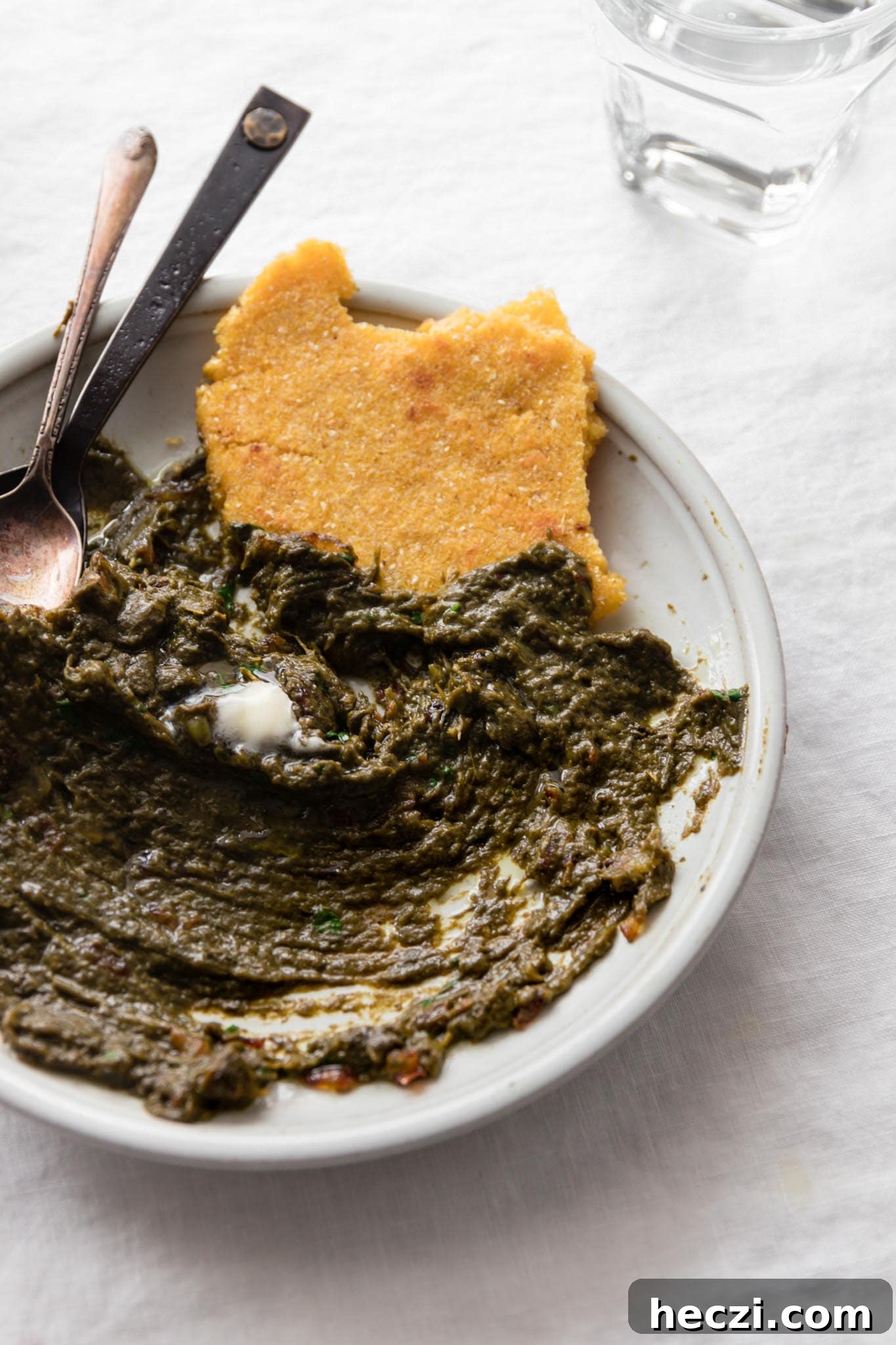
Sarson Ka Saag pairs beautifully with rotis, naan, corn tortillas, or makai ki roti—the traditional cornmeal flatbread. A simple makai ki roti can be made by mixing cornmeal with boiling water and a pinch of salt, letting it cool slightly, then rolling and cooking on a hot pan.
For another family-friendly greens recipe, try Spinach and Potato Curry (Aloo Palak).
More Punjabi Curry Recipes You’ll Love
- Easy Baingan Bharta (Oven Roasted/Broiled Eggplant Curry)
- Spinach and Potato Curry – Aloo Palak
- Kadhi Pakora (Instant Pot & Stovetop)
- Matar Paneer
- Chana Masala (Authentic Chickpea Curry)
I hope you enjoy making this Sarson Ka Saag. If you try it, share your experience—I love seeing how readers adapt and serve it.
Easy Sarson Ka Saag (Stovetop & Instant Pot)
Ingredients
Saag
- 2 cups water for Stovetop
- 2 bunches mustard greens, washed, stems removed, roughly chopped
- 1 bunch spinach, washed, stems removed
- 3-4 small green chilies, stemmed and chopped
- 4-5 garlic cloves, left whole
- 1/4 tsp turmeric powder
- 1 1/4 tsp kosher salt
- 1/4 cup yellow corn flour or fine cornmeal
- 1 1/2 tbsp dried fenugreek leaves (methi)
Tadka (Tempering)
- 1/4 cup neutral oil
- 3 tbsp ghee or butter, or extra oil
- 1 small onion, finely chopped
- 2 tbsp minced ginger
- 2-3 tbsp cilantro leaves, chopped
- pat of butter, for serving
Instructions
Stovetop
-
Heat a 5 qt Dutch oven over medium heat. Add the mustard greens, spinach, green chilies, garlic, turmeric, salt, and 2 cups water. Cover and simmer until the greens are tender, about 45–60 minutes.
-
Turn off the heat, uncover, and stir to crush the garlic. Blend with an immersion blender or pulse in a food processor to a rough purée. Remove any tough stems.
-
Return to medium-high, add corn flour, and cook 3–5 minutes to remove raw taste. Stir in dried methi and adjust salt.
-
Lower heat, add 1 cup boiling water, and simmer while preparing the tadka. Add extra water if needed to reach desired consistency.
-
Tadka: In a skillet over medium-high heat, warm oil and ghee, add onion and sauté until deep golden (6–8 minutes). Add ginger and cook 1 minute more. Stir the tadka into the saag, garnish with cilantro, and finish with a pat of butter. Serve with makai ki roti, roti, naan, or tortillas.
Instant Pot
-
Add 1/4 cup water for the Instant Pot, then the mustard greens, spinach, green chilies, garlic, turmeric, and salt. Seal and pressure-cook on High for 20 minutes. Let natural release for 5 minutes, then quick release remaining pressure.
-
Open, stir, and crush the garlic. Blend with an immersion blender or food processor to a coarse purée. Remove any tough stems.
-
Select Sauté (High), add corn flour, and cook 3–5 minutes. Stir in dried methi.
-
Add 1 cup boiling water and stir until incorporated. Adjust salt and thin with another 1/2 cup water if necessary. Press Cancel.
-
Tadka: In a skillet, heat oil and ghee, brown the onion until deep golden, add ginger for 1 minute, then pour into the saag. Garnish with cilantro and serve.