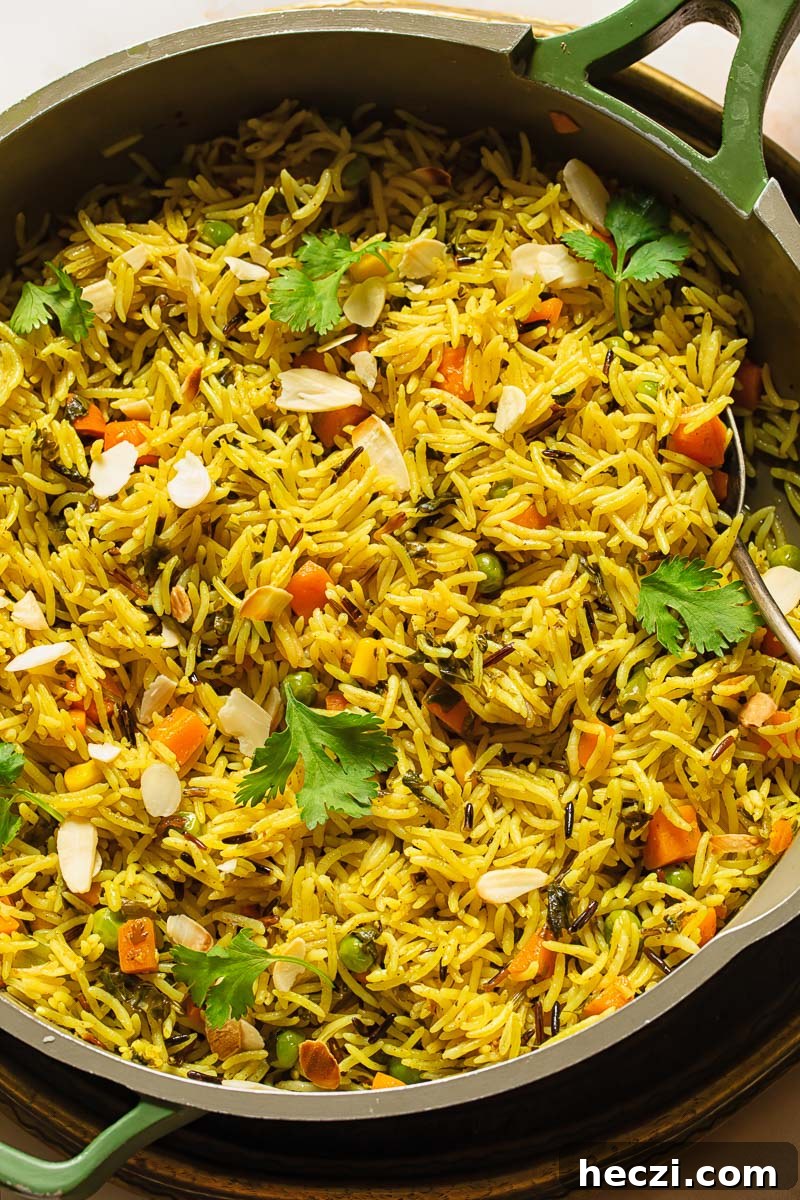
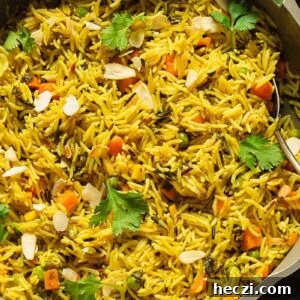
Basmati and wild rice pilaf with vegetables is a rich, satisfying side that pairs beautifully with any curry. Shimmering with ghee or oil, separate grains of rice are cooked in flavorful stock and fragrant spices, then studded with peas, carrots and green beans and finished with crunchy nuts.
For a show-stopping rice main, try an elegant chicken biryani made with traditional flavours and modern, time-saving techniques.
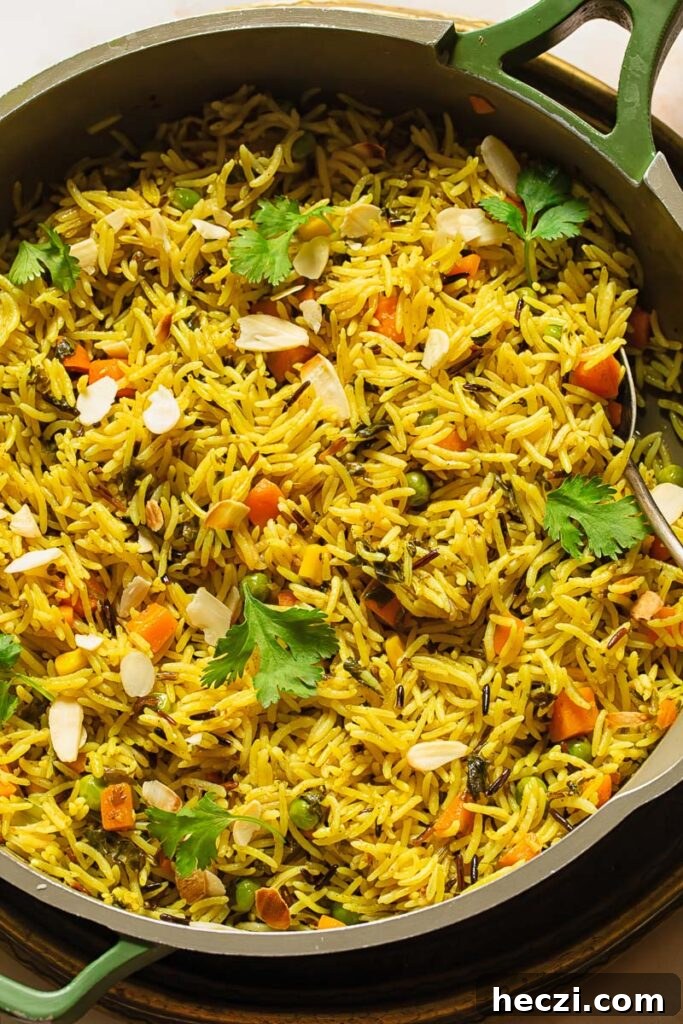
Some call it pilaf, others pilau — both names describe the same delicious rice dish. The variation in name reflects regional language differences rather than any major change in the dish.
Vegetable rice pilaf
Pilaf has its roots in Persian cuisine, where rice is treated with great respect and is often the highlight of a meal rather than a filler. This vegetable pilaf celebrates that approach: rice is rinsed and soaked, toasted briefly in ghee or oil until each grain is glossy, then simmered in stock until every drop is absorbed. The result is deeply flavored rice with an inviting aroma.
Spices are an essential part of pilaf. Varieties vary across regions, but cardamom, bay leaves and cinnamon are common. In this version I use turmeric for colour, plus cumin, coriander, cinnamon and a touch of cayenne for warmth. Garlic and ginger are used to infuse the oil; a classic recipe might use onion instead.
To add texture and visual contrast I combine basmati with wild rice. Wild rice is a whole grain with a darker colour and firmer texture, which makes the dish more interesting and wholesome. I also streamline prep by using a frozen vegetable mix — the small pieces are perfectly sized and quick to cook.
Pilaf recipes vary widely: some include vegetables like this one, others include small amounts of meat such as lamb or chicken. In Turkey, a pilav might be made with rice and bulgur or with vermicelli for a different texture. However you make it, the hallmark of pilaf is the care taken at each step to produce separate, flavorful grains.
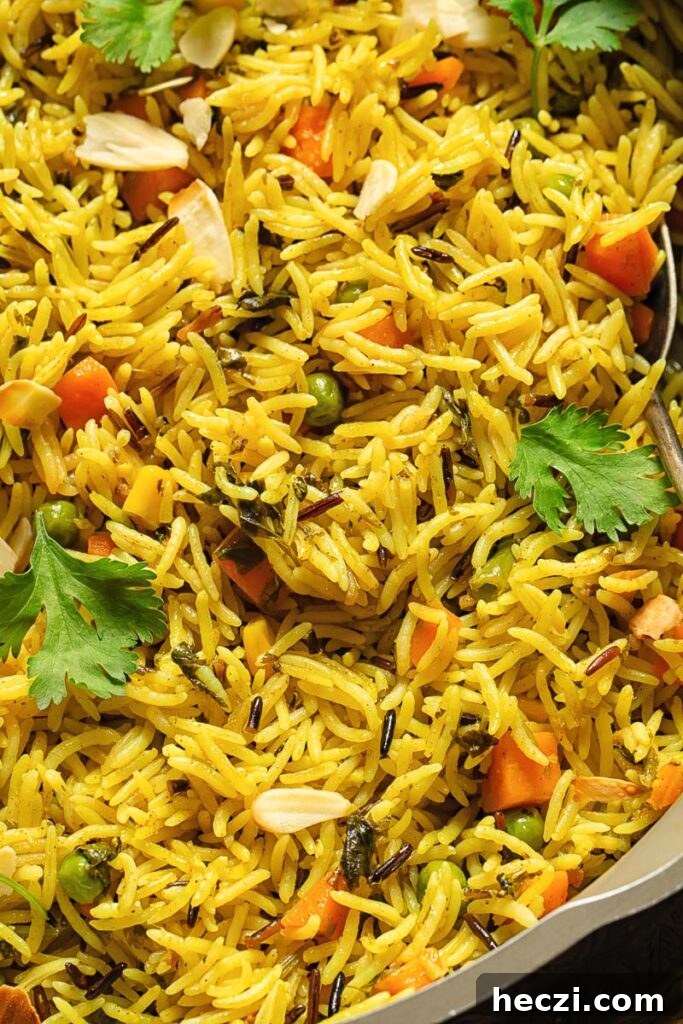
Recipe tips and notes
- If you use a different rice combination, adjust cooking time accordingly. Brown rice, for example, will need more time than basmati or wild rice.
- Ghee brings a richer, buttery flavour than neutral oil; it’s commonly available in larger supermarkets and Asian stores.
- A frozen vegetable mix saves time — peas, carrots, green beans and corn work well, but broccoli, cauliflower or spinach are good alternatives.
- Fresh cilantro (coriander) adds brightness and is important both in the cooking liquid and as a garnish.
- Chopped nuts such as flaked almonds or cashews add texture and a finished look.
Serving suggestions
This pilaf is versatile and pairs best with saucy, meaty curries. Some popular companions include spiced meatball curry, butter chicken, chicken and potato curry, Nepalese red lentil dahl for a meat-free option, or a chickpea and butternut squash curry for a hearty vegetable main.
Storage and leftovers
Store pilaf in the refrigerator for 3–4 days. Reheat gently on the stovetop with a splash of stock, covered, and let it rest for five minutes so the rice absorbs the liquid. The dish also freezes well when stored without the cilantro and nuts — keep in a freezer-safe container for up to six months and thaw in the fridge overnight. Note that frozen and reheated rice may not be as fluffy.
More recipes to try
- Homemade Naan
- Easy Saag Paneer
- Moong Dal Tadka
- Chicken Korma
Basmati and Wild Rice Pilaf
Equipment
- A large, heavy-based pan with a lid
Ingredients
- 300g / 1½ cup basmati and wild rice mix
- 2 tbsp vegetable oil, or ghee
- 1 tbsp grated ginger
- 2–3 cloves garlic, crushed
- 1 tsp salt
- 1/2 tsp turmeric
- 1 tsp cumin
- 1 tsp coriander
- 1/4 tsp cinnamon
- 1/2 tsp cayenne pepper
- 2 tbsp chopped cilantro (fresh coriander)
- 500ml / 18oz chicken stock, or vegetable stock
- 120g / 1 cup frozen veg mix (peas, carrots, green beans and corn)
- 2 tbsp toasted flaked almonds, or chopped cashews
Instructions
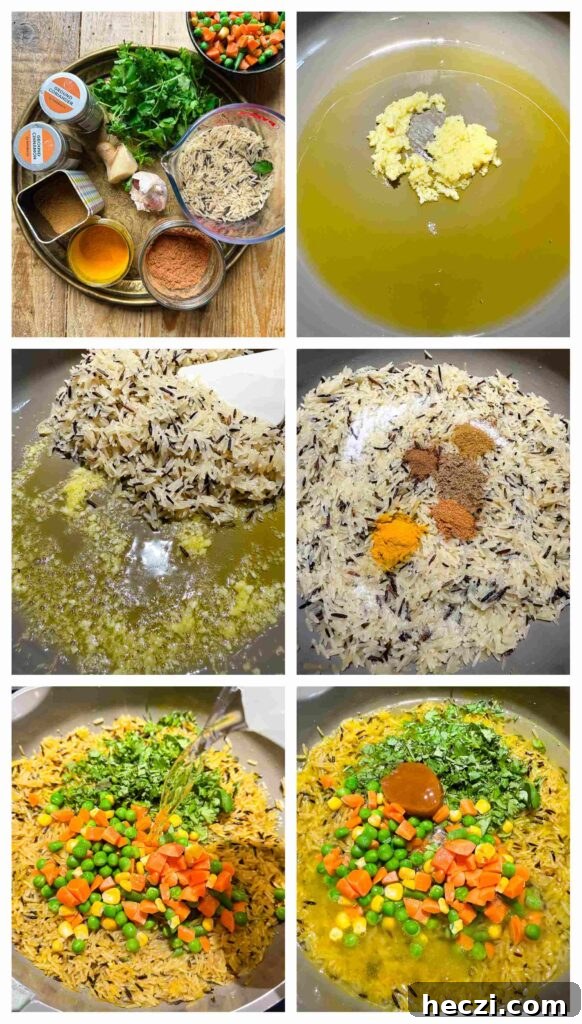
- Wash the rice mix until the water runs clear, then soak in water for 30 minutes. Drain well.
- Heat the oil or ghee in a large pan over low heat. Add the grated ginger and crushed garlic and stir-fry for about 30 seconds.
- Add the drained rice and stir for a minute to coat the grains. Add the salt, turmeric, cumin, coriander, cinnamon and cayenne. Stir until the spices are fragrant.
- Pour in the stock, add the frozen vegetables and chopped cilantro, and bring to a gentle simmer. Reduce the heat, cover and cook on low for 15 minutes. Remove from heat and let the pan sit, covered, for another 10 minutes.
- Uncover, fluff the rice with a fork, and scatter extra cilantro and the toasted nuts over the top before serving.
Notes
- Mixing basmati with wild rice gives a pleasing contrast; if you substitute other rices, adapt cooking times according to package instructions.
- Ghee adds a rich, buttery aroma but neutral oil also works.
- Frozen vegetables speed up preparation and keep pieces uniformly sized for the pilaf.
- Fresh cilantro is recommended for both the cooking liquid and as a garnish.
- Chopped nuts add texture and an elegant finish.
Nutrition
Nutrition information is automatically calculated and should be used as an approximation.