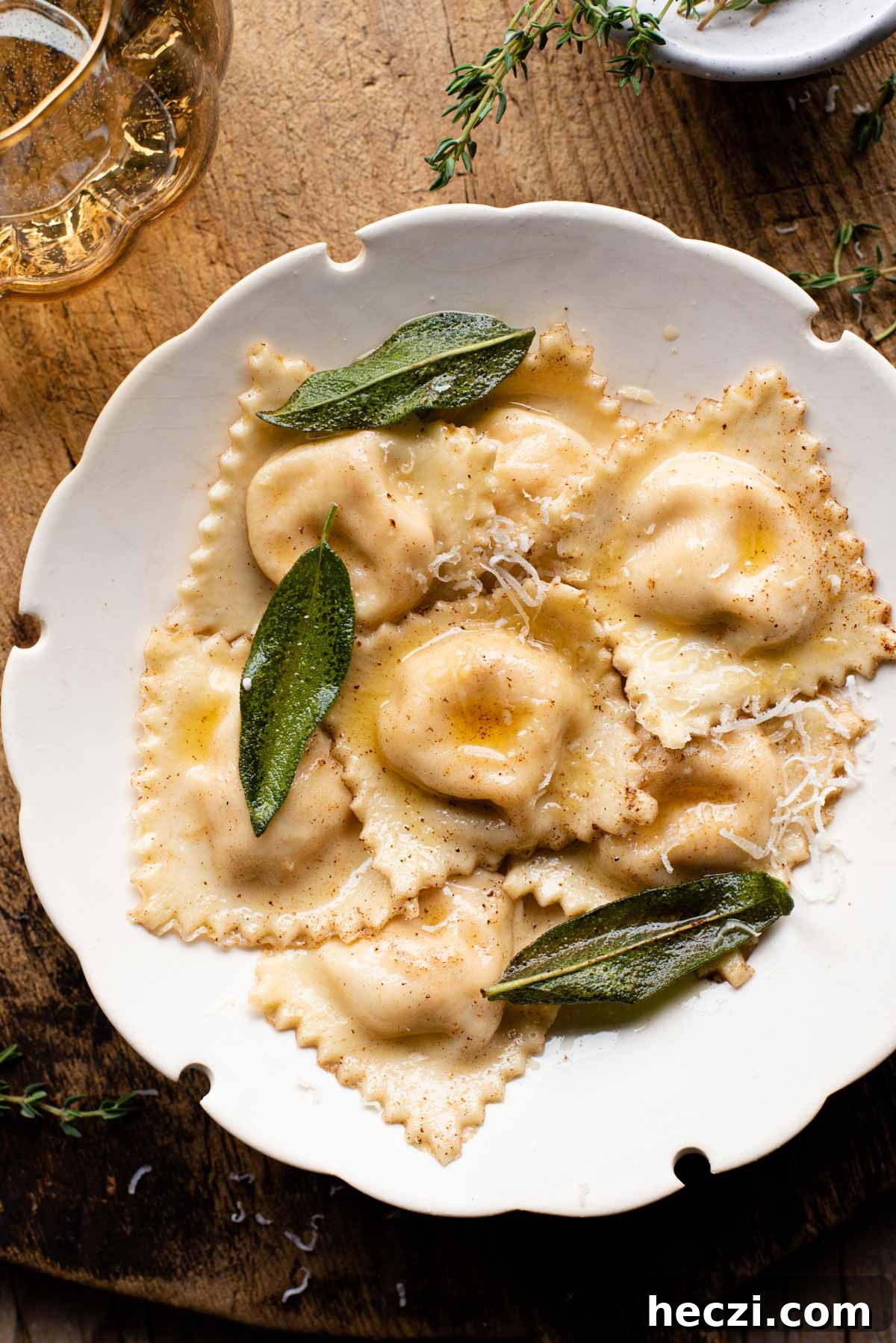
Homemade Butternut Squash Ravioli made with fresh egg pasta dough, a rich and creamy butternut squash and ricotta filling, and finished in a simple brown butter and sage sauce. This comforting pasta is perfect for autumn.
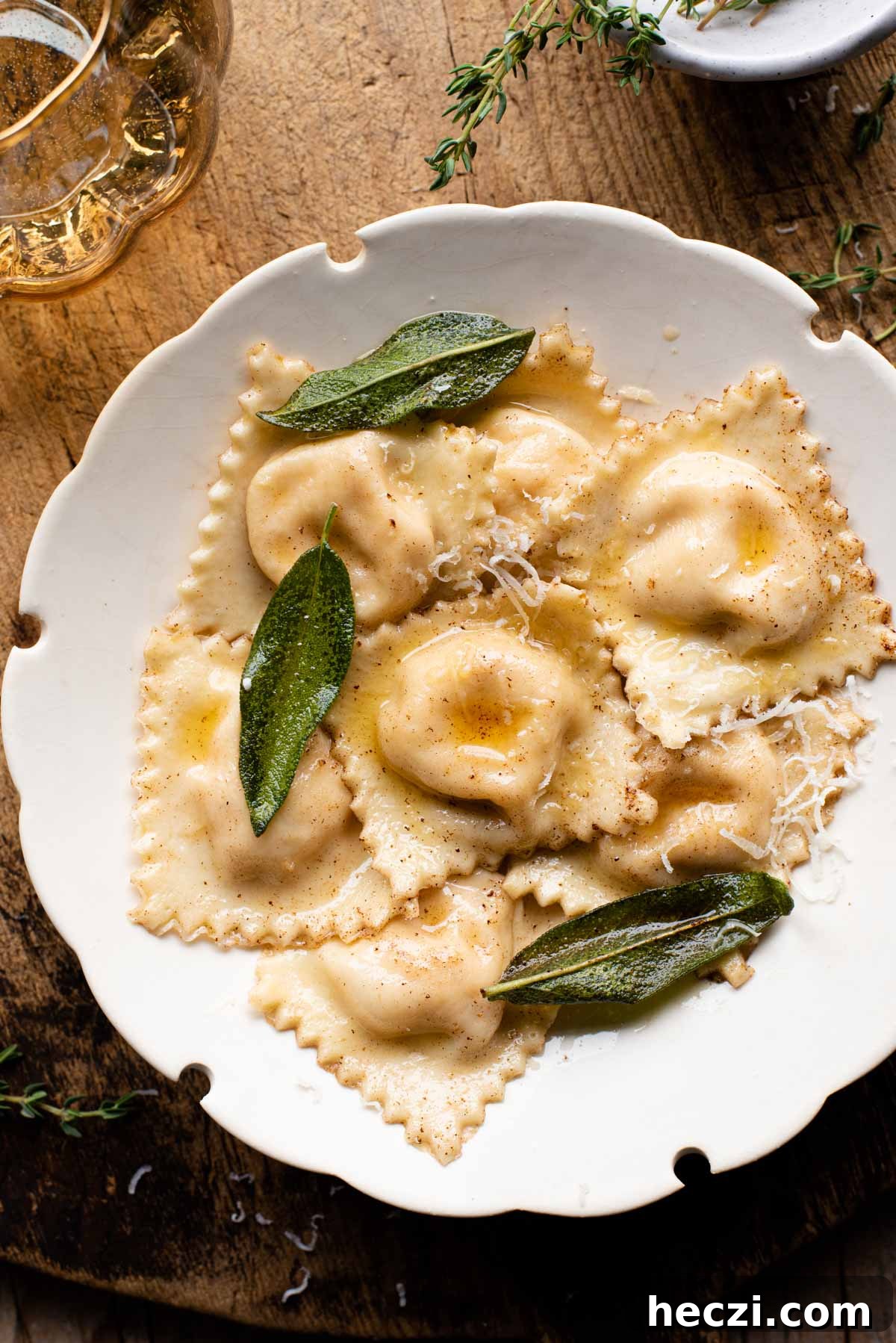
There’s no better way to embrace fall than with roasted butternut squash and fresh sage. When the weather cools, this flavour combination is the first I reach for. This recipe pairs silky homemade pasta with a smooth squash and ricotta filling, finished with a quick brown butter and sage sauce. It takes time and patience to make ravioli from scratch, but the results are well worth the effort.
If you enjoy making filled pasta, you might also like the mushroom ravioli or our step-by-step ravioli guide for extra tips. For a special occasion, try the egg yolk ravioli with spinach and ricotta, which yields one large, show-stopping raviolo per person.
See the recipe below for ingredient notes, step-by-step photos, tips, variations and a video. For the printable recipe, scroll to the bottom of the page.
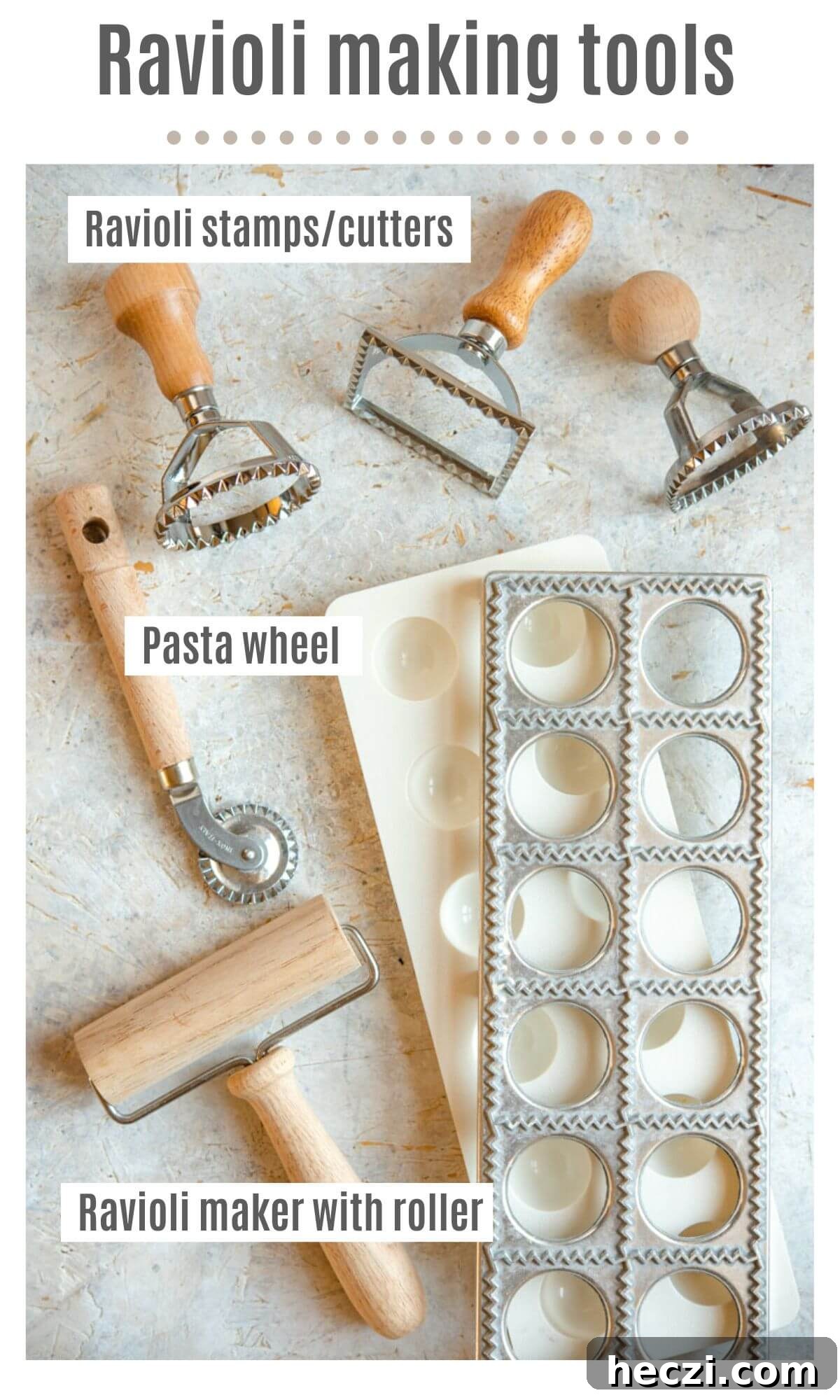
Ravioli making tools
Some basic tools make the process much easier. A ravioli maker speeds up assembly and helps produce evenly filled pieces with minimal scrap. If you don’t have one, a ravioli stamp, pasta wheel or just a knife will work perfectly well.
Ingredients
Photos below show the ingredients and some helpful notes on substitutions.
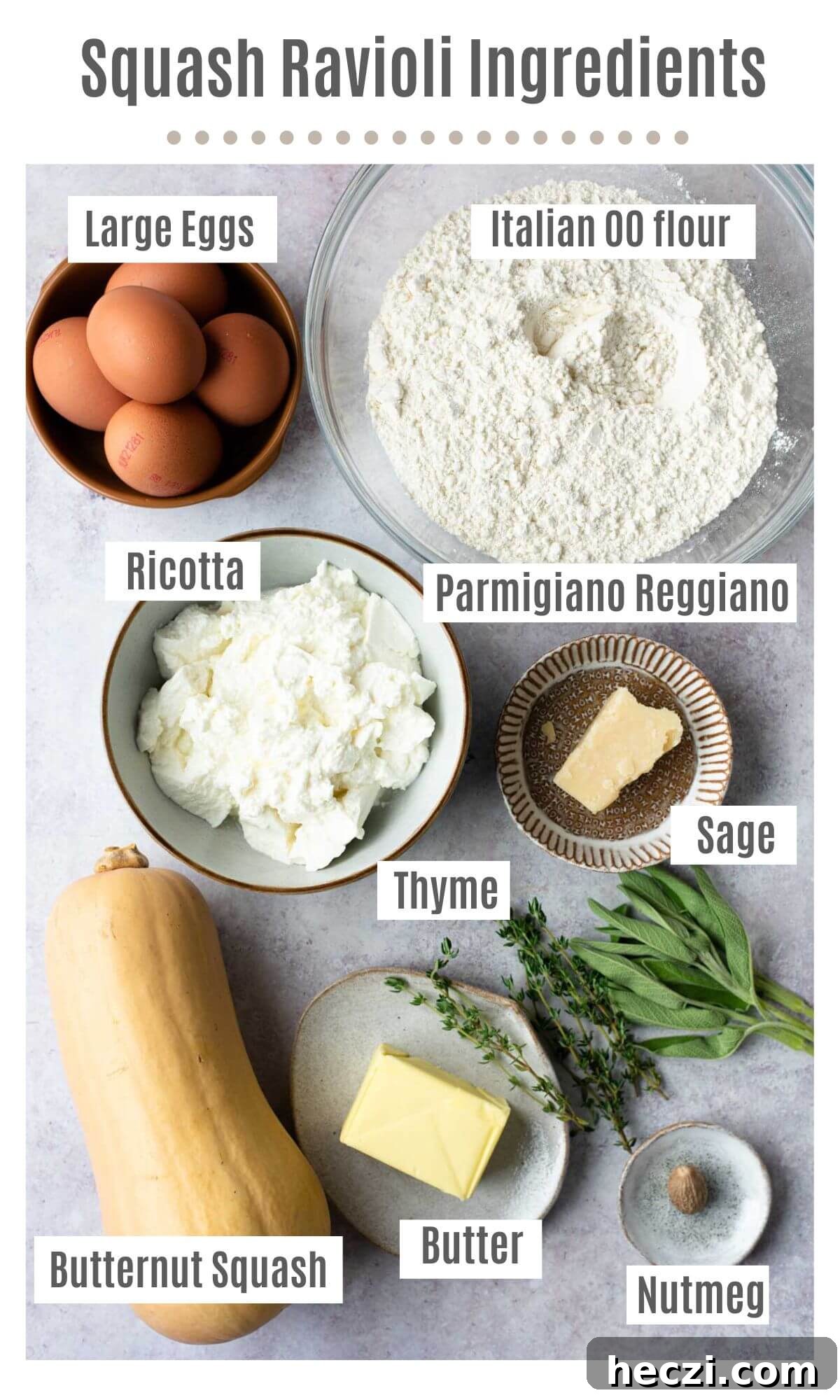
Ingredient notes and substitutions
- Butternut squash – Swap with a similar squash or pumpkin if preferred.
- Ricotta – Drain excess liquid from the tub before using for a firmer filling.
- Parmigiano Reggiano – Pecorino is a good alternative. Grate fresh cheese rather than using pre-grated for best flavour.
- Sage – Use fresh leaves. If unavailable, thyme or rosemary are acceptable substitutes (use fresh, not dried).
- Unsalted butter – Use unsalted so you can control the seasoning; salted butter will make the sauce too salty.
Step by step photos and instructions
Before you start
- The instructions are detailed to make the process clear. If you’ve made ravioli before it will feel easier each time, though it does require time and patience.
- This guide uses a ravioli maker; if you don’t have one you can use a stamp, pasta wheel or knife. Refer to a general ravioli guide if you need more help.
Make the pasta dough
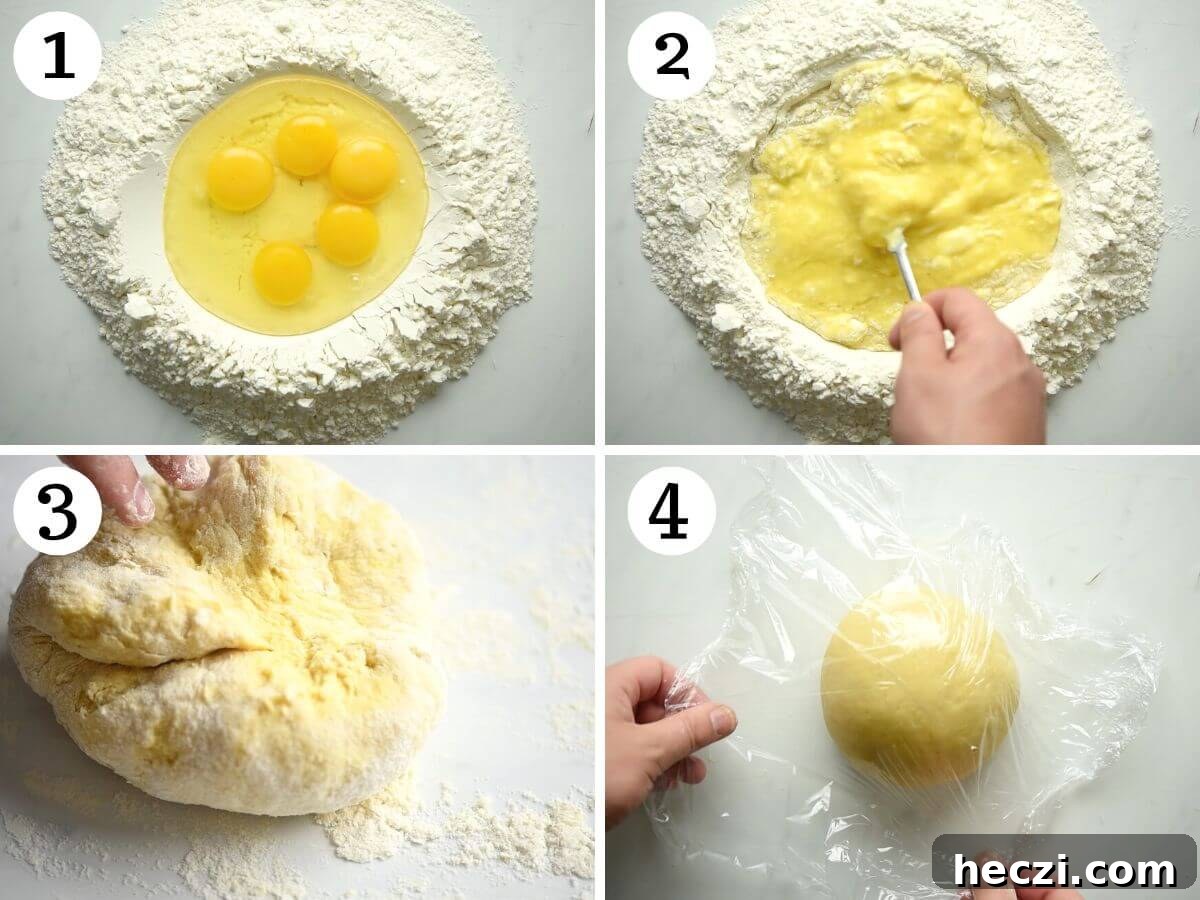
Tip the flour onto a clean surface and form a large well in the center. Place a mixing bowl on top of the flour to help shape the well if desired. Add the eggs and yolk to the well and gradually incorporate the flour until a rough dough forms. Knead for about 10 minutes until smooth and elastic. Wrap the dough and let it rest at room temperature for at least 30 minutes.
Make the filling
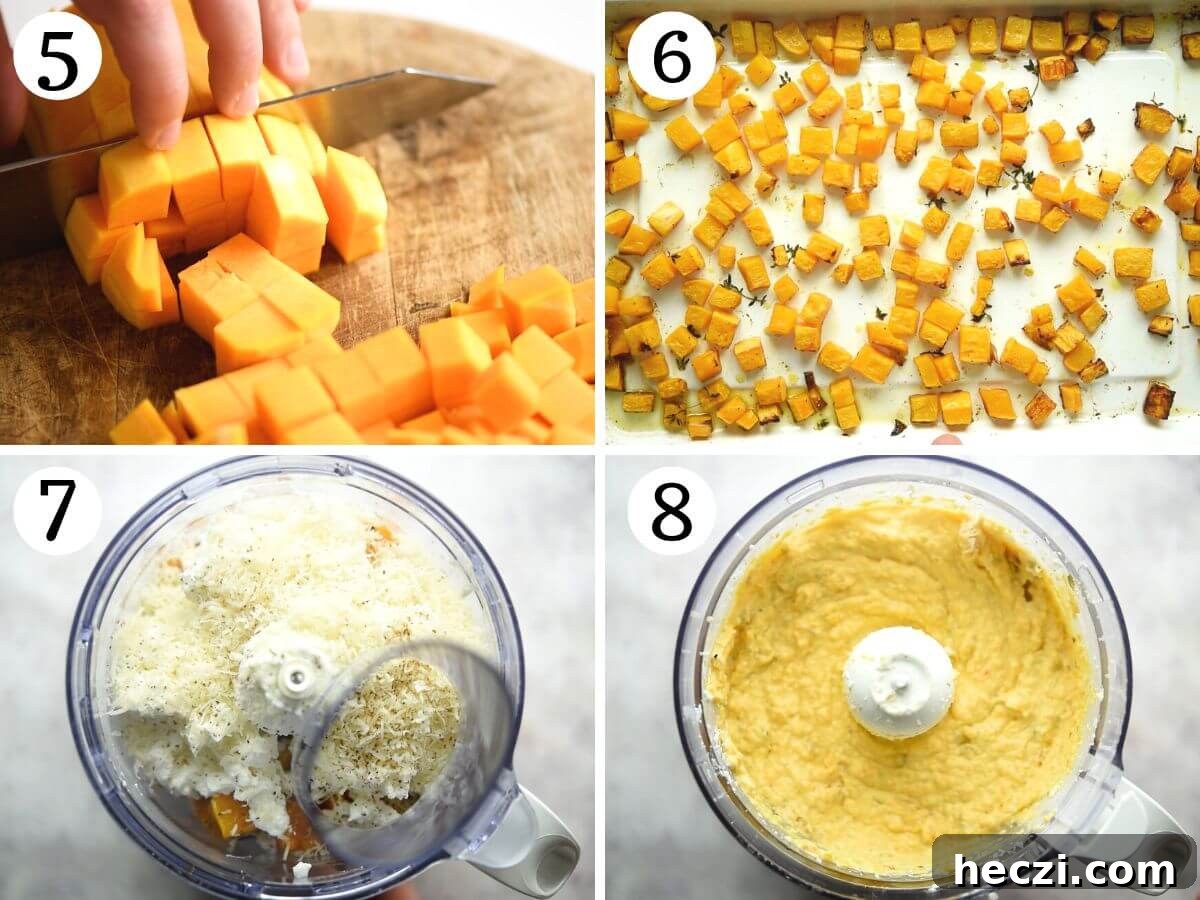
Peel and cube the squash into medium pieces. Toss on a baking tray with thyme, salt, pepper and olive oil, then roast until tender. Let the squash cool slightly before transferring to a food processor with ricotta, Parmigiano Reggiano and a pinch of nutmeg. Blitz until smooth and taste for seasoning. The smooth texture makes the filling easy to pipe or spoon into the ravioli.
Roll out the pasta dough
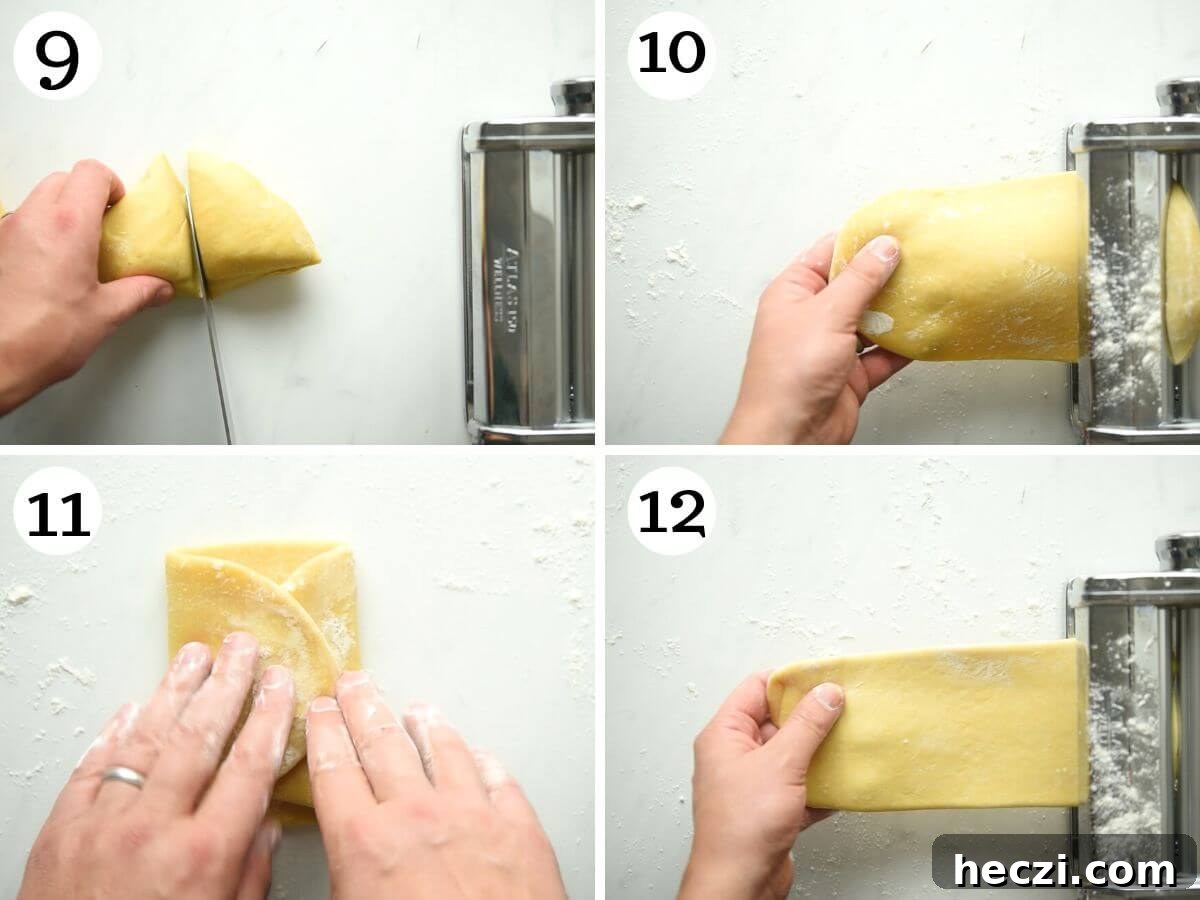
Set your pasta machine to the widest setting (usually 0). Divide the dough into quarters and work with one piece at a time, keeping the others wrapped. Dust the surface and machine with flour. Flatten the piece so it feeds easily through the rollers, folding and passing it through several times to develop structure. Progress through the machine settings until the sheet is thin—around setting 6 on a Marcato Atlas 150 is a good guide.
Assemble the butternut squash ravioli
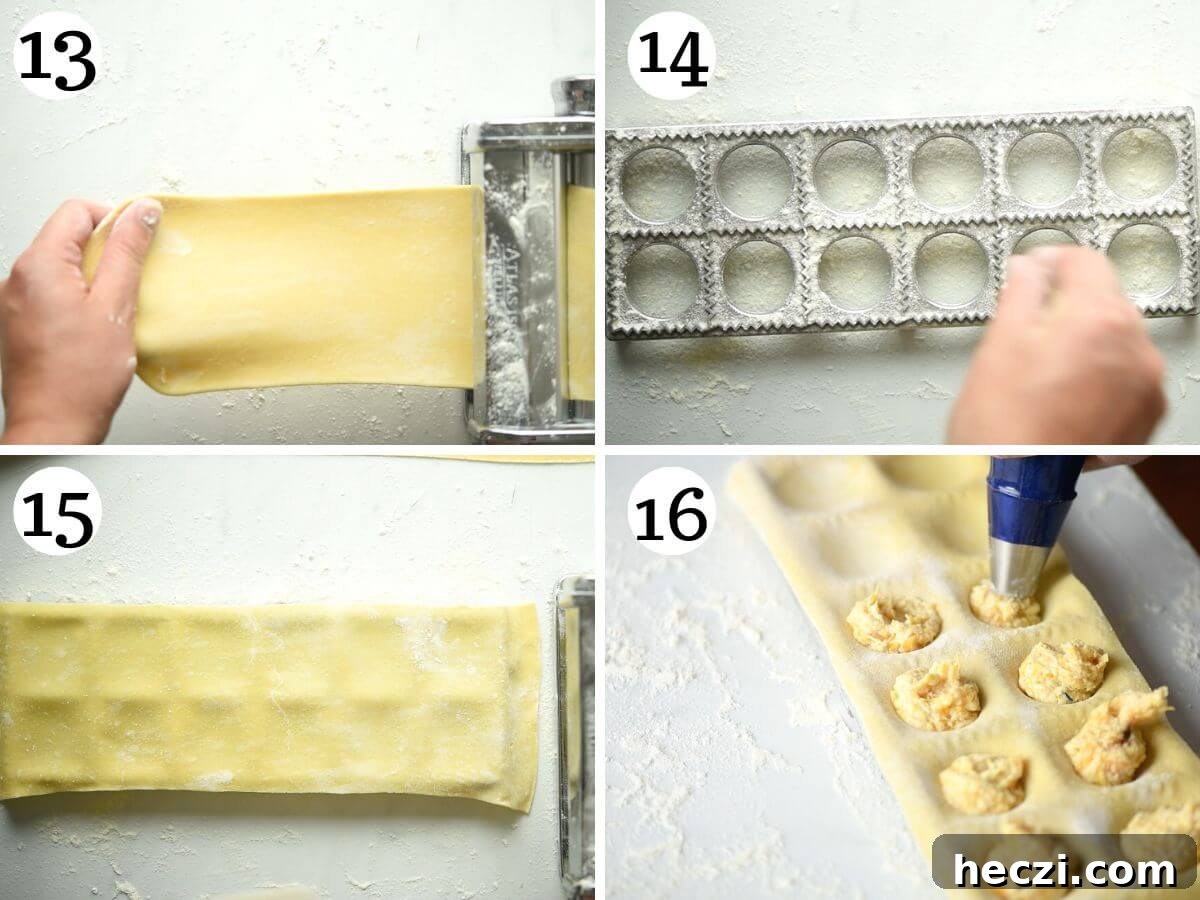
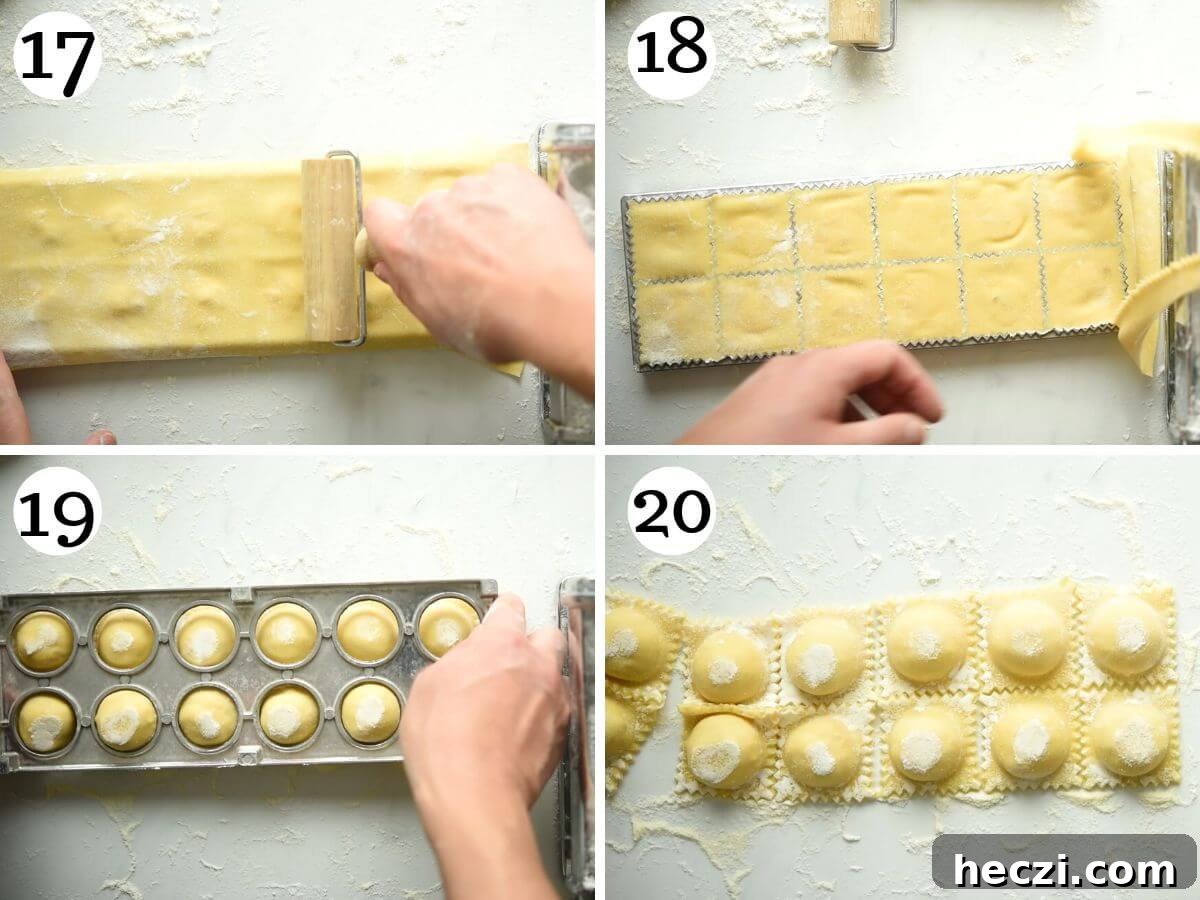
Dust the ravioli maker or work surface with flour. Cut the long sheet of pasta into two equal lengths. Place one sheet over the mould, add the indent plate, then pipe or spoon the squash filling into each cavity. Lay the second sheet on top and use a roller or small pin to seal and trim. Tip the mould upside down and release the ravioli onto a floured board. Repeat with each dough portion.
Cook the ravioli and make the sauce
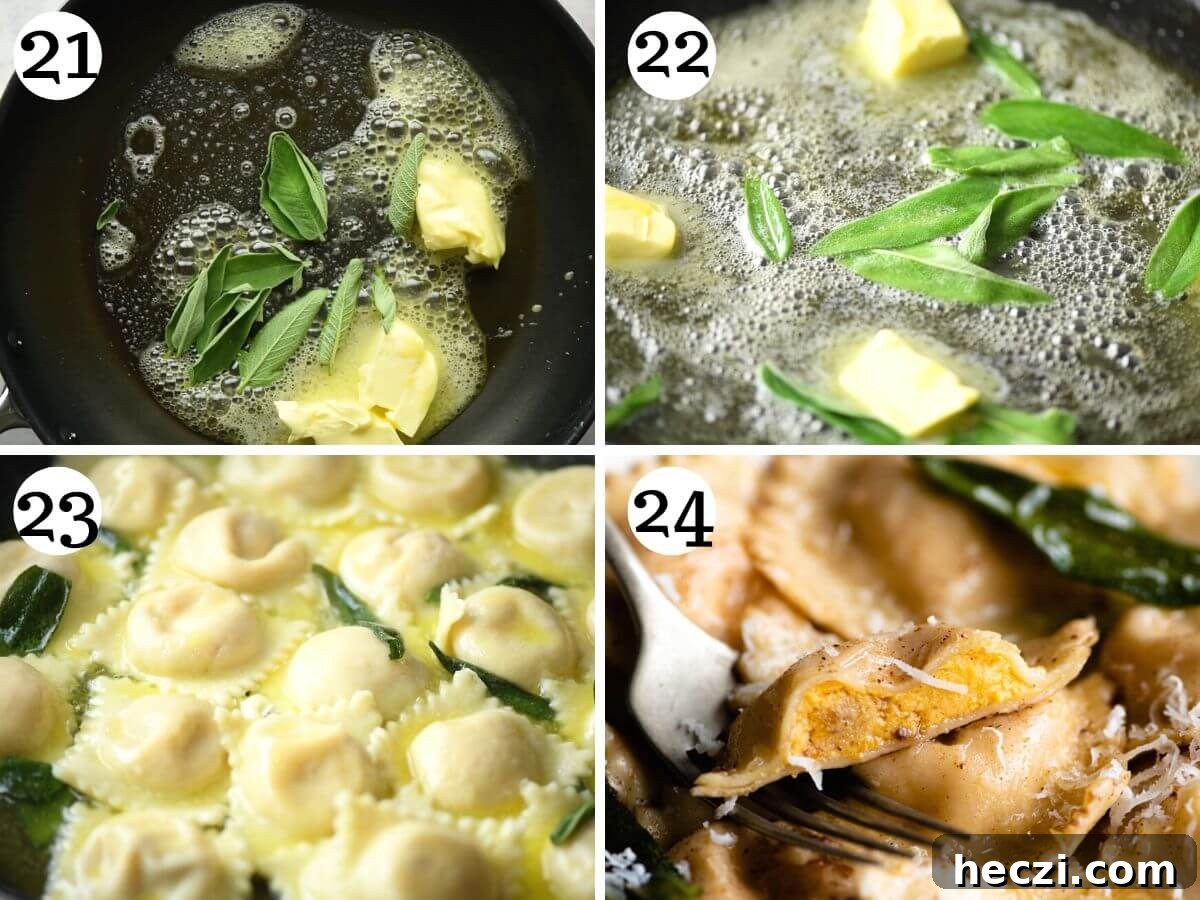
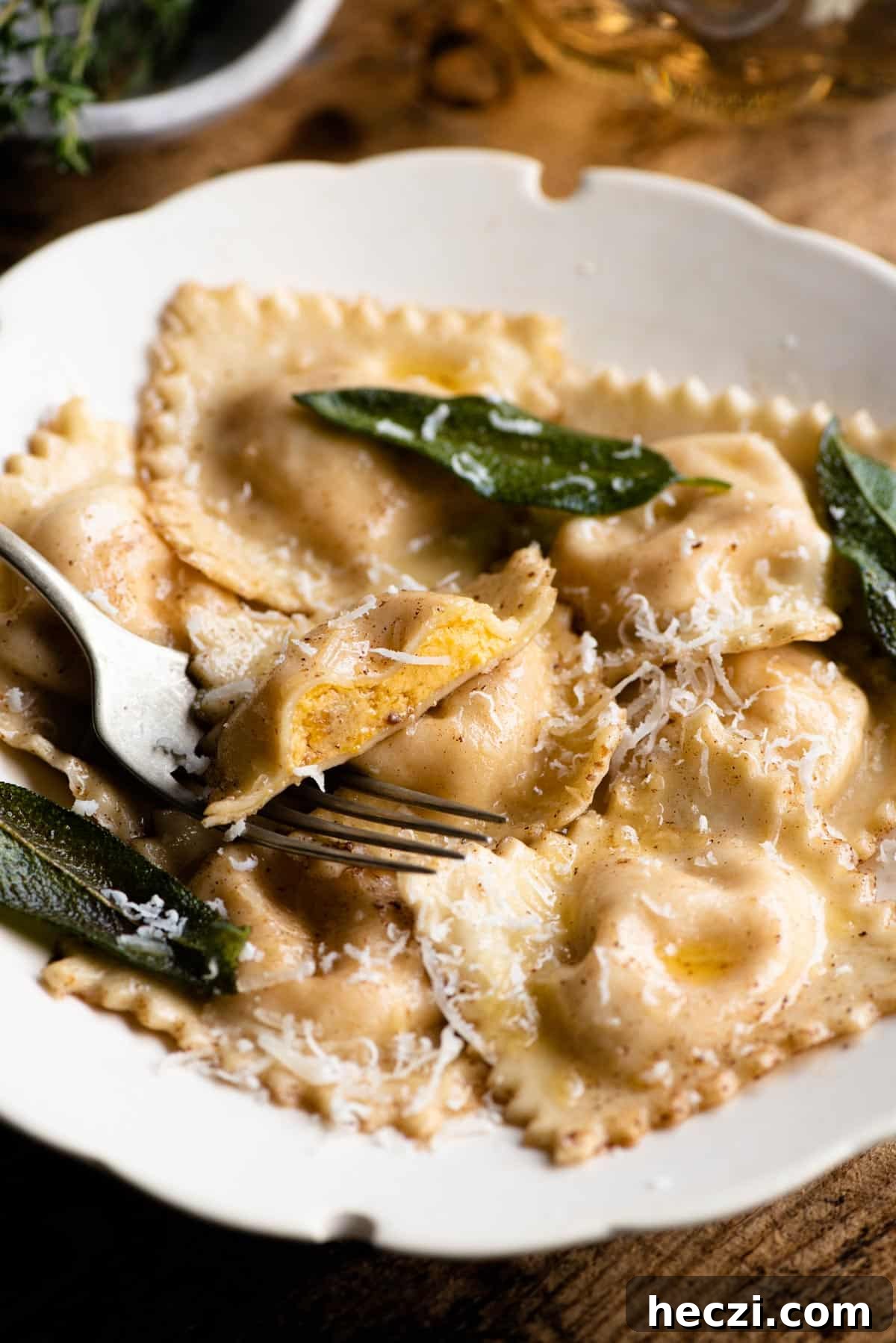
Bring a large pot of salted water to a boil. Cook the ravioli in batches for about 4 minutes, stirring gently so they don’t stick. While they cook, melt unsalted butter in a skillet over medium heat with fresh sage leaves and a pinch of salt. Let the butter foam and turn a light golden-brown — watch it closely so it doesn’t burn. Use a slotted spoon to transfer the cooked ravioli into the brown butter and toss to coat. Serve immediately with extra grated Parmigiano Reggiano.
Top Tip – If your pan isn’t large enough for the full batch, divide the ravioli into bowls and pour the brown butter sage sauce over each serving.
How to store fresh homemade ravioli
Filled ravioli will absorb moisture from the filling if left too long and become sticky. The best method is to blanch them briefly to firm the pasta before storing. Bring a large pot of salted water to a boil and blanch in batches for about 1 minute. Remove with a slotted spoon and place on a clean towel on a cooling rack. Let them air dry for 20–30 minutes; they should feel tacky but not wet.
After drying, store in the refrigerator for up to 3 days or freeze. For freezing, arrange blanched ravioli in a single layer on a baking tray, freeze until solid, then transfer to freezer bags. Cook from frozen — do not thaw; add about a minute to the cooking time if needed.
Top Tip – Blanching before freezing makes the pasta more durable and reduces the risk of cracking or bursting when cooked.
Recipe tips
- Best flour – Italian 00 (double zero) flour produces the best-textured pasta.
- Kitchen scale vs cups – A kitchen scale is recommended for consistent results; cup measures vary. If using cups, spoon flour into the cup and level it off rather than scooping directly.
- Filling – A food processor gives a silky filling that’s easy to pipe. If you don’t have one, mash the roasted squash by hand.
- Rolling out – Keep your work surface and machine well dusted with flour to prevent sticking.
- Ravioli maker – Dust the mould generously with flour so the ravioli releases easily.
- Make ahead – The filling can be made a day or two in advance and kept refrigerated.
FAQs
Yes. Use the dough hook, beat the eggs lightly before adding to the flour, mix on low–medium until a dough forms, then knead on medium for about 10 minutes.
Yes. Roast 2–3 garlic cloves in their skins with the squash and remove the skins before blending, or add ½–1 clove of finely chopped garlic to the butter sauce.
Blanch the ravioli for 1 minute, dry them on a towel, then refrigerate for up to 3 days or freeze in a single layer on a tray before transferring to bags. Cook straight from frozen.
Besides brown butter and sage, try a rich Parmesan cream sauce or a tomato vodka cream sauce for a different flavour profile.
More delicious recipes for Fall
Fresh Pasta
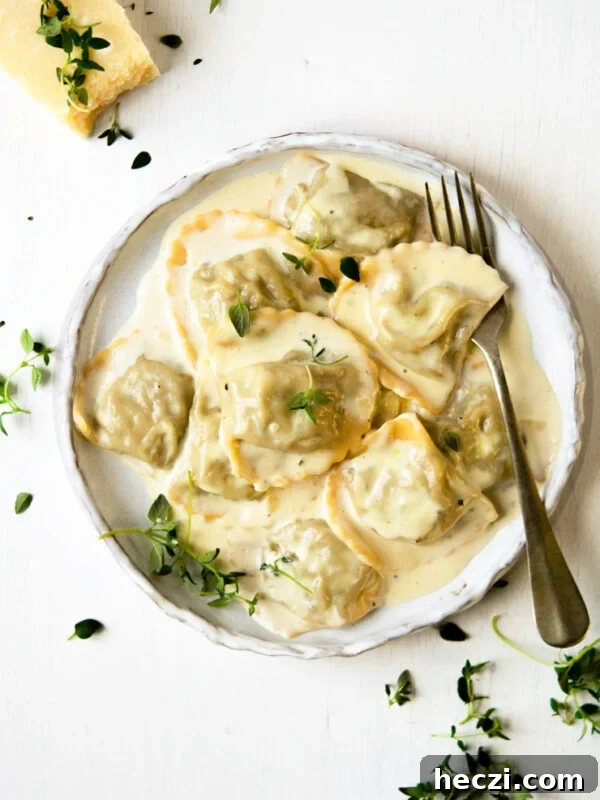
Mushroom Ravioli With Parmesan Cream Sauce

Risotto
Butternut Squash Risotto With Thyme
Fresh Pasta
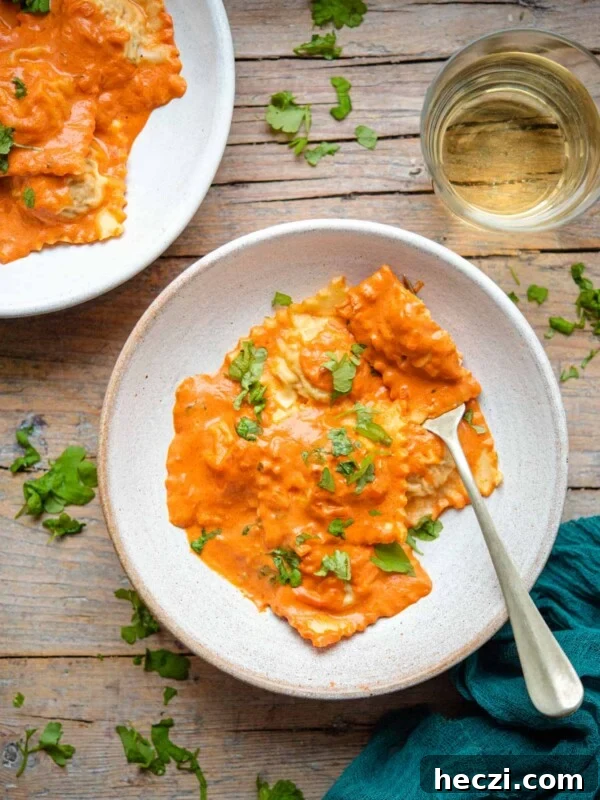
Lobster Ravioli with Vodka Cream Sauce
Pasta
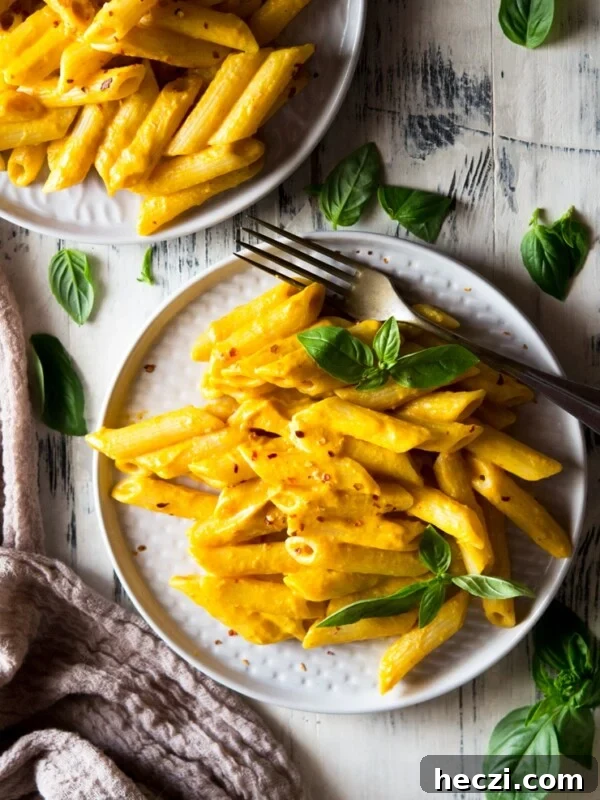
Creamy Butternut Squash Pasta
If you try this Butternut Squash Ravioli recipe, please rate it and leave a comment with your experience—I love hearing from readers. Follow the blog on social media or sign up for the newsletter for more seasonal recipes and tips.
Step By Step Photos Above
Most recipes include step-by-step photos, helpful tips and a video to guide you through the process.
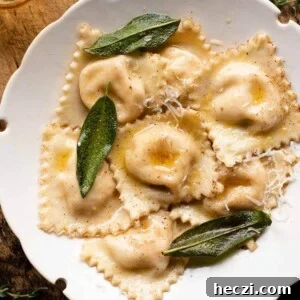
Butternut Squash Ravioli with Brown Butter and Sage Sauce
By Emily
Equipment
- Food processor
- Pasta machine
- Ravioli maker or stamp
- Piping bag (optional)
Ingredients
For the pasta dough
- 3 cups (400g) Italian 00 flour, plus extra for dusting
- 4 large eggs, at room temperature
- 1 egg yolk, at room temperature
For the filling
- 1–2 tbsp olive oil
- 4 cups butternut squash (630g), cut into medium cubes
- 1 sprig fresh thyme
- 1.5 cups ricotta (375g)
- ¾ cup Parmigiano Reggiano or Pecorino, freshly grated
- Salt and pepper
For the sauce
- 1 stick (100g) unsalted butter
- 8–10 fresh sage leaves
Instructions
Make the pasta dough
- Tip the flour onto a clean surface and make a wide well. Add the eggs and yolk, scramble them with a fork, then gradually incorporate the flour until a rough dough forms.
- Knead by hand until most flour is absorbed, then continue kneading about 10 minutes until smooth and elastic. Wrap and let rest at least 30 minutes.
Make the filling
- Preheat the oven to 400°F (200°C).
- Peel and cube the squash. Toss with salt, pepper, thyme and olive oil, spread in an even layer and roast until soft (about 30–40 minutes).
- Let cool, then blend the squash with ricotta, Parmigiano and nutmeg until smooth. Season to taste. Transfer to a piping bag or bowl for filling the ravioli.
Assemble the ravioli
- Set the pasta machine to the widest setting. Divide the dough into quarters and work with one at a time, keeping the rest covered.
- Dust with flour and pass the dough through the rollers, folding and repeating several times to develop structure. Gradually thin the sheet to about setting 6 on a pasta machine.
- Cut the sheet into two lengths. Place one sheet over the ravioli mould, add the mould plate and fill each cavity with the squash mixture. Cover with the second sheet and seal with a small roller. Release the ravioli onto a floured board.
Cooking the ravioli
- Bring a large pot of salted water to a boil. Cook ravioli in batches for about 4 minutes, stirring gently.
- Meanwhile, melt butter over medium heat with sage and a pinch of salt until it turns light golden-brown. If it browns too quickly, lower the heat.
- Transfer ravioli to the skillet with a slotted spoon and toss gently to coat. Serve with extra grated Parmigiano Reggiano.
Notes
- Scale vs cups: A kitchen scale ensures consistent results; cup measures vary by brand and packing.
- Filling: A food processor yields a smooth filling; if you don’t have one, mash the squash by hand.
- Rolling: Keep the surface and machine well dusted with flour.
- Using a mould: Dust the ravioli mould generously so the pasta releases easily.
- Make ahead: The filling can be prepared a day or two in advance and refrigerated.
- Storage & freezing: Blanch ravioli in salted boiling water for about 1 minute, dry on a towel, then refrigerate up to 3 days or freeze. Cook from frozen; do not thaw.
Helpful Info for All Recipes
- I use extra virgin olive oil unless stated otherwise.
- All vegetables are medium-sized unless noted.
- Recipes are tested in a fan (convection) oven unless stated otherwise.
- Nutrition is calculated automatically and should be used as an approximation.
Nutrition
Carbohydrates: 66 g |
Protein: 21 g |
Fat: 27 g
Nutrition information is an approximation.
Did you try this recipe?
Leave a comment below!