
If your sourdough starter isn’t bubbling, doubling, or behaving as it should, it likely needs a boost. Starters can tolerate some neglect, but getting them back to full strength can take targeted steps. Below are proven methods to strengthen a sourdough starter. It’s not luck — it’s consistent care and understanding what is weakening your starter.
These tips will help if:
- Your starter consistently smells like nail polish remover, even after a feed.
- Your starter has been neglected (left unfed in the fridge too long or skipped several counter feeds), causing excess acidity.
- You’ve been cultivating a starter for weeks but it isn’t doubling reliably and seems stalled.
- Your loaves lack oven spring, have a gummy crumb, or a pale crust.
Table of Contents
- What Causes A Weak Sourdough Starter?
- Use A Scale!
- Stir Your Starter
- Feed Your Sourdough Starter Superfood
- Discard Before Every Feed
- Rethink Your Feeding Ratio
- Keep Your Starter At A Lower Hydration
- Keep Your Sourdough Starter Warm
- Totally Refresh Your Starter
- Frequently Asked Questions
What Causes A Weak Sourdough Starter?
Many factors can weaken a sourdough starter, but the most common is excess acidity. When a starter is neglected — left unfed in the fridge for months or on the counter for days — lactic acid bacteria can produce too much acid, which inhibits yeast activity. Wild yeast tolerate some acidity, but in a highly acidic environment they struggle to reproduce. Since the bubbles and rise come from yeast-produced carbon dioxide, a very acidic starter often stops bubbling and losing strength.
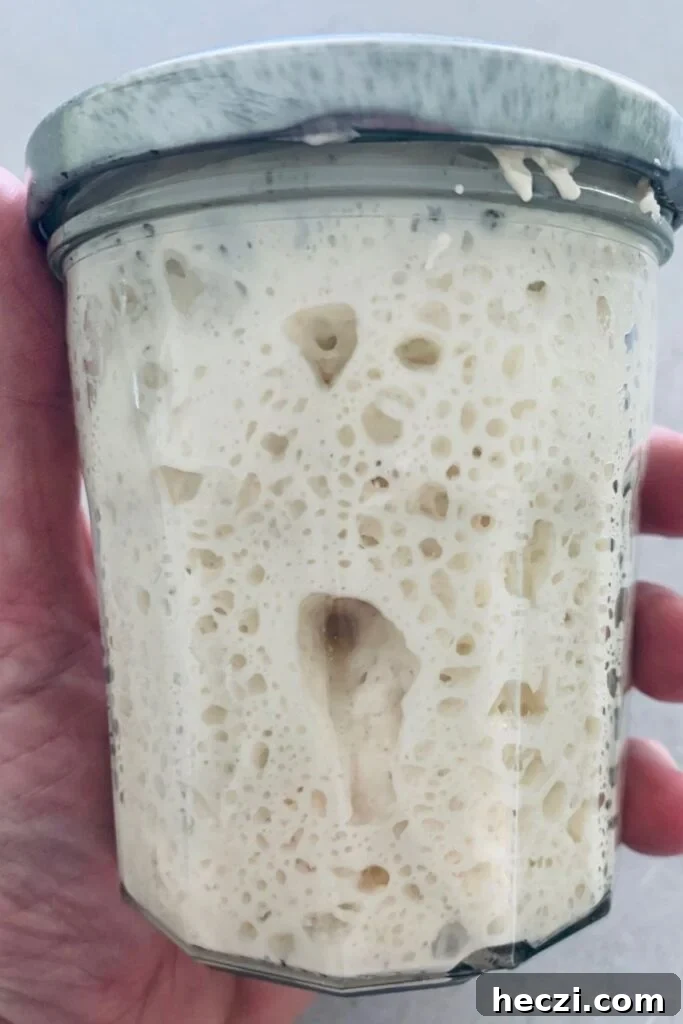
If the yeast aren’t active, the dough won’t rise. It’s straightforward: happy yeast equals a lively starter. A healthy starter should consistently double or triple after a feed, smell pleasantly yeasty, and be full of bubbles. It will contribute to a lofty loaf with an open crumb structure.
Use A Scale!
Always weigh your starter, flour, and water with a digital kitchen scale in grams. Weighing ensures consistent feedings. Volumetric measurements (cups) are unreliable because flour and water weigh differently. Following precise weight ratios prevents imbalance and helps your starter thrive.

Stir Your Starter
Stirring between feedings is an easy way to boost activity. Yeast and bacteria don’t move on their own, so stirring redistributes organisms and fresh food (flour and water), giving them access to nutrients to produce carbon dioxide. Stirring well after feeding and again a few hours later supplies a little oxygen initially, which is beneficial.
Kate’s STARTER Tip
A brief burst of oxygen when you first feed your starter helps the yeast. Stirring after feeding and once more a few hours later won’t harm the starter and can improve activity.
Feed Your Sourdough Starter Superfood
If your starter was built on refined white flour, boost it with rye flour. Rye acts like a superfood for a starter, supplying nutrients that revive activity quickly. Many bakers find success using half rye and half bread or all-purpose flour rather than 100% rye. Rye can also increase tanginess in your bread.
To use rye as a boost, substitute half your usual flour with rye for a few consecutive feeds and you should see improved activity. Freshly milled whole wheat is also beneficial if available and can increase wild yeast presence. When changing flours, expect a short adjustment period as the starter adapts.
Discard Before Every Feed
Discarding some starter before each feed prevents excess acidity and overaccumulation of spent food. The easiest method is to transfer the amount you want to keep into a clean jar and toss the remainder. Not discarding can lead to a sluggish, foul-smelling starter that fails to rise.
Rethink Your Feeding Ratio
If your starter frequently produces hooch (a liquid layer), it’s a sign of hunger. Instead of increasing feeding frequency, try increasing the amount of flour and water per feed. For example, move from a 1:1:1 ratio to a 1:2:2 ratio. This gives the culture more fresh food and helps reset balance. If you want to limit flour use, reduce the starter amount while keeping higher feed weights (for example, 25g starter fed 50g flour and 50g water).
Keep Your Starter At A Lower Hydration
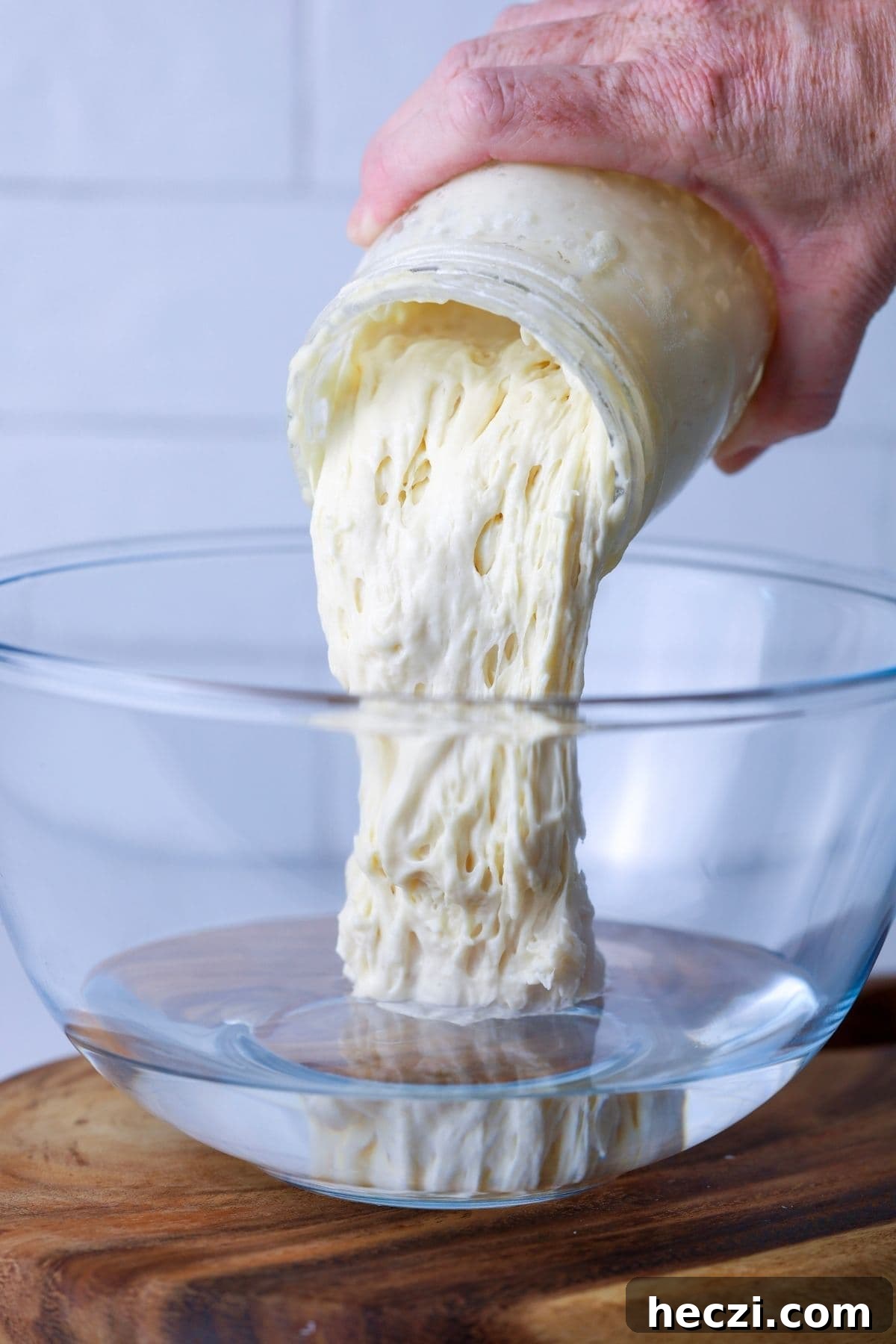
Thin, runny starters can be hard to monitor because bubbles dissipate quickly, and they can acidify more easily. Try feeding flour only for one or two rounds to thicken the starter and lower hydration. A stiffer starter often shows more defined bubbles and a spongier structure.
If the mixture seems very runny, stir extra flour in; if stiff, it will loosen as fermentation proceeds. After one or two stiffer feeds you can return to your usual hydration. If you need a 100% hydration starter for a recipe, you can quickly bring it back at the next feed by portioning starter and adding equal weights of flour and water.
Keep Your Sourdough Starter Warm
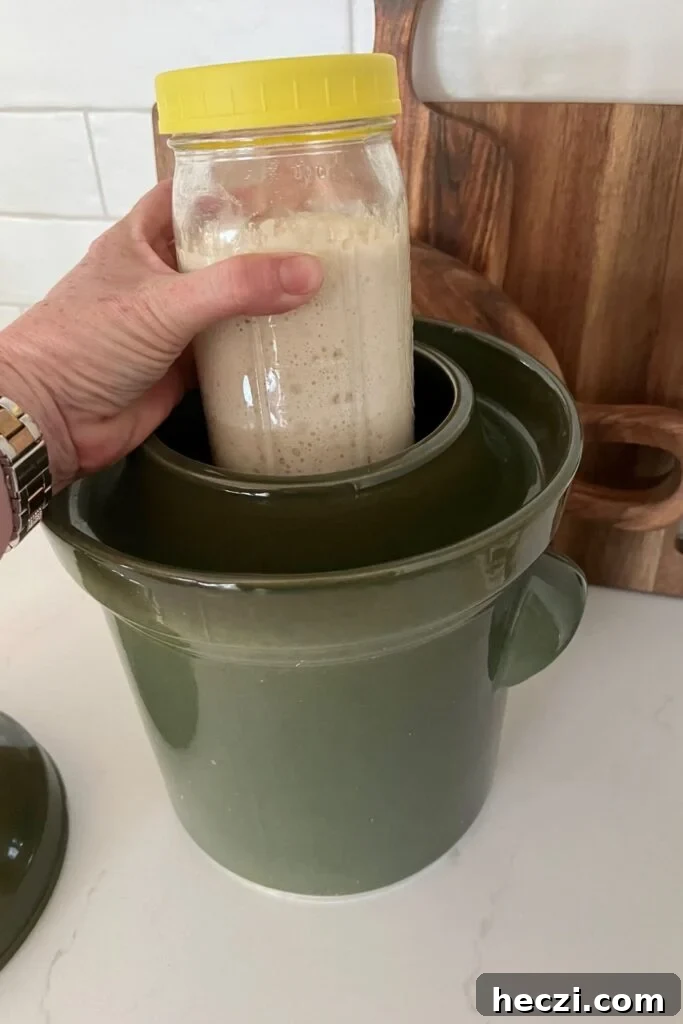
Temperature matters when establishing and reviving a starter. Starters kept below 70°F (21°C) tend to be sluggish, while temperatures above 75°F (24°C) encourage stronger activity. Avoid letting the starter exceed about 82°F (28°C), as higher temperatures can promote excess acid build-up. Aim for a warm, stable spot to revive and maintain activity.
Totally Refresh Your Starter
If your starter shows no consistent activity, a complete refresh can revive it, especially after neglect or overfeeding that caused an acid buildup. Follow this refresh routine:
- Place 5g of starter into a clean jar and discard the rest.
- Feed that 5g with 25g flour and 25g water, stirring thoroughly (a 1:5:5 ratio).
- Cover loosely and let it peak (at least double). If it doesn’t double after 12 hours, continue to the next step.
- Take 5g of that mixture into a new clean jar and feed with another 25g flour and 25g water. Stir well and let it peak. It should become bubbly and smell pleasant.
- Once the refreshed starter peaks reliably, resume regular feeding. A 1:2:2 ratio for a while can help prevent a return to excess acidity. Remember to discard before feeds to maintain balance.
I hope these strategies help you strengthen your sourdough starter and bake better bread. Most weak starters are the result of acid build-up, so restoring balance with the steps above will reward you with a resilient starter for years to come.
Frequently Asked Questions
You can, but it’s unnecessary. Sugar gives yeast extra food but doesn’t reliably strengthen a starter long-term. Reserve sugar for bread recipes unless you intentionally want a sweeter starter.
Early in a starter’s life, bubbling without doubling is common. Microbial populations compete until a stable community develops. With consistent feeding and care, the starter should begin to double reliably.
Yes. Stirring redistributes organisms and nutrients and introduces a small amount of oxygen that helps initial growth after a feed.
No. Adding pineapple juice alters acidity and isn’t necessary. Stick to flour and water and use the balancing techniques described above.
Yes. Rye and whole grain flours are excellent boosts. When switching flours, allow a few days for the starter to adjust. For consistent results, feed with the same flour most of the time.
Yes — water quality matters. Avoid heavily chlorinated water or water from systems that strip minerals. Use filtered or mineral-containing water when possible to support a healthy starter.