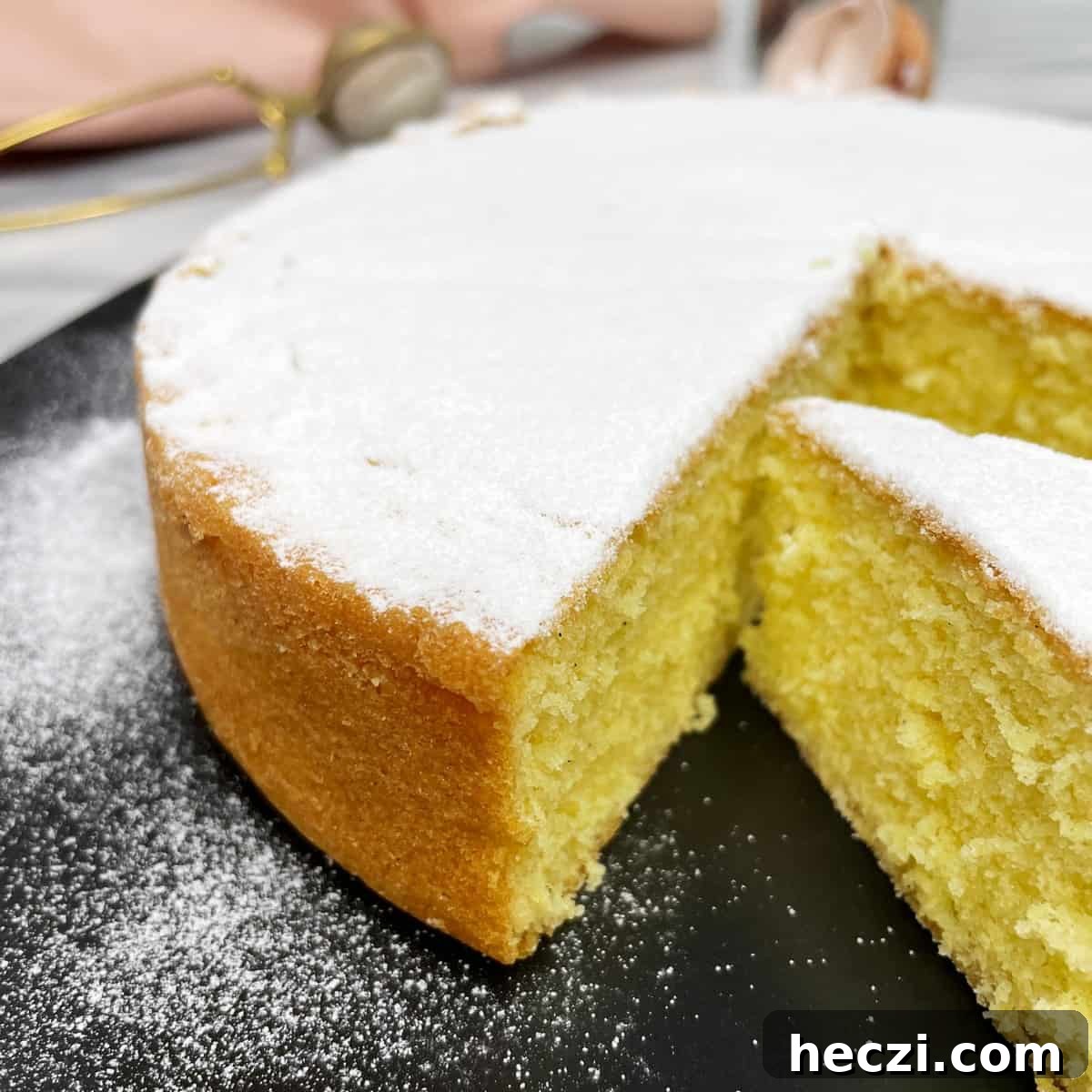
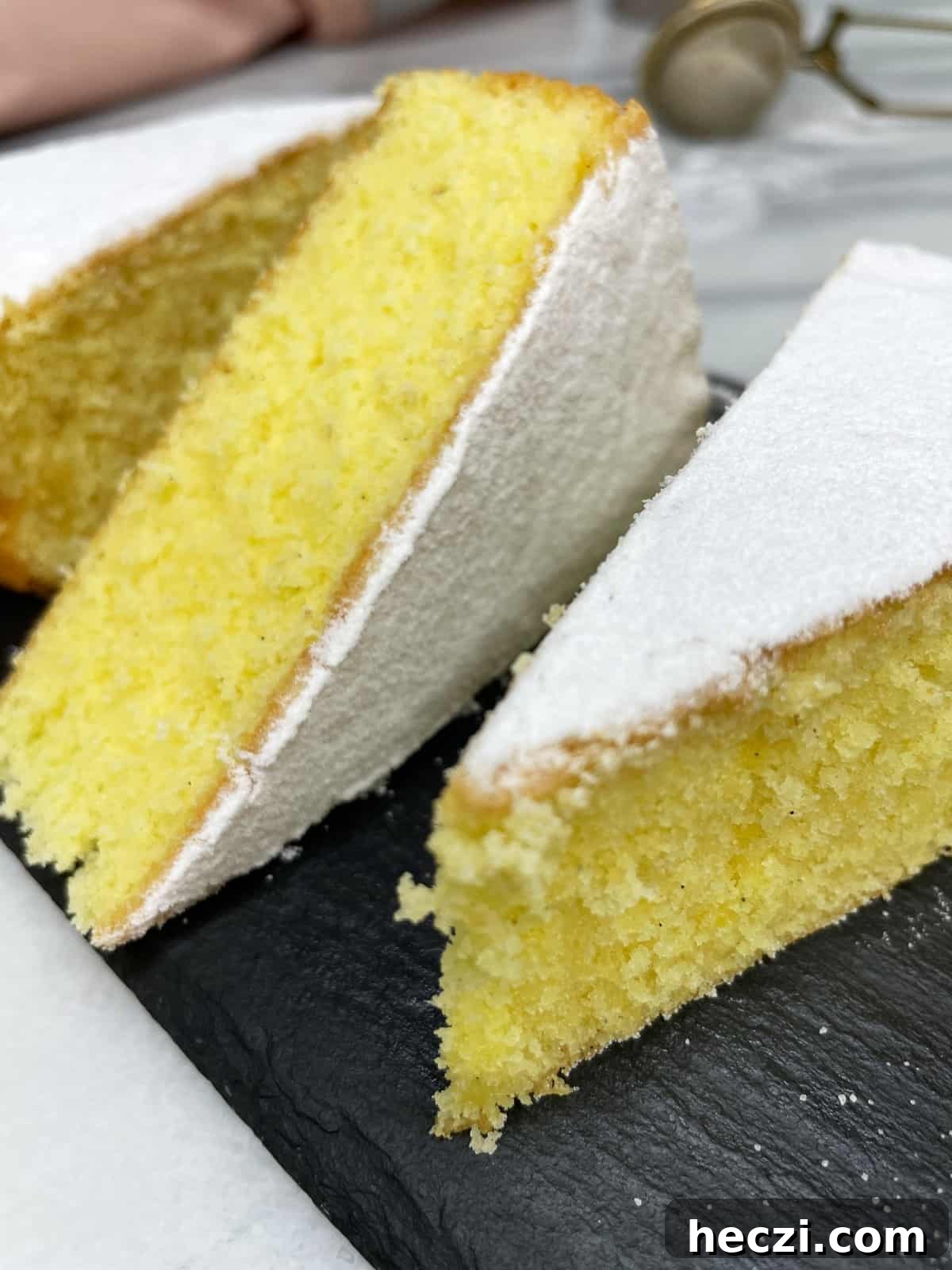
If you’re looking for an easy, classic Italian cake to bake at home, try the traditional Torta Paradiso, also known as Paradise Cake. Made from simple ingredients, it has an exceptionally soft, pillowy texture — so light it’s often called Heaven Cake.
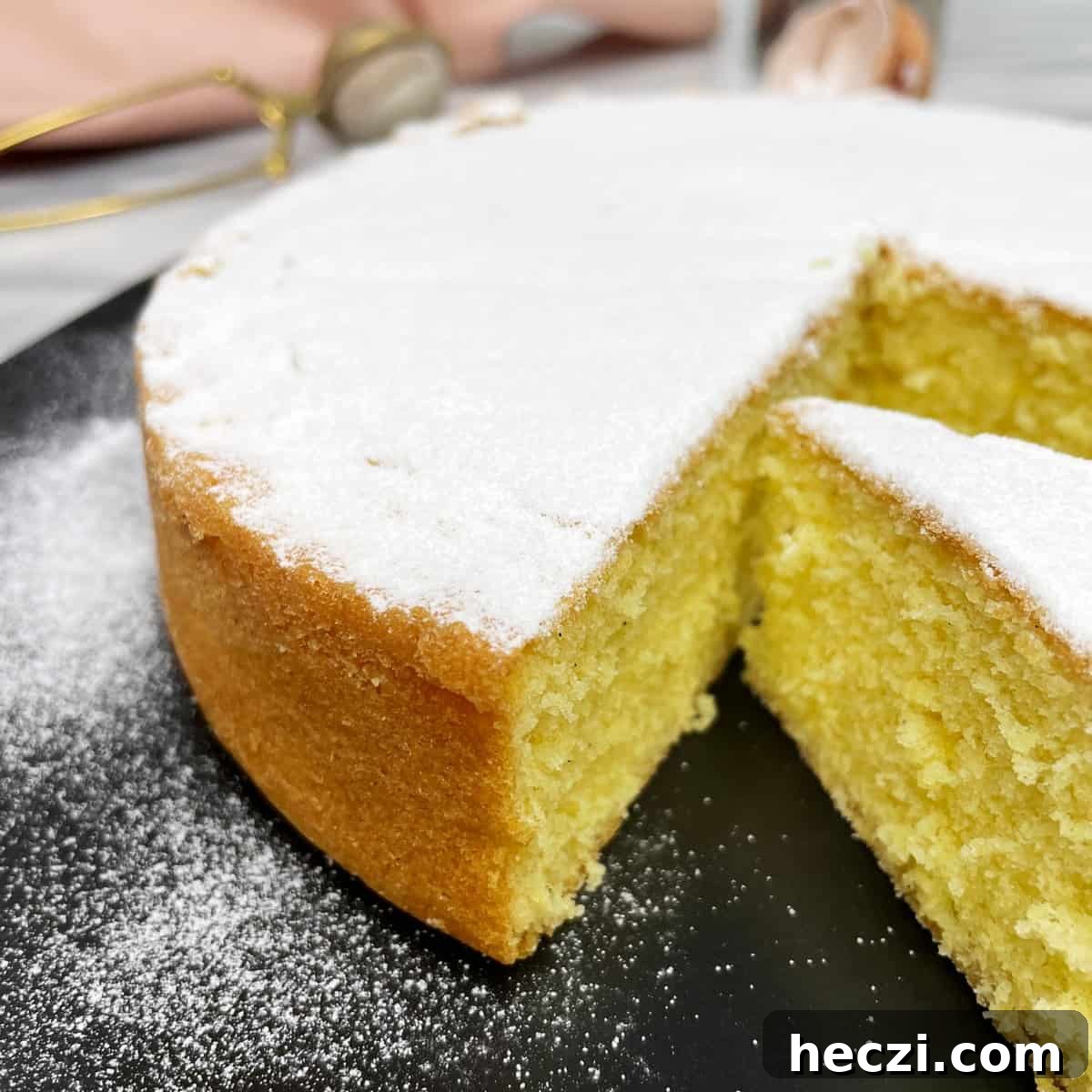
Isn’t it true that the simplest things are often the best? If you haven’t tasted a slice of this Italian Paradise cake yet, you should.
This Lombard cake is said to have originated in the Certosa di Pavia monastery. In 1878 Pavia pastry chef Enrico Vigoni refined the recipe at the request of the Marquis Cusani Visconti, and a noblewoman who tasted it named it the “cake of paradise.” The cake became an emblem of Pavia and later gained popularity throughout Italy and beyond. Torta Paradiso (also called Torta Del Paraiso or Torta Paraiso) won recognition in Rome in 1888 and delighted visitors at the 1906 Milan International Exhibition. The original recipe remains a cherished specialty of Pasticceria Vigoni in Pavia.
Traditionally, this cake was often made without electric mixers, using only a wooden spoon or spatula. While that method produces excellent results, using an electric or stand mixer makes the process easier and helps incorporate air into the batter for maximum lightness.
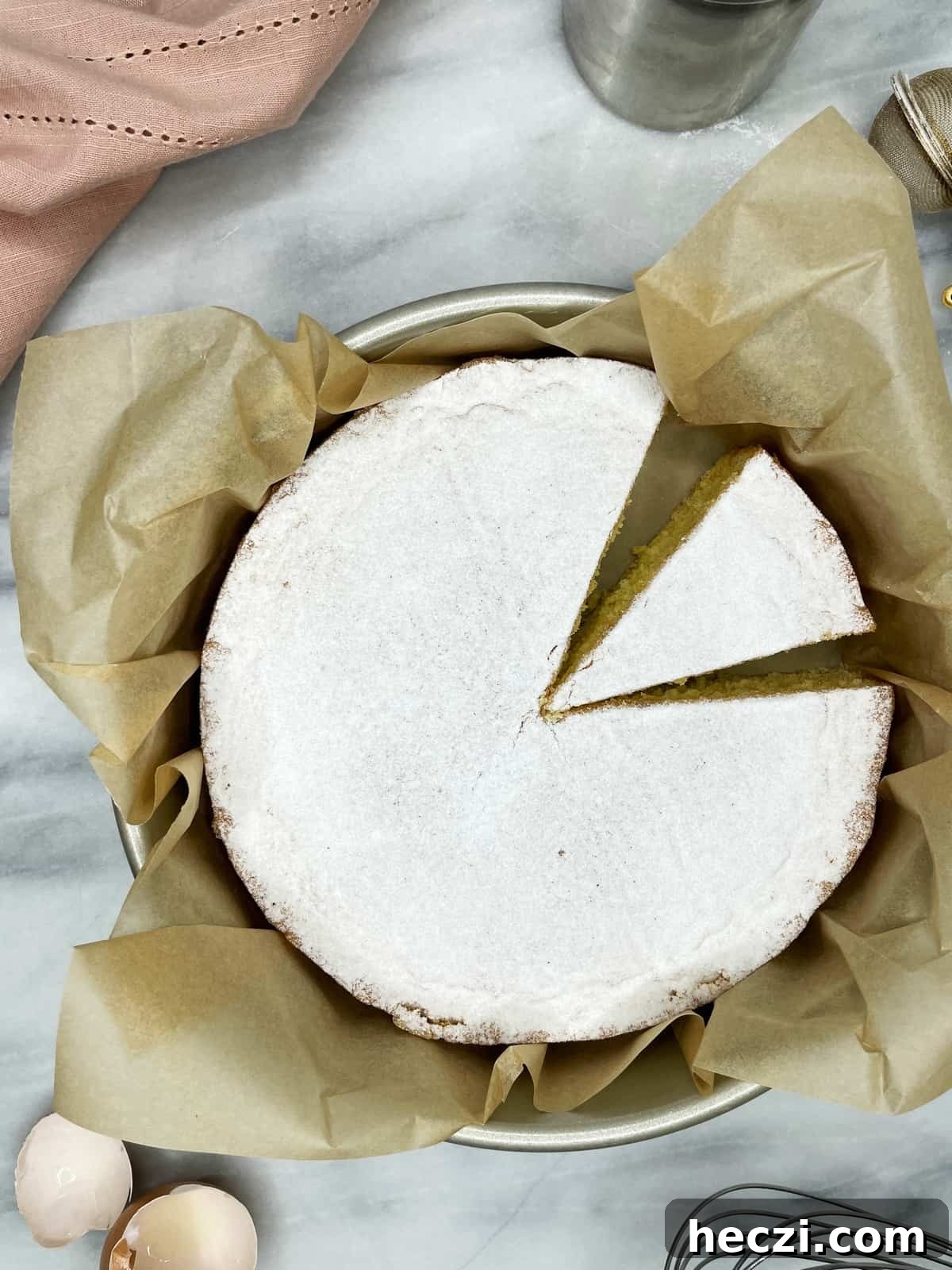
Why you should try this recipe
Torta Paradiso and its close cousin Torta Margherita are Italian classics. If you want to bake an authentic Italian torta, this is an ideal choice. The cake is similar in spirit to the French quatre-quarts (four quarters) in how ingredients are balanced, but its texture is uniquely delicate and melt-in-your-mouth.
This sponge is rich, fragrant, and perfect with minimal decoration — a generous dusting of powdered sugar is often all it needs. Serve it for breakfast, an afternoon coffee or tea, or as a simple dessert. When sliced and filled with creams, jams, or fresh berries, it also makes a beautiful layered cake for celebrations.
Ingredients
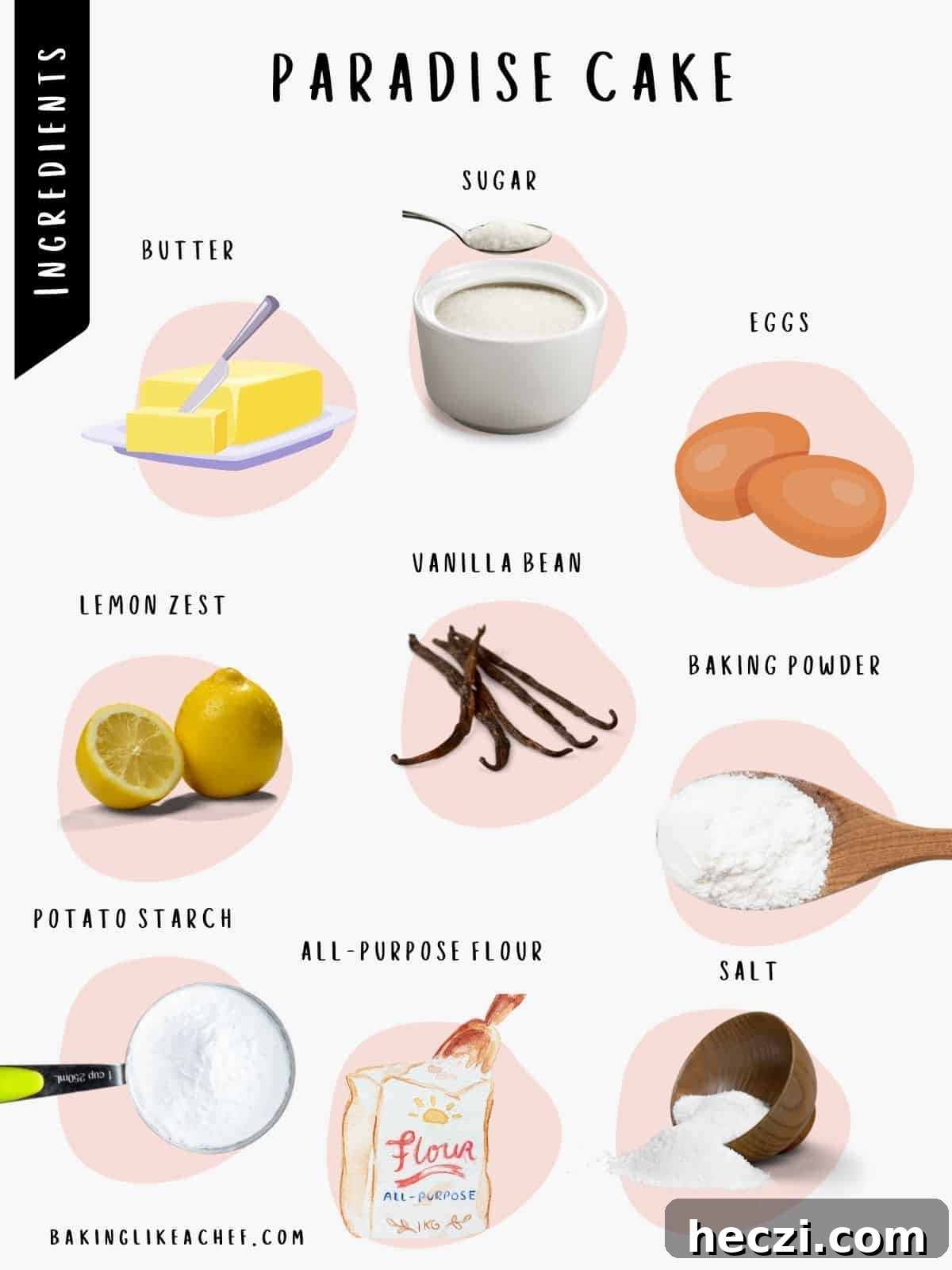
For exact ingredient amounts and detailed steps, see the recipe card below.
Make sure all ingredients are at room temperature.
Butter: Use high-quality, high-fat butter (European-style if possible). Soften at room temperature for 1–2 hours — soft but not melted. If you must substitute oil, use 80 g of oil for every 100 g butter.
Sugar: Granulated sugar is traditional. You can use store-bought powdered sugar (with starch) if preferred for easier dusting.
Eggs: Use large eggs at room temperature. The classic recipe uses whole eggs; some variations separate yolks and whites, but whole eggs keep the method simple.
Flour: The authentic recipe uses Italian 00 flour; all-purpose flour is an acceptable substitute.
Starch: Potato starch (not corn starch) is traditional and contributes to the cake’s tender, delicate crumb.
Lemon: Fresh lemon zest from an untreated lemon gives the cake its bright aroma. Use a microplane or zester.
Vanilla: Use a fragrant vanilla bean or the best vanilla extract available for a clear, warm flavor.
Baking powder: Optional. The original recipe often relies solely on beaten butter and eggs for lift, but adding ½ teaspoon of baking powder will yield a slightly higher rise.
Salt: A pinch enhances the overall flavor.
How to make Torta Paradiso
Preheat the oven to 355°F (180°C). Butter and flour an 8-inch (20 cm) cake pan and line the bottom with a round of parchment paper.
Lightly beat the room-temperature eggs with a fork and set aside. Sift the flour, potato starch, salt, and baking powder (if using) twice into a medium bowl.
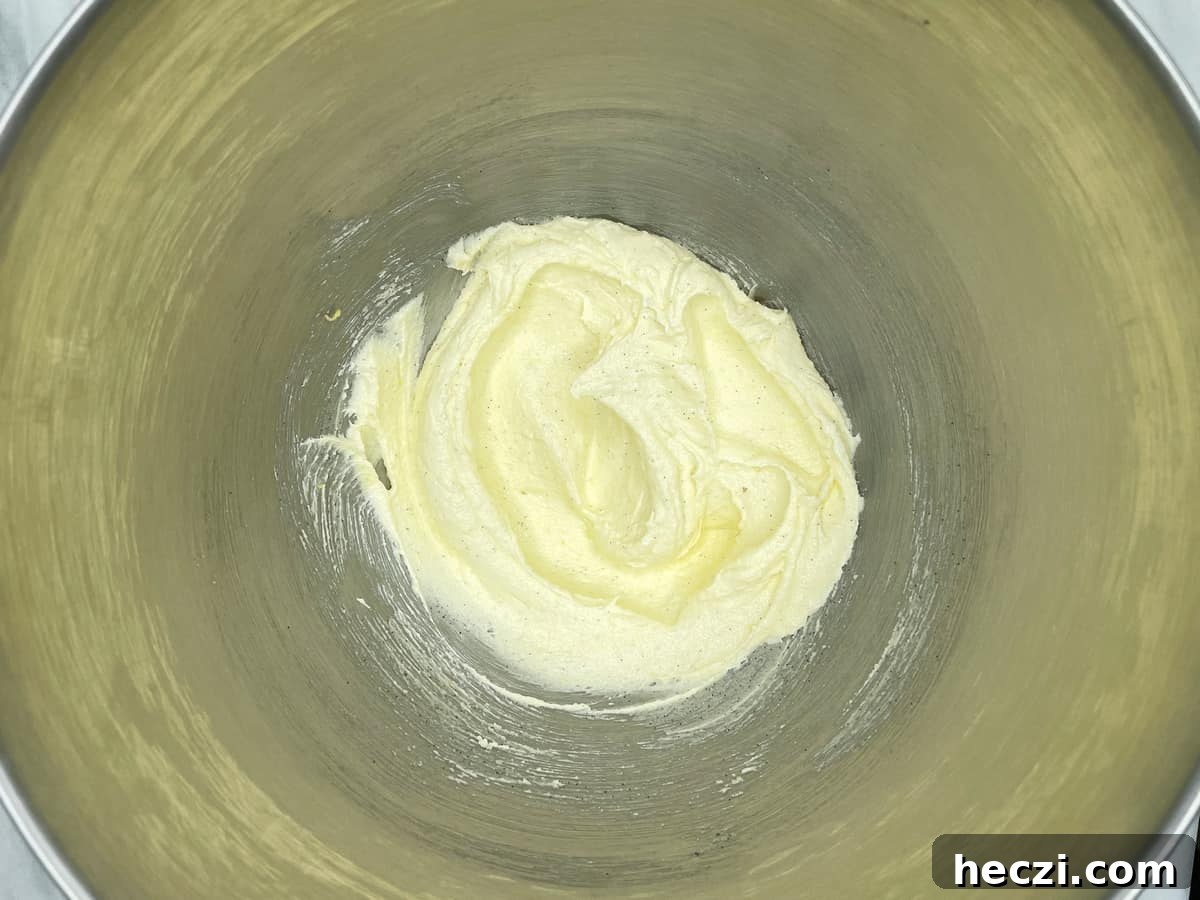
In a large bowl or the bowl of a stand mixer, combine the softened butter, granulated sugar, lemon zest, and scraped vanilla seeds. Whip on medium-high (with the whisk attachment) for about 15 minutes until the mixture becomes pale and velvety.
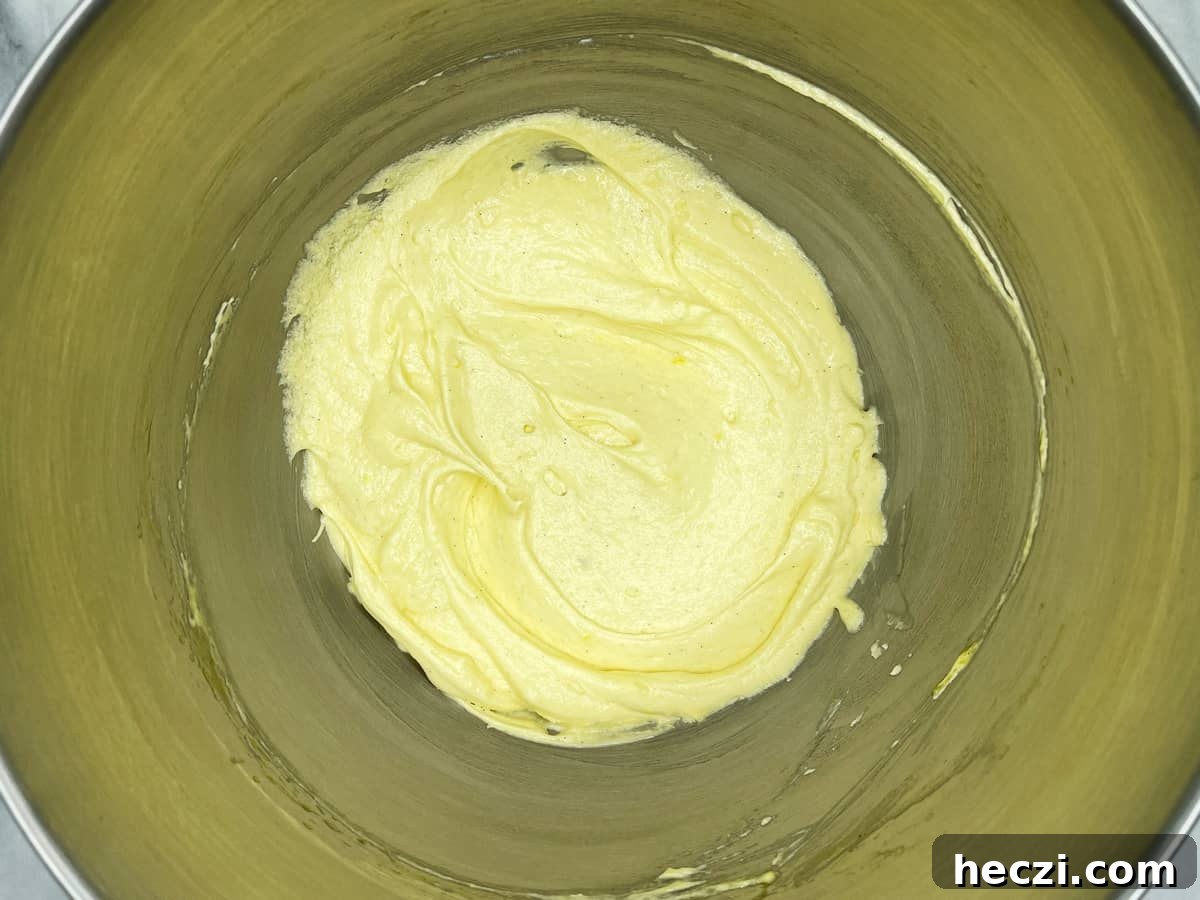
Reduce the mixer speed to low. Add the lightly beaten eggs one tablespoon at a time, waiting until each addition is fully incorporated before adding the next. This slow addition helps preserve the aeration you created while whipping the butter and sugar.
Remove the bowl from the mixer. Using a rubber spatula, fold in the sifted dry ingredients a tablespoon at a time with large, gentle strokes, waiting for each addition to be absorbed before adding more. Continue until the batter is smooth and creamy.
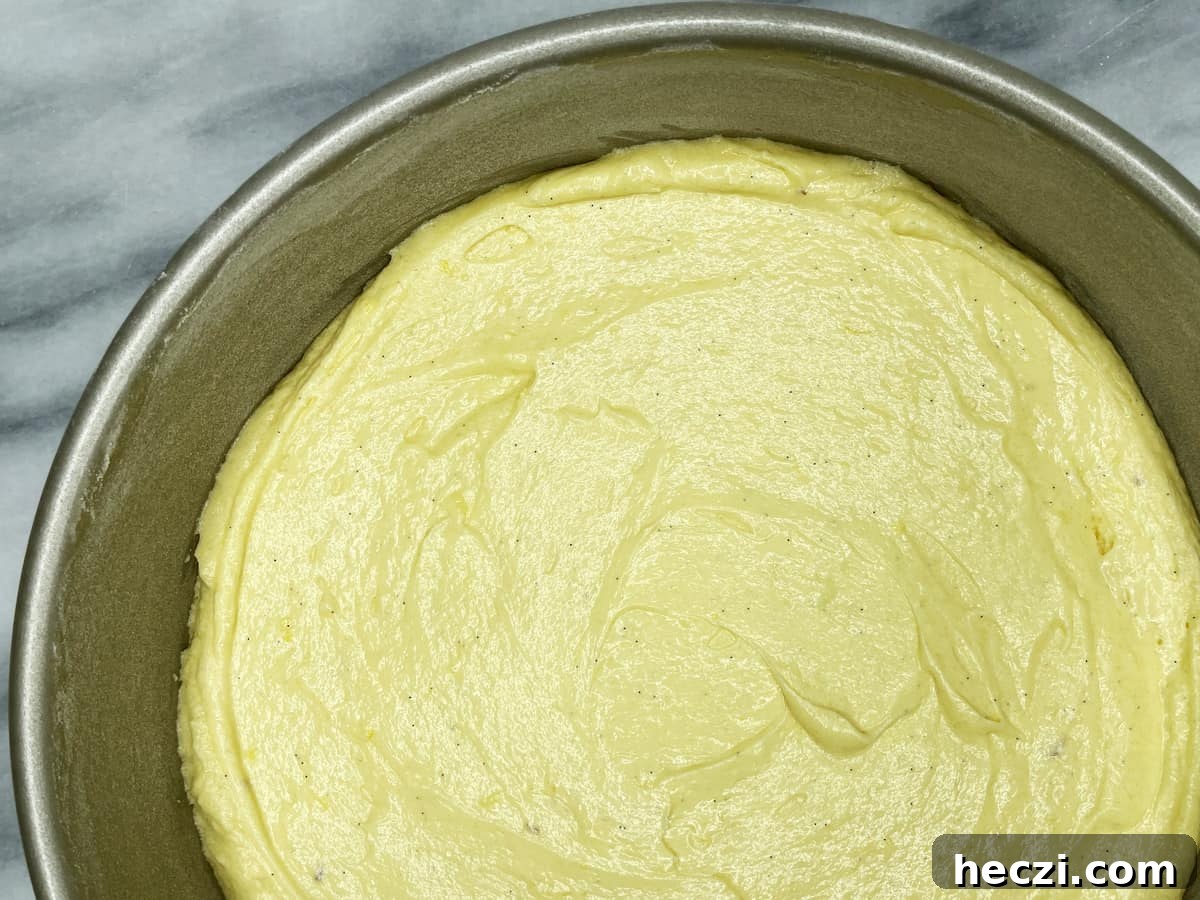
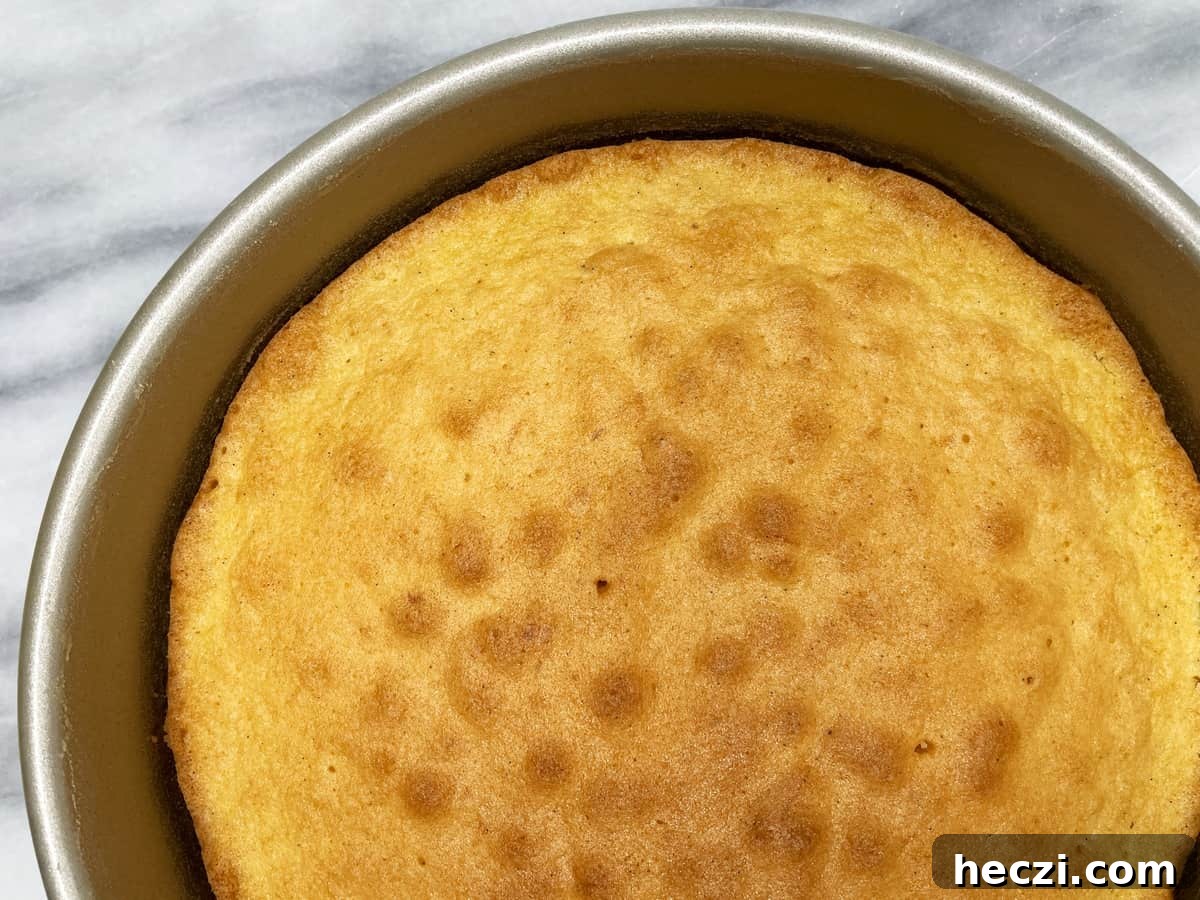
Pour the batter into the prepared pan and smooth the top. Bake for 30–40 minutes, or until a toothpick inserted into the center comes out clean.
Remove the cake and, while still hot, invert it onto a flat platter lined with parchment. Let it rest for about 15 minutes (not longer, to avoid condensation on the paper), then flip it again using a plate or cutting board to obtain a perfectly flat top. Cool completely on a wire rack (about an hour) and dust generously with powdered sugar before serving.
Recipe variations
Torta Paradiso is wonderfully versatile. The base is simple — flour, sugar, eggs, and butter — and it adapts well to flavor and filling variations.
For a festive touch, fold in a tablespoon of lemon juice or a splash of citrus liqueur such as Limoncello or Grand Marnier. Slice the cake in half to fill with whipped cream, pastry cream, jam, Nutella, or fresh berries for an elegant layer cake. To make a chocolate version, replace about 40 g (⅓ cup) of flour with cocoa powder. Filling the cake with a milk cream (crema al latte) creates a richer Kinder-style Paradiso.
Storing and freezing
Torta Paradiso is best the day it’s baked but will stay soft and flavorful for a couple of days. Store at room temperature under a cake dome or bell jar. If filled with cream, refrigerate and consume within two days. The plain cake freezes well (without powdered sugar or fillings): wrap tightly in plastic wrap and freeze up to one month. Thaw overnight in the fridge or for a few hours at room temperature.
Expert tips
- Use ingredients at room temperature for the best emulsion and texture.
- Allow enough time to whip the butter and sugar until pale and airy.
- Add eggs and dry ingredients slowly — one tablespoon at a time — to preserve air in the batter.
- Bake in a static (conventional) oven and avoid opening the door during the first 30 minutes.
- Cooking times vary by oven; check doneness with a toothpick or cake tester.
- For a smooth, elegant finish, place the cake’s flat bottom on top after cooling.
Frequently asked questions
Torta translates as “cake” in Italian (and Spanish). The word’s meaning varies by region and language, but in this context it refers to a classic Italian cake.
Paradise in Italian is “paradiso.” The cake’s name expresses its light, heavenly texture.
To make a gluten-free version, replace the 00 or all-purpose flour with an equal amount of rice flour or a suitable gluten-free flour blend, and ensure the starch you use is gluten-free.
They are similar but prepared differently: Paradiso typically starts by beating butter and sugar first, then adding eggs; Margherita usually begins by whipping eggs and sugar together before folding in flour and other ingredients.
Love Italian desserts? Try these next!
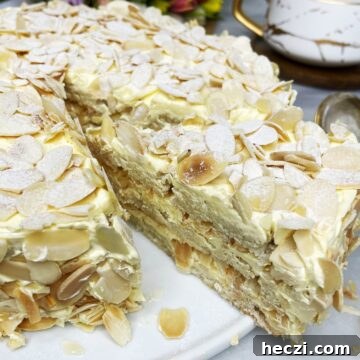
 Best Italian Almond Cake Recipe (Gluten-Free)
-
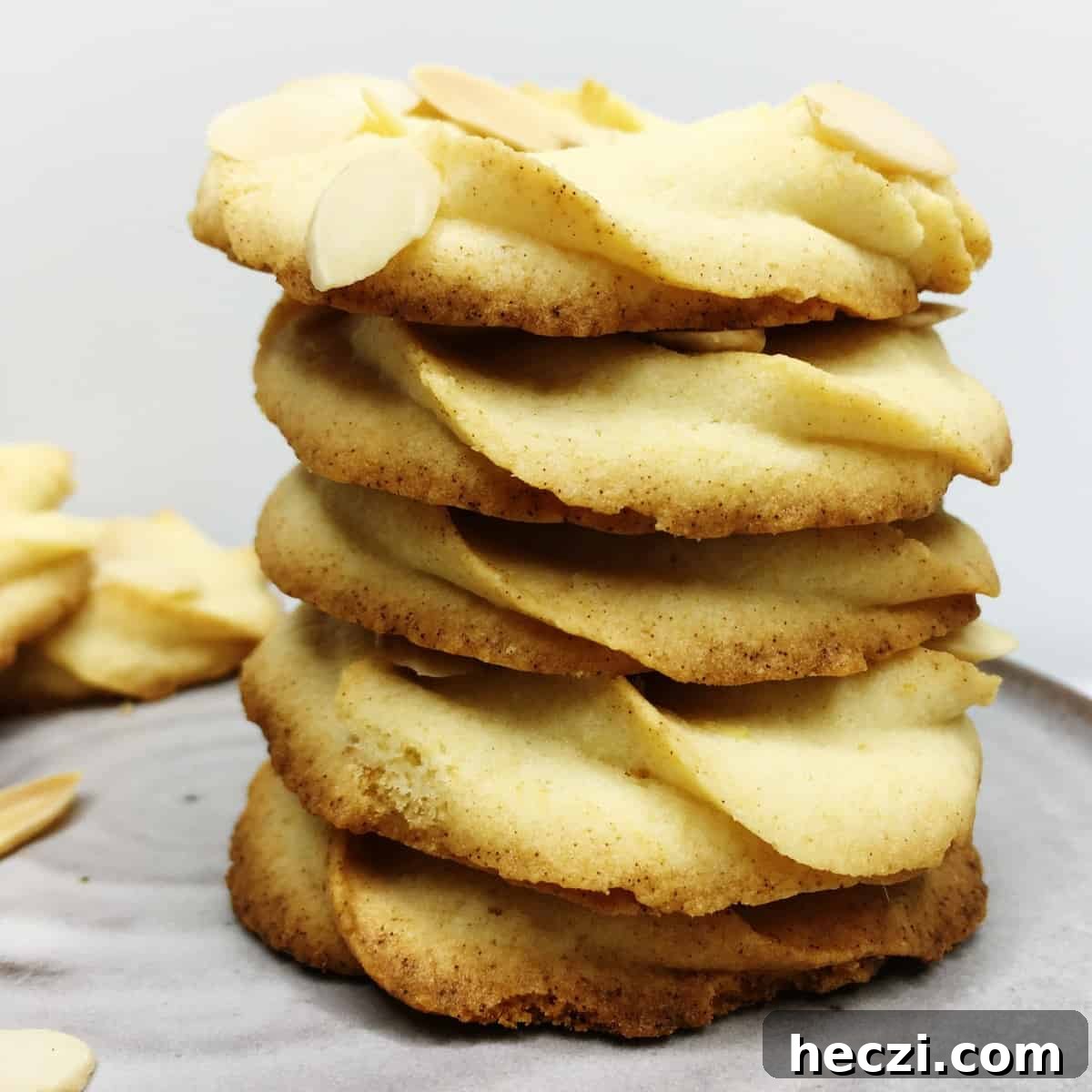
Authentic Italian Shortbread Cookies
-
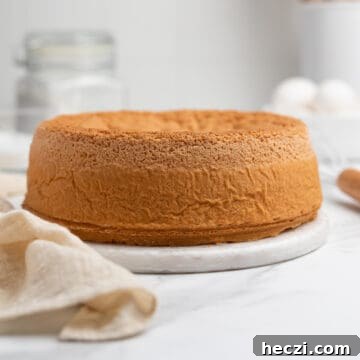
Italian Sponge Cake (Pan di Spagna)
Recipe card
Torta Paradiso (Traditional Italian Paradise Cake)

Torta Paradiso is a simple yet elegant Italian cake with a tender crumb and a soft, buttery texture. It’s lightly scented with lemon and vanilla and finished with a dusting of powdered sugar.
- Author: Irina Totterman
- Total Time: 45 minutes
- Yield: 8 servings
- Category: Cakes
- Method: Baking
- Cuisine: Italian
Ingredients
- 150 g (5.3 oz) unsalted butter, softened
- 150 g (¾ cup) granulated sugar
- Zest of ½ lemon
- ½ vanilla bean, seeds scraped
- 3 large eggs (about 150 g), room temperature
- 75 g (½ cup + 1½ tbsp) 00 flour or all-purpose flour
- 75 g (⅓ cup + 2 tbsp) potato starch
- ½ teaspoon baking powder (optional)
- Pinch of salt
- 1 tbsp powdered sugar for decoration
Instructions
- Preheat the oven to 355°F (180°C). Butter and flour an 8-inch (20 cm) cake pan and line the bottom with parchment. Lightly beat the eggs and set aside. Sift flour, potato starch, salt, and baking powder (if using) twice into a bowl.
- In a large bowl or stand mixer bowl, combine softened butter, sugar, lemon zest, and vanilla seeds. Whip with the whisk attachment for about 15 minutes until pale and velvety.
- Reduce the mixer to low and add the beaten eggs one tablespoon at a time, ensuring each addition is fully incorporated before adding more.
- Remove the bowl and fold in the sifted dry ingredients with a rubber spatula, adding a tablespoon at a time and using large, gentle strokes until the batter is smooth.
- Pour the batter into the prepared pan and smooth the top. Bake 30–40 minutes, until a toothpick comes out clean.
- Invert the hot cake onto a parchment-lined platter and let rest 15 minutes. Flip again to level the top, then cool completely on a wire rack. Dust with powdered sugar before serving.
Notes
- Use ingredients at room temperature.
- Allow sufficient time to whip the butter and sugar until airy.
- Add eggs and flour a spoonful at a time to maintain aeration.
- Avoid opening the oven door during the first 30 minutes of baking.
- Test doneness with a toothpick; baking times may vary by oven.
- You can place the cake’s flat bottom on top after cooling for a smooth finish.
Nutrition
- Serving Size: 1 slice
- Calories: 302
- Sugar: 18.9 g
- Sodium: 49 mg
- Fat: 17.2 g
- Saturated Fat: 10.2 g
- Carbohydrates: 34.8 g
- Fiber: 0.4 g
- Protein: 3.5 g
- Cholesterol: 110 mg
Nutritional information is an estimate for guidance only.