
Adobong Dilaw with turmeric adds vibrant color and warm, earthy flavor. This regional take on pork adobo is simple to prepare and full of comforting taste — a guaranteed family favorite.
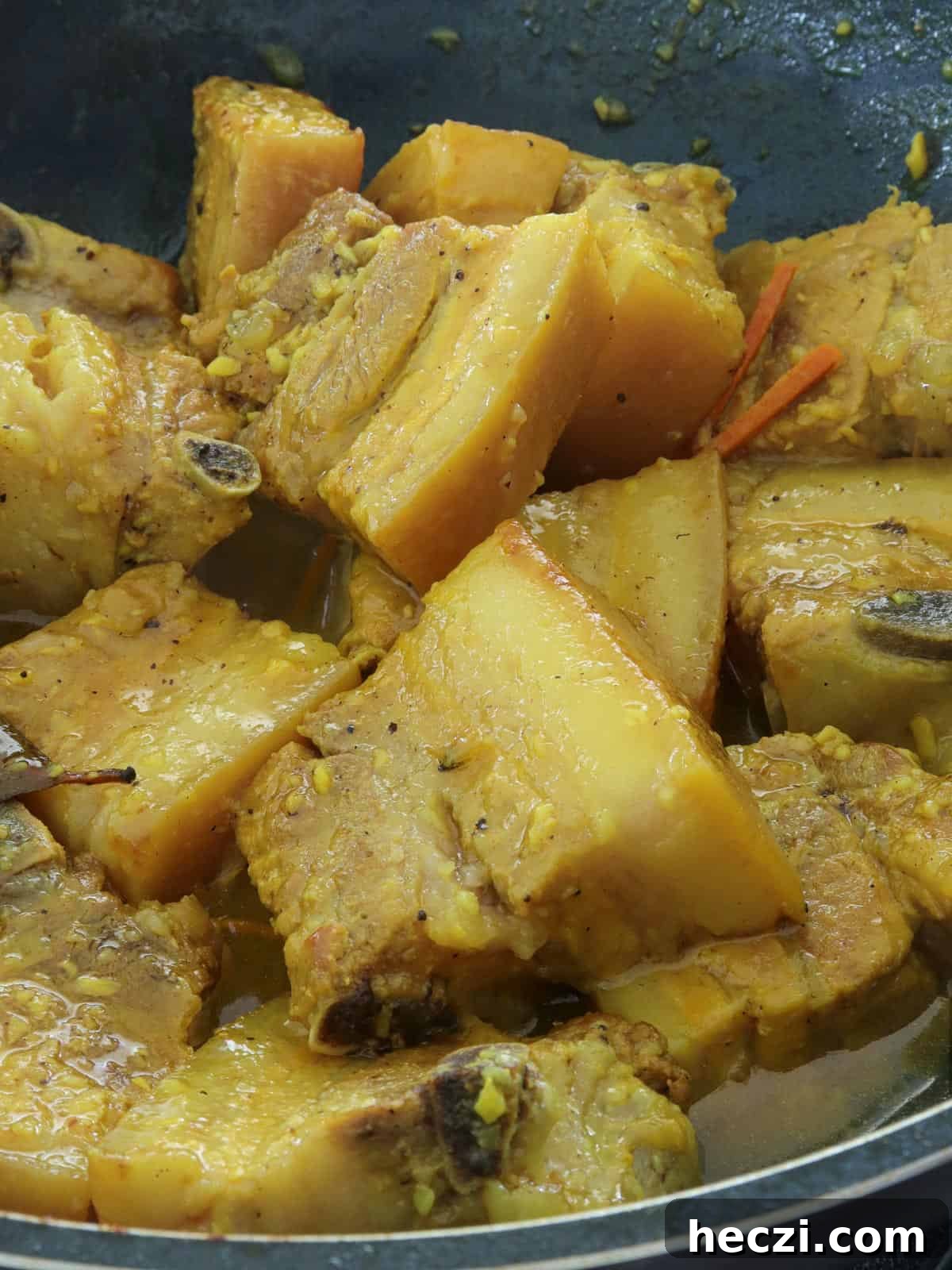
Adobo is a cornerstone of Filipino cooking — not just a single recipe but a technique used across the islands. While I already feature many adobo variations, this yellow adobo highlights how a few local ingredients can transform the classic braise into something distinct. Using turmeric (luyang dilaw or atsuete in some regions) gives the dish its characteristic golden hue and a slightly peppery, warm flavor.
Traditional adobo usually braises meat in vinegar with garlic, peppercorns, and bay leaves. Regional and household versions adapt that base with ingredients like coconut milk, fish sauce, chilies, or annatto. Adobong Dilaw keeps the process straightforward while adding turmeric for color and depth.
Popular kinds of adobo
- Adobong Pula — uses ginger and atsuete (annatto) for added color and flavor.
- Adobong Puti — a “white” adobo where salt replaces soy sauce for a lighter appearance.
- Adobo sa Gata — finished with coconut milk and chilies for creaminess and heat.
- Adobo with Oyster Sauce — a simple addition that brings sweetness and extra umami.
- Adobong Dilaw — a yellow adobo associated with Batangas and popular across the Visayas and Mindanao; turmeric or luyang dilaw provides the signature color and peppery note.
Ingredient notes
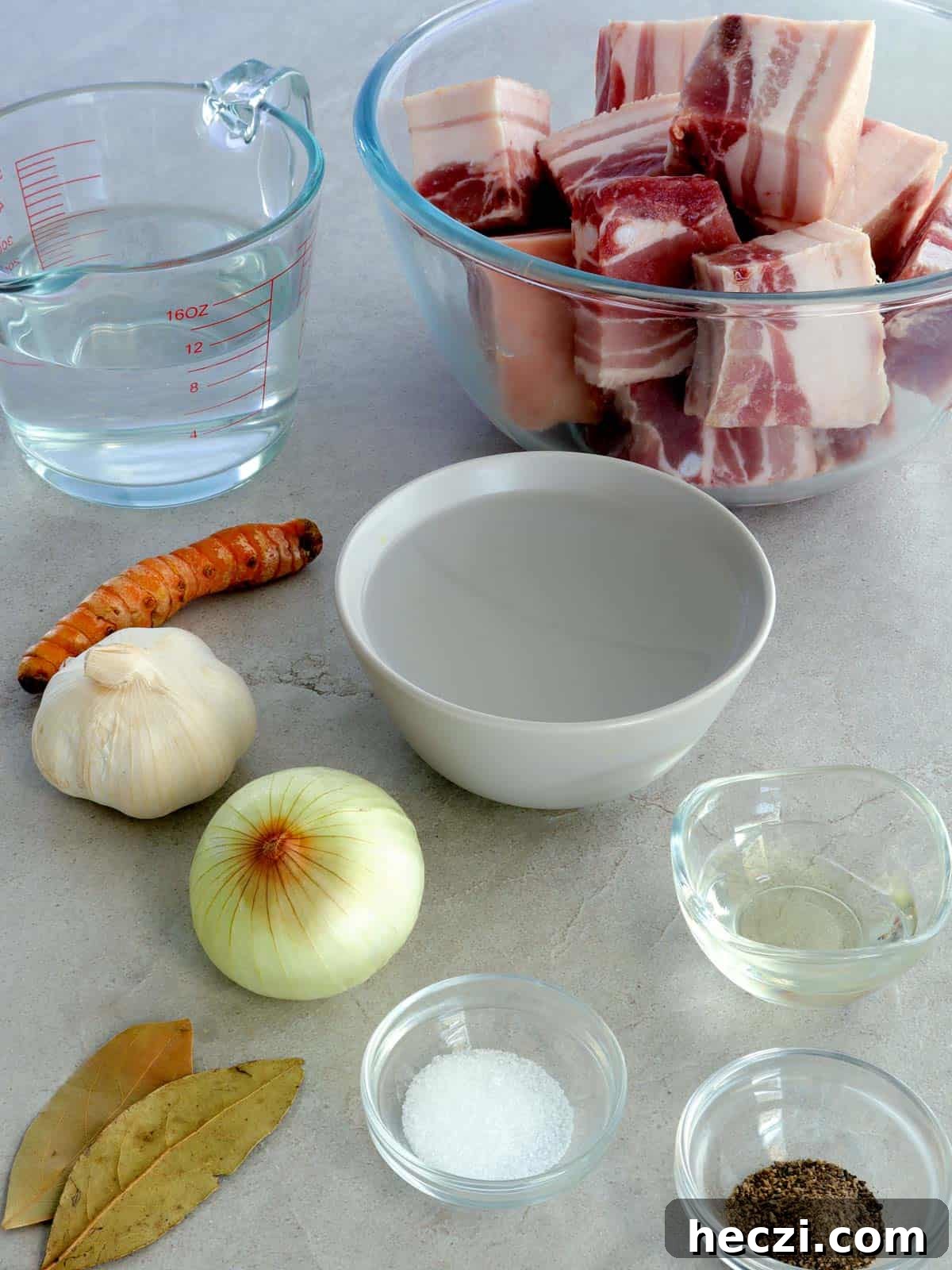
- This recipe uses pork belly for its rich flavor and tender texture, but you can substitute pork shoulder, spare ribs, or bone-in chicken if you prefer leaner cuts.
- The distinctive color and aroma come from fresh turmeric (luyang dilaw). If fresh turmeric isn’t available, turmeric powder works as a suitable substitute; use it sparingly to avoid overpowering the dish.
Cooking tips
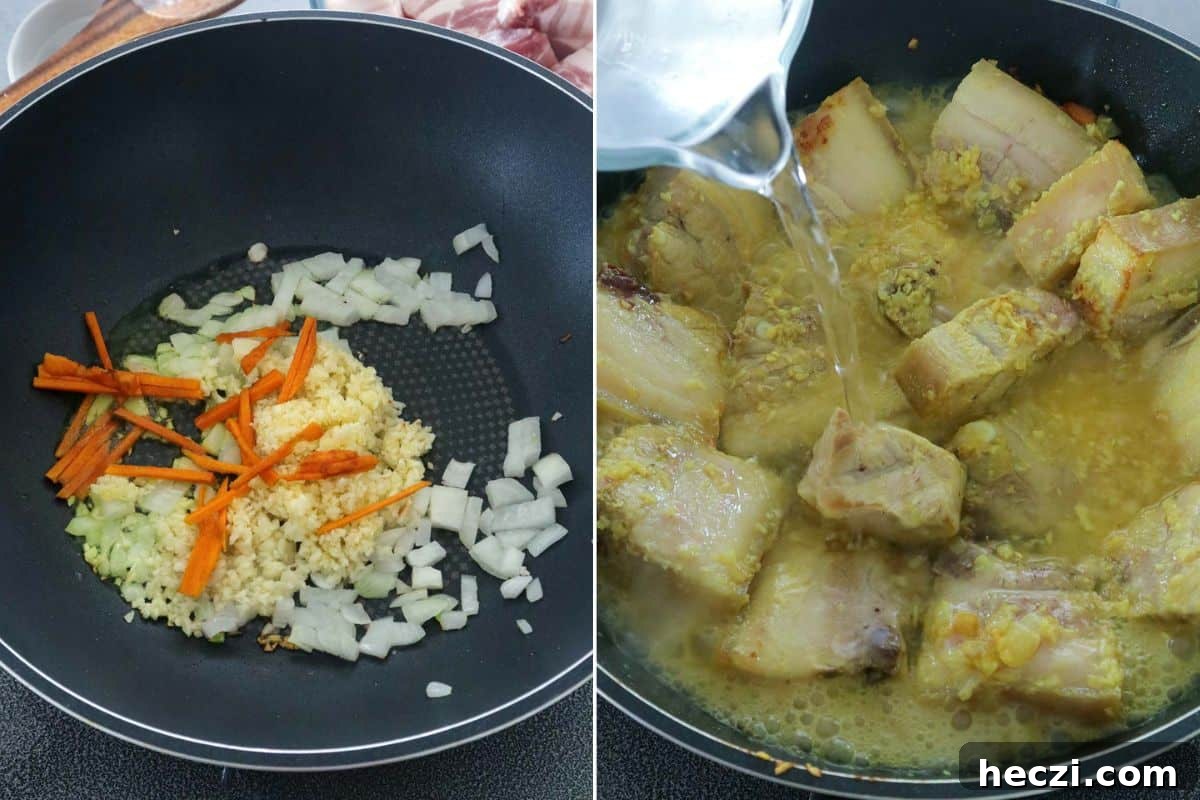
- Cut the pork into uniform pieces so it cooks evenly.
- Pat the meat dry before searing so it browns properly.
- When you add vinegar, let it come to a boil uncovered and avoid stirring for a few minutes; this helps mellow the sharp vinegar taste before adding water.

How to serve
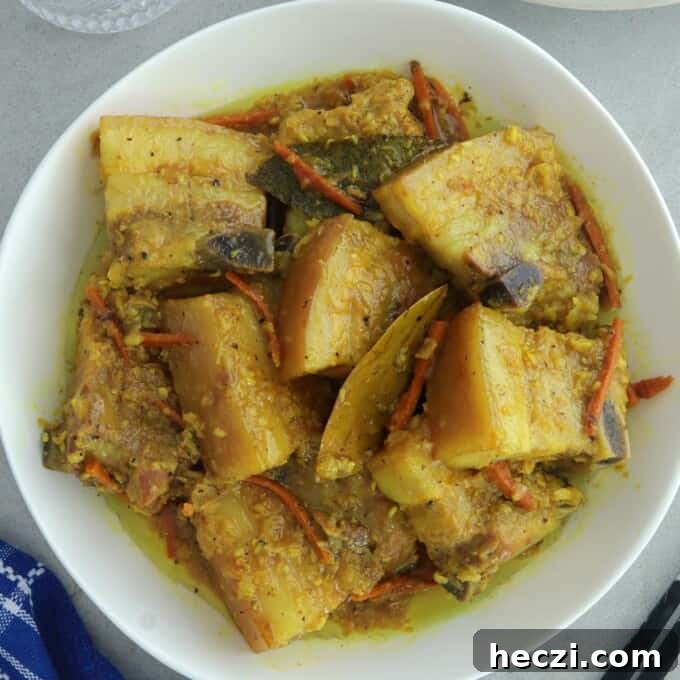
Serve Adobong Dilaw with steamed rice to soak up the savory sauce. It also pairs wonderfully with garlic fried rice and a sunny-side-up egg for breakfast or a hearty brunch.
Storing leftovers
- Store leftovers in an airtight container in the refrigerator for up to 3 days, or freeze for up to 3 months.
- To reheat, warm gently in a pan over low heat until the internal temperature reaches 165°F (74°C), or microwave in 1–2 minute intervals, stirring halfway through.

More pork belly recipes
Crispy pork belly that’s simmered until tender then fried to golden perfection — crunchy outside, moist inside. A favorite for special meals and everyday feasts.
Adobong Dilaw
Ingredients
- 1 tablespoon canola oil
- 1 onion, peeled and chopped
- 1 head garlic, peeled and minced
- 1 thumb-size turmeric, peeled and julienned (or 1 tsp turmeric powder)
- 3 pounds pork belly, cut into 2-inch cubes
- 1 cup vinegar
- 1 ½ cups water
- 2 bay leaves
- salt and pepper to taste
Instructions
- In a pot over medium heat, warm the oil.
- Sauté the onion, garlic, and turmeric until softened and fragrant.
- Add the pork and cook, stirring occasionally, until pieces are lightly seared and evenly coated with turmeric.
- Pour in the vinegar and bring to a boil. Cook uncovered without stirring for 4–5 minutes to mellow the sharp vinegar flavor.
- Add the water and bay leaves and return to a boil.
- Lower the heat, cover, and simmer for 50 minutes to 1 hour, or until the pork is fork-tender and the sauce has reduced.
- Season with salt and pepper to taste. Serve hot with rice.
Notes
- Trim and cut the pork into consistent pieces so everything cooks evenly.
- Dry the meat before searing for better browning and texture.
- Let the vinegar boil briefly without stirring before adding water to reduce its sharpness.